A request and some reflections on reality, the sciences, and journalism.
The initial reason why I thought of writing an open letter to science journalism was somewhat petty, though not personal. Then I told myself I shouldn't be so narrow-minded and turned a particular request into a series of reflections. Here they are.
1-For a year now, a mathematician proposed creating Hypatia Day on March 20. Later that request was transformed into something bigger: Hypatia Day would also be Women in Science Day. The request is on Change.org and so far has received about 800 signatures. If you ask me, that's quite few. However, over this time, given some interventions, the number grew rapidly. How to get more signatures? Perhaps with more well-known figures and the mass media. I therefore invite journalists to address the issue and spread the initiative (see links below).
Isn't this request just "symbolic"? That's how many people in general seem to think about "days of...". But it is as symbolic as the non-existence of such days. In both cases (their creation or their non-creation) it is testimony, symptom, indication, consequence of a certain way of thinking.
If what we say is a consequence of what we think, the reverse also occurs, because what we think originates in social discourses. Therefore, saying is not harmless. Discourses generate ideas and ideas generate discourses and actions. In this sense, then, it is no longer something merely "symbolic".
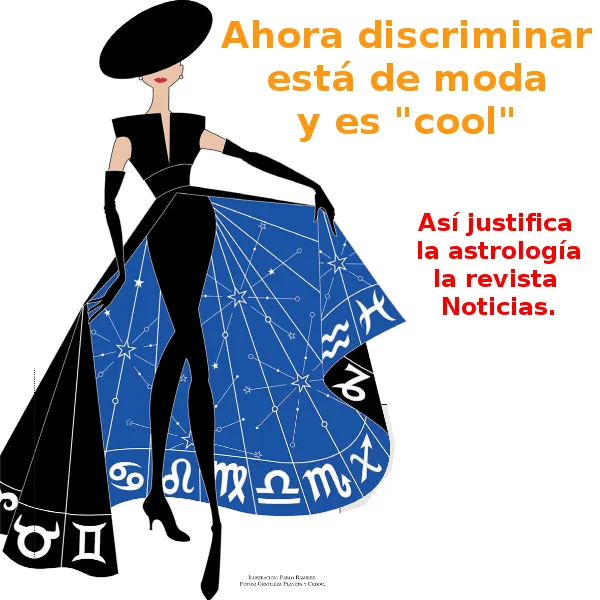
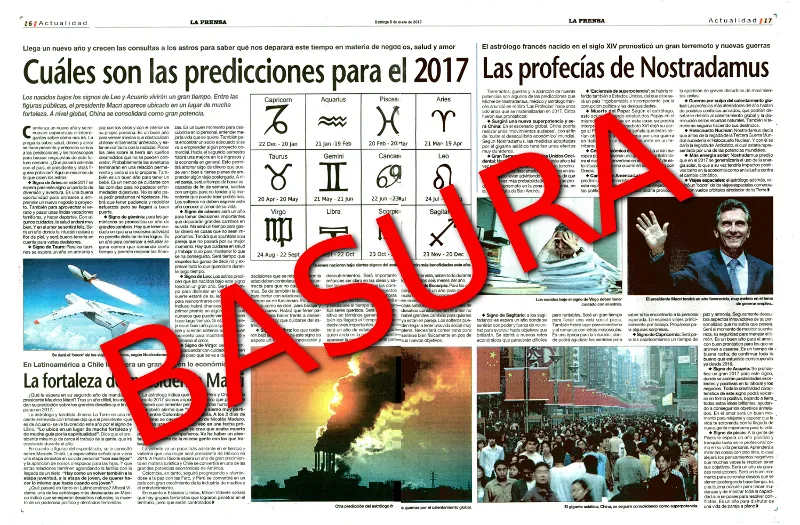
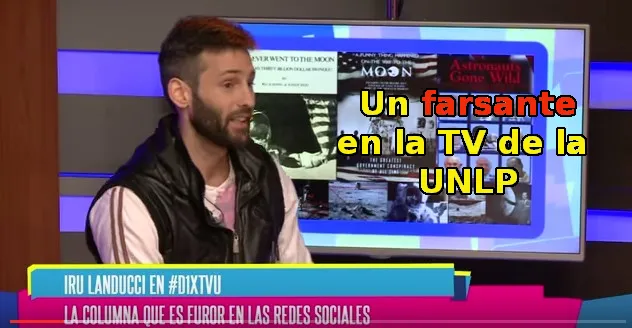
2-In recent times we have seen how the media echo what are called "viral news" that, in many cases, are related to "paranormal phenomena". In such news there is usually no intervention by journalists specialized in science. Even if a journalist is not specialized, their general knowledge, as journalism, should drive them to separate the wheat from the chaff, something that is also not done.
It is taken for granted that there are haunted houses, alien ships creating crop circles, ghost videos, etc.
Can those cases be explained in an ordinary way, without appealing to extra-ordinary concepts?
If someone puts 5 video cameras in the supposedly haunted house and detects nothing, is that a coincidence? Or is it only "causality" when it's convenient?
Is it possible to explain haunted houses without considering that people lie, that is, with an intention? Could it be a sum of suggestions?
A suggestion does not move a knife. But, did the knife move or does it seem that it moved? If it actually moved, then, it's not just suggestion and, therefore, someone is not telling the truth or it is an extra-ordinary event.
If it is the latter, then, by placing video cameras (in a controlled manner), we should record knives flying on their own, without tricks. Do we have that? No, we have the opposite.
Can a crop circle be made in a quasi-perfect shape only by giant alien ships that nobody saw, or can it be explained by simple methods we have known for centuries?
When these topics are touched upon, (science) journalists must intervene to prevent reality from being told in biased ways. Or is the only way to get ratings by lying?
3-The sciences are not only natural, they are also social. In economics or sociology it is also possible to do science journalism. Both in the numbers from INDEC (it's economics and not just mathematics) or in the pickets, it is necessary to approach reality in a scientific way. That is, to try to understand what the causes or reasons are for something happening. Pickets or social protests do not happen just because, randomly or by spontaneous generation. Instead of dealing only with the symptoms, we must understand the causes.
The same happens with street vendors. The symptoms are dealt with through journalistic reports that show one side of the issue (the legal, tax side). But it is not shown that by dealing with the symptoms, but not the causes, the symptoms disappear for a while and then reappear. Because the causes were never addressed.
4-The INDEC case I leave aside because it deserves it in the general sense of the use of statistics. In Argentina we are going through a partisan "rift" that mixes everything. The methods (not just the results) must be explained in detail and therefore also debated. Is it possible in a country with such vastness and different customs to find a single CPI? The average, as a mathematical concept, is very useful and very false. If in a group of 10 students, half got a 10 on an exam and the other half got a 5, the average is 7.5, that is, a figure that no one obtained.
In the recent past there were sufficient reasons (given by unions and universities) to suspect the statistical method used in the official agency. But those reasons remain as long as the methods are not known and debated. In science, methods are as or more important than results.
It is more important to know how to perform the root extraction than to know the result of the cube root of 27. That someone "gets" the figure right could be a coincidence, hence the importance of the explanation.
This same applies to any scientific study disseminated in the press that makes use of statistics and probability, like the topic of the possibility of finding intelligent life in the universe. Numbers do not speak, they are signs. They must be interpreted and explained.
5-Being suspicious of paranormal phenomena and pseudosciences in general must have its counterpart in the sciences. One cannot be "critical" in one sense, but not in another. There are arguments against those who, for religious reasons, oppose vaccination. But that does not prevent being critical, at the same time, of the conduct of certain doctors and pharmaceutical laboratories. Abstract science is applied in a concrete way. Science, understood this way, should not be immune.
6-On the other hand, being critical (in some cases and in others, always) does not mean being pessimistic. Finding problems, but not solutions, should not be interpreted as a simplistic stance because it is not. Examples:
Olbers found a problem: if the universe is infinite (as he thought) and that necessarily implies that the number of stars is infinite, then, why is the night dark?
Olbers found and pointed out a problem, but did not come up with the solution. It is a problem that may seem simple, but it didn't occur to everyone and it wasn't easy to find an explanation for it. We cannot demand that those who point out problems also solve them.
Another case: The Riemann hypothesis. The mathematician found a problem and whether he found the solution or not we don't know because he didn't write it down. Since then mathematicians have searched for a proof, without finding it until now. The particular calculations made so far prove the mathematician right, but what is sought is a proof (that is, for all cases). And it is hard to find. Finding and pointing out problems is the beginning of their solution. Hence, indicating a problem is not just a negative criticism and therefore does not respond to a pessimistic view, but rather the opposite. Believing that reality is wonderful when there are problems that some do not want to see is idealistic and utopian.
7-Both in the U.S. and in Argentina, different groups of scientists have mobilized against certain policies that have an economic root. If scientific thinking is characterized by anything, it is by finding common denominators among different things. Journalists who cover conflicts led by scientists must know that such situations have something in common with the rest of society: work. Scientists are workers. But they can also be, in some cases, business owners or entrepreneurs. The same happens in the arts (I'm thinking of concerts). There are workers and business owners. Having this vision is also having a scientific (critical) sense of society as a whole. The sciences and the arts are not bubbles split off from society, but rather in both cases, such collectives are traversed by social contradictions.
The reasons for this letter are varied, but I can summarize them: Yes, it's true, more science is needed. But, to be consistent with my thinking, more clearly, it is preferable to say it another way: what is needed is critical thinking, which is by no means pessimistic, but rather the attempt to understand reality. Then, after understanding reality, we will form a value judgment. Not the other way around. When I put society in front of a mirror I see the opposite. And, as we already know, plane mirrors do not invert reality from left to right nor from right to left. As Luca Prodan said: "I am right side up, you are the one turned upside down."
Sources and related links
- Commemorating the first female astronomer, Hypatia of Alexandria.
https://www.change.org/p/canada-s-parliament-commemorating-the-first-female-astronomer-hypatia-of-alexandria - Hypatia of Alexandria: Hypatia Day, in Spanish.
http://itedamza.frm.utn.edu.ar/?p=7169
(To interested journalists: you can contact Dr. Beatriz García, a professional Argentine astronomer who can explain the initiative, through the Contact section on the ITeDA site) - Why do mirrors invert right and left and not up and down?
http://eltamiz.com/2008/10/29/%C2%BFpor-que-los-espejos-invierten-derecha-e-izquierda-y-no-arriba-y-abajo/
About the images
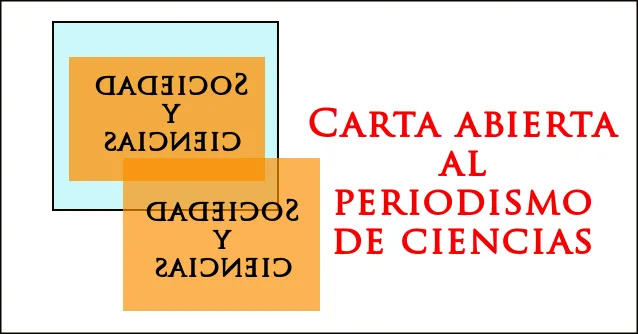
The image is my own, but it was inspired by the one used in El Tamiz.