In June, the IAFE invites you to participate in the CYCLE "ONE-ON-ONE WITH SCIENTISTS". Also, a lecture at Amigos de la Astronomía.
Two excellent ways to bring astronomy closer to the rest of society.
What are astronomers like? How do they work? How do they know what they know? There is no better approach to these questions than "one-on-one" with the protagonists of astronomical research in Argentina. A unique opportunity, especially for young people with concerns in these topics.
The lecture cycle is aimed at students in the last two years of high school, university entrance (CBC), and first-year students in related majors.
Objective of the cycle:
To become familiar with some of the topics currently being researched in Astronomy and related sciences, to learn how these investigations are carried out, to encourage direct contact with researchers to ask questions that help clarify vocational choices for those who show a marked interest in doing science in the area of Astronomy and Astrophysics.
Days and times:
The cycle consists of 6 meetings on THURSDAYS 1/6, 8/6, 22/6, 29/6, 6/7 and 13/7 from 15.30 to 17 h.
The meetings are independent of each other; one can attend one, several, or all according to the student's interest. We especially recommend attending the first meeting: "Introduction to an exploration of the Universe" to contextualize the rest of the meetings.
ATTENDANCE CERTIFICATES ARE PROVIDED TO PRESENT TO SCHOOLS (in case of needing an excuse for school hours).
Methodology:
The meetings are held in the IAFE Conference Room. They consist of talks given by researchers from the Institute that promote active participation from attendees, so that they can raise their concerns about the various topics covered and about career guidance questions.
Meeting place:
IAFE Building in Ciudad Universitaria, Nuñez, CABA
THE MEETINGS ARE FREE / LIMITED SPACES
IMPORTANT!
THOSE INTERESTED IN PARTICIPATING IN THIS SERIES (regardless of attending one, several, or all meetings) SEND AN EMAIL TO: [email protected] with Subject: MANO A MANO.
IN THIS WAY YOU WILL BE INCLUDED IN THE LIST OF INTERESTED PARTIES AND FOR EACH MEETING YOU WILL BE SENT AN EMAIL TO CONFIRM IF YOU WISH TO ATTEND.
For any other inquiry about the series please write to: [email protected]
SCHEDULE
First meeting
Thursday, June 1
“Introduction to an exploration of the Universe”
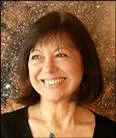
Dra. Gloria Dubner
In this first meeting we will take a tour, necessarily brief, from our planet to the confines of the universe, describing some scales of space and time that can help us organize knowledge of the different objects and phenomena, to then continue in the following meetings developing some of them in more depth. We will also present you with an "inside" view of what it's like to work in astrophysics research, how we astronomers, physicists, mathematicians, engineers and even biologists work daily, trying to advance the knowledge of our planet seen from space, the stars, the galaxies, the clusters of galaxies and even the origin, shape and destiny of the universe.
My note: Dr. Dubner is an eminence. Recently, together with her colleague Castelletti, they made world news about their research regarding SN1054 (See article in La Nación).
Second meeting
Thursday, June 8
“Our Restless Sun and the Magnetic Cool Stars”
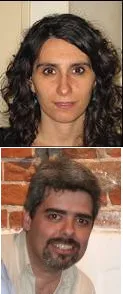
Dra. Andrea Buccino and Dr. Marcelo López Fuentes
Sun in different wavelengths in near real-time from the comfort of home or the cybercafé, and even get forecasts of solar events that affect Earth's space environment.
We know that there are countless stars in our Galaxy with characteristics very similar to the Sun; however, to observe and study their phenomena we do not possess the high spatial resolution that we have in the case of the Sun. In this meeting we will also talk about this and we will show you the different strategies used to study the magnetic activity of solar-type stars and even cooler ones, and we will tell you about the different observatories in our country where these studies can be carried out. Finally, we will give a very brief overview of how these studies influence the detection of extrasolar planets, anticipating the contents of the third meeting of this cycle.
Thursday, June 15: no meeting
Third meeting
Thursday, June 22
“The Search for Life in the Universe”
Dr. Daniela Maizel and Dr. Rodrigo Díaz
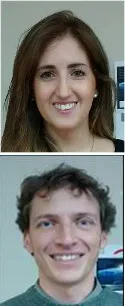
In recent years, a series of surprising discoveries opened a new door for the search for life in the Universe: rocky planets, like Earth, Mars or Venus, in the habitable zone of their star. The habitable zone is the region around a star where the temperature is right to allow the presence of liquid water on the surface of a rocky planet. Furthermore, in the coming years, thanks to the launch of the James Webb Space Telescope, it will be possible to study the atmosphere of these objects in some detail. This will give us more information about the capacity of these planets to harbor life and will even allow us to search for indirect signs of the presence of current or past biological activity on these bodies.
However, our notion of 'habitability' is limited by our restricted knowledge about life on Earth as we know it. Therefore, in an attempt to find possible forms of extraterrestrial life, it is essential to expand our knowledge about extreme life within our own planet. Studying those environments where life exists under such uncommon conditions allows us to broaden the limits for the search for it in other places in the Universe. Life forms capable of growing in extreme conditions are known as 'extremophiles,' and their study is very important to answer the three great questions of Astrobiology: Where do we come from? Where are we going? Are we alone in the universe? In this meeting, we will discuss some of the basic ideas used for the search and characterization of rocky planets and life forms capable of surviving in extreme conditions, similar to those we would find on these planets.
Fourth meeting
Thursday, June 29
“The Interstellar Medium: From Star Formation to Supernova Remnants”
Dr. Martín Ortega and Dr. Alberto Petriella
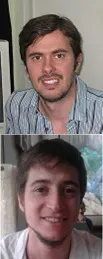
When we look at the sky on a dark night far from big cities, we can see, if we look carefully, that besides the stars there are certain cloud-like structures. And indeed, the space between stars is not empty; clouds of gas and dust flood the vast corners of our galaxy with what is known as the interstellar medium. Stars are embedded in it. They form and evolve there, obtaining from it the necessary matter to form. In turn, they enrich it, contributing new elements, during all their evolutionary stages and mainly at the end, when they have already consumed all their nuclear fuel. In this meeting we will chat about the different aspects of the interaction between stars and the interstellar medium, such as the formation of new stars and supernova explosions.
We will tell you about these topics in the context of the daily work of an observational astrophysicist, the questions we seek to answer, what it's like to observe with a radio telescope, what the processing and analysis of the acquired data consists of, and how results are presented to the scientific community. On the other hand, besides one's own observations, nowadays an astrophysicist has at their disposal countless public databases and images with which "very good science" can be done. Therefore, in this meeting we will give you a brief introduction to using a freely installable "software," designed to manipulate and visualize publicly available astronomical images of high scientific quality.
Fifth meeting
Thursday, July 6
“The universe on a large scale”
Dr. Susana Pedrosa and Dr. Gabriel R. Bengochea
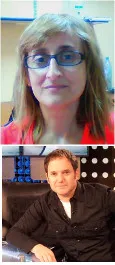
Curiosity is something inherent to our species. Wanting to understand the mechanisms underlying everything around us, always wanting to “go a little further,” makes us a race of explorers. Science is our tool to learn more and to reach the confines of our universe without yet leaving our planet. In this talk we will tell you how we work to try to understand what happened for our universe to be as we see it, how the structures observed in telescopes form and evolve, and how we discover many other secrets hidden in this light that reaches us.
Sixth meeting
Thursday July
“How the Earth looks from space without google maps”
Dr. Francisco Grings and Dr. Mariano Franco
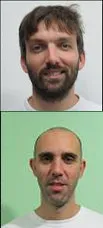
Light is present in our daily lives in many different ways: the lighting in our homes, microwave cooking, and even in the generation of large-scale maps. Our eyes detect only a small portion of the electromagnetic spectrum. With the part we don't see we can do a great many things, and one of them is monitoring the Earth from space. In this meeting we will talk about how satellites (orbiting at 700km in altitude) obtain information about the Earth's surface (floods, droughts, earthquakes, glacier surfaces, oil slicks in the sea), what data we have to do it, and what is the underlying physics in the remote monitoring of the Earth.
CONFERENCE AT AMIGOS DE LA ASTRONOMÍA
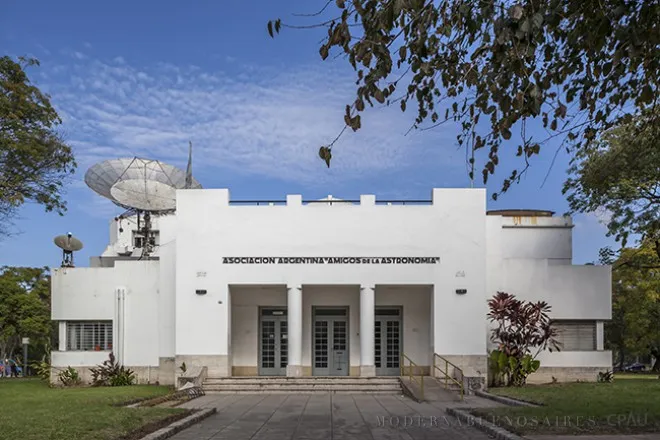
Amigos de la Astronomía invites you to the second conference of the year, which will feature the presence of Dr. GABRIEL R. BENGOCHEA, IAFE (CONICET-UBA), titled "THE QUANTUM SECRET OF THE UNIVERSE". It will take place on Saturday, June 10, 2017, at 19:00 h, at our social headquarters at Av. Patricias Argentinas 550-CABA.
Admission is free and open to the public and you may bring guests.
We look forward to seeing you.
The quantum secret of the Universe
Since the formulation of Quantum Physics, at the beginning of the 20th century, we have thought that the ultimate nature of any phenomenon in the Universe must be quantum.
On the other hand, supported by Einstein's theory of gravitation, the Big Bang model is the one that brings together our ideas about how the Universe arose and how it evolves. However, today we do not have a quantum description of gravity.
In this talk I will describe some arguments that are allowing us to reflect on the possibility of modifying Quantum theory, to answer some open problems in cosmology, and that could serve as a guide in the search for a quantum theory of gravitation.
Gabriel Bengochea