A project by Argentine astronomers and science communicators to bring astronomy to the street. Also, LightSound, devices that transform light into sound.
Within the framework of celebrations for the centenary of the IAU, the International Astronomical Union, special projects will be carried out, among which are two projects with Argentine participation.
The first is the Ágora Project, which, as indicated on its specific webpage:
consists of a series of spontaneous, unplanned, short "interventions" carried out by professional and amateur astronomers in public environments where an astronomy talk is not expected: in the square and parks, but also in train stations, the subway, or the bus. It is proposed as a means to modify proposals for the general public, based on traditional telescope observations or lectures in special environments. This activity aims to involve millions of people across the country.
This initiative is also a tribute to the first astronomers, who used to teach outdoors, with no more resources than their hands, their eyes, their voice, and of course their brain.
Organizers:
Asociación Achernar (Mar del Plata, BsAs) and ITeDA Mendoza, as part of the NOC Argentina.
Co-organizers:
Museo del Observatorio Astronómico de Córdoba and Complejo Astronómico CODE (Santa Fe).
Sponsors:
Asociación Argentina de Astronomía (AAA), CONICET-VoCar and Secretaría de Ambiente y Ordenamiento Territorial de la Provincia de Mendoza.
Website: http://sion.frm.utn.edu.ar/NOC-Argentina/index.php/agora/
At IAU: https://www.iau-100.org/agora
LightSound
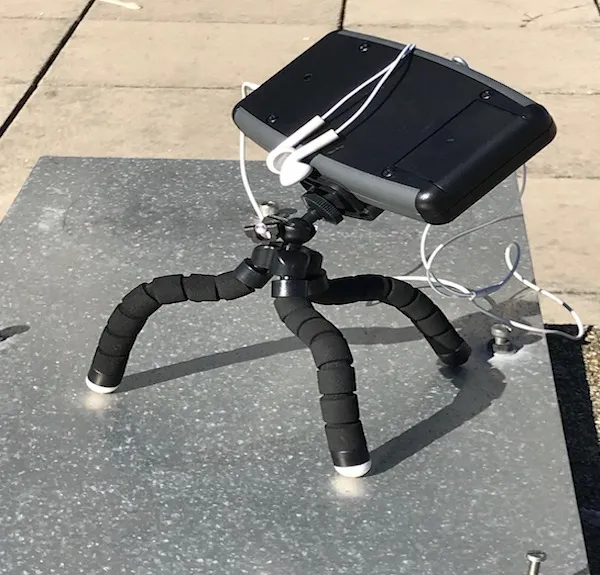
The other special project is called LightSound and, as its name indicates, it is a tool to transform light into sound, with the goal that a total solar eclipse, like the one that will be observable in 2019 especially in Argentina and Chile, can be experienced by those with visual impairments.
This project involves Harvard University, Universidad Diego Portales in Chile, Edinboro University, Charleston College, and the Instituto de Tecnologías en Detección y Astropartículas (ITeDA) of Argentina.
Website: http://astrolab.fas.harvard.edu/accessibility.html
At IAU: https://www.iau-100.org/lightsound-eclipse
In both cases, these are initiatives for outreach and inclusion. The concept of inclusion is often used to overcome barriers that hinder access to knowledge. Evidently, different or diminished abilities are a barrier. However, outreach in general is always inclusive insofar as it attempts to break down other types of difficulties through which the general public fails to access information, knowledge, and experiences.
Astronomy, like other sciences based on mathematics, can be or seem "non-inclusive" for those who have difficulties with numbers and abstract thinking. However, those skills can be developed to the extent that we have motivations to do so, but also, a certain level of knowledge can be learned without major technical requirements. Ultimately, at least in part, astronomy is a way to appreciate Nature and therefore it is a form of experience.
A comparison is worthwhile: To go to a museum of plastic-pictorial works, you don't need to know how to paint, but without a guide it will be difficult for us to understand the value of what we see.
For astronomy, the same can be thought: you don't need to have much prior knowledge, but some guide is necessary to help us understand what we can perceive.
I greet both initiatives from here and will be attentive to their development to report in this space how they are carried out, and I congratulate all the individuals and organizations that make up these projects.
Science should be within reach of society, opening new, original, entertaining, and diverse paths, as well as improving those that already exist, instead of closing doors.
Sources and related links
IAU 100 years: Special projects https://www.iau-100.org/special-projects
About the images
Images taken from the corresponding pages for illustrative purposes.