In digital format and for free, the work SCIENCE, and the “Cosmos” of the 21st Century can be downloaded.
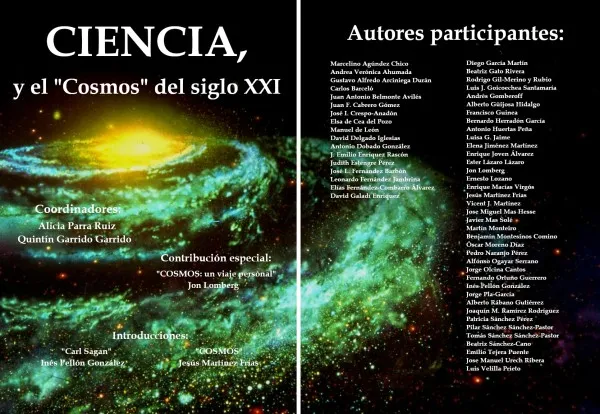
Quintín Garrido -who had already coordinated a work we talked about on another occasion- surprises me again with a scientific outreach initiative.
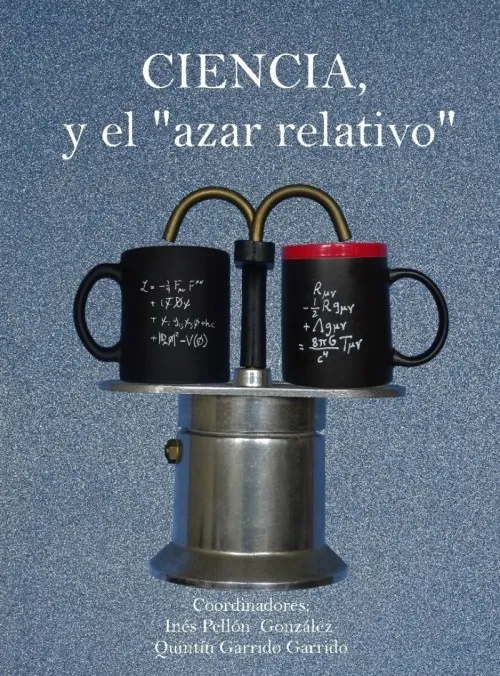
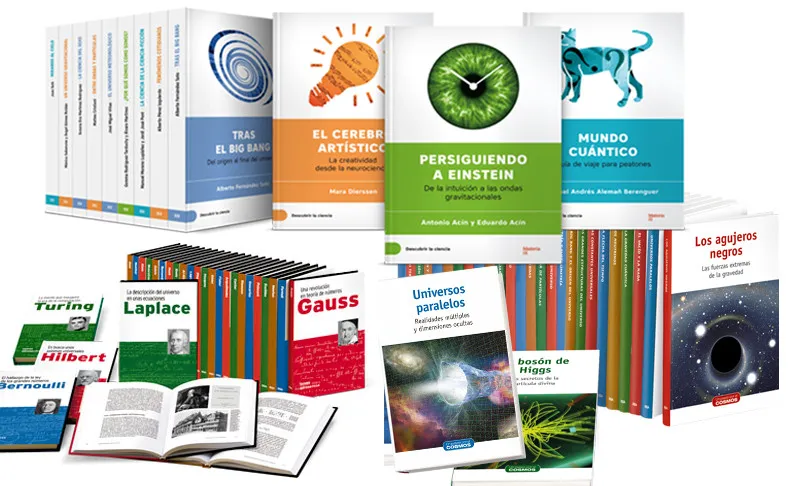
It is SCIENCE, and the “Cosmos” of the 21st Century which is part of a small but growing collection of science books written by scientists: SCIENCE, and I also understand it!!! (2017); SCIENCE, and I want to be a scientist!!! (2018); SCIENCE, and a giant leap for mankind!!! (2019).
The new work compiles texts from fifty Spanish scientists, with a special contribution from Jon Lomberg, the famous illustrator of the book Cosmos and the Golden Record of the Voyager probes.
It is interesting that the structure of the book is similar to that of Carl Sagan's famous book:
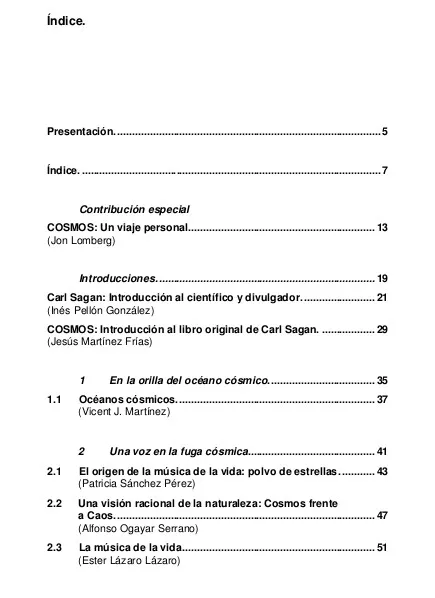
Throughout more than 270 pages, we find varied texts that highlight different aspects of the astronomer communicator's work, but based on topics that are current.
The book contains a short biography of Sagan and, although the structure constantly refers back to the original work, it is actually a good excuse to talk about sciences: astronomy, geology, biology, mathematics. That is to say, it is a good tribute because the legacy of the American astronomer is outreach done by scientists, in collaboration with others from different disciplines and with artists. And that is what the book offers. The readers of Sagan and later viewers of his television series (and that film version of the novel Contact), were curious young people who today are prestigious scientists. And they carry the torch of outreach in each text of this captivating book.
Without further ado, the work can be downloaded from the blog:
https://cienciayelcosmosdelsigloxxi.blogspot.com/
Thanks to Quintín and Alicia Parra for their excellent initiative.
Bonus: The online music
Quintín tells me that: You cannot talk about the Cosmos series without mentioning the music that accompanied the spectacular images (Vangelis, among others). On this occasion we have managed, for listening if one opts for the online reading of our SCIENCE, and the “Cosmos” of the 21st Century, the altruistic participation of great musicians, all participating under a CC License as well. To mention and thank J.J. Machuca, J.A. Caballero, Bert Schellekens, Gabriel de Paco, among many others.
A PERSONAL CONTRIBUTION
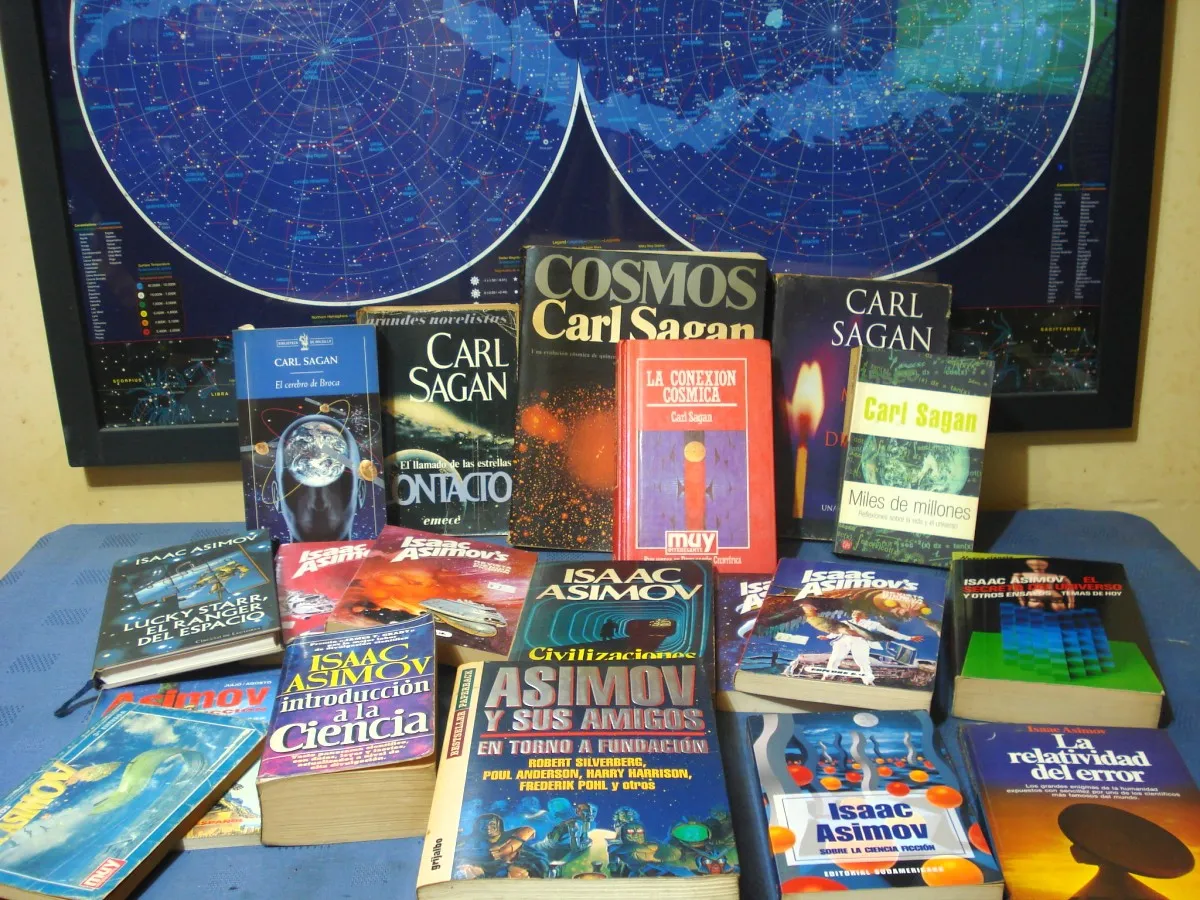
Not only professional astronomers, but also amateurs have been inspired by Carl Sagan. In my library I have six books by him: The Cosmic Connection; The Demon-Haunted World; Broca's Brain; Cosmos; Billions and Billions; Contact.
My relationship with the author began with his television series, of which I could only see a few episodes at the time. I was interested in the Rosetta Stone episode. I had already read something about it, with my barely 12 years, in a history book. But it was just a mention. I was captivated by the idea of translating, decoding, in the manner of detectives, the hieroglyphs.
However, it would be unfair to embody the memory exclusively in the figure of Carl Sagan. It would be unfair because, in my personal history, it would be failing the truth. My fascination with scientific outreach and science fiction had another spokesperson in capital letters: Isaac Asimov. I still have several of his books on the shelves. He was one of the most prolific authors, by the way. But my first approach to Asimov was through the magazine Muy Interesante which published beautifully illustrated stories. In particular, I remember the text "What Time Is It?" where he proposed dividing the hour in decimal format: tenths, hundredths, thousandths.
If a day is 24*60 = 1440 minutes, then a tenth of a day is 144 and a hundredth is 14.4.
In 24 hours, ten times 144 minutes pass; one hundred times 14.4 minutes pass. A tenth of a day equals 2.4 hours.
At my young age, being a pre-teenager, it seemed like a brilliant idea to me. And I added a personal imprint:
If a tenth of a day is 2.4 hours, and there are ten tenths in a day, then, that multiplied by 3.3 is a third of the day, almost equal to 8 hours. In numbers: 1440*0.33=475 minutes=7.92 hours. Which is the same as 2.4*3.3. (If you wonder why it's not exact, it's because a third is not 0.33).
We have developed the romantic idea that in the past there was a "Golden Age", ideal, perfect, unmatched and that everything current is a degradation. I am a bit nostalgic, but that is false. I have commented on the inspiring work of Dennis Overbye: "Lonely Hearts of the Cosmos" or the book by Argentine cosmologist Alejandro Gangui: El Big Bang, la génesis de nuestra cosmología actual.
The new version of the Cosmos series, hosted by Neil De Grasse Tyson, follows Sagan's legacy. And there is a significant number of very valuable YouTube channels, among other forms of outreach that include visits by astronomers to schools (even if they don't have mass dissemination).
That is why this new compilation work by Quintín Garrido is important. Because the scientists who write there take up the baton and continue the path. It is not just about remembering the figure of Sagan, but about putting into communicative action the idea of disseminating science to the general public.
Sources and related links
- Isaac Asimov and Carl Sagan [Anecdotes (Part 1)], by DANI TORREGROSA
https://www.esepuntoazulpalido.com/2017/03/isaac-asimov-y-carl-sagan-anecdotas-1.html - What Time Is It?
https://valar.wordpress.com/2005/06/18/%C2%BFque-hora-es/