
The National Astronomical Observatory of Japan announced that it has developed a new optical adapter that improves the resolution of its "Subaru" telescope tenfold, one of the largest in the world located in Hawaii (USA).
Via >La Flecha
The improved resolution allows recognizing a ping-pong ball one hundred kilometers away, facilitating the study of objects that escaped observation such as the detailed structure of distant galaxies, according to observatory sources cited by the Kyodo news agency.
The new optical system will allow the "Subaru", located on the summit of Mauna Kea in Hawaii and inaugurated in 1999, to overcome the blurring effect produced by the atmosphere in images captured by telescopes placed on land, the report says.
It adds that the new resolution will be 3.5 times better than that of the American "Hubble" telescope, which has been orbiting Earth since 1990.
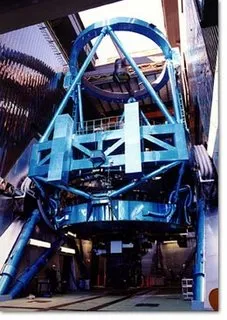
The new Japanese system, which has 188 adjustable pieces to sharpen the image, compared to the current 36, will enter into operation next year.
The Japanese observatory has also developed a system to project guide stars into the sky, a device necessary to help measure the brightness of real stars.
In a >test observation conducted last month, the telescope achieved an image of the Orion Nebula with a resolution ten times greater, and projected an artificial star in the sodium layer of the atmosphere at a height of 90 kilometers, according to the same sources.