A new study on chemical reactions at very low temperatures, like those of interstellar space.
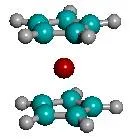
Stephen Klippenstein, a chemist at Argonne National Laboratory, with his colleagues from Sandia National Laboratories; the Institute of Physics, University of Rennes and University of Cambridge have developed a detailed understanding of the dynamics of reactions between neutral radicals and neutral molecules, known as "neutral-neutral" reactions, at temperatures as low as 20 degrees Kelvin, approximately the temperature of interstellar space.
In their work, Klippenstein and his collaborators determined why certain molecules reacted quickly even at low temperatures by carefully comparing theory and experiments for a class of reactions (O3P + alkenes) that range from non-reactive to highly reactive.
The observed experimental results have a close correlation with the theoretical predictions, according to the scientist.
"It was remarkable how well theory and experiment agree across the entire spectrum from 20 Kelvin to room temperature. This means we can rely on theory to predict which reactions will occur quickly."
Establishing a model for interstellar chemistry is especially important given the difficulty of conducting large-scale experiments, according to Klippenstein.
"My collaborators have developed some experimental techniques to measure these reactions at low temperature. But such experiments are still very time-consuming and also difficult to apply to many reactions. So schemes for predicting reactivity for arbitrary reactions, whether a priori or by extrapolation from measurements at higher temperatures, are of great utility for interstellar chemistry models."
Previous experiments with CRESU (Reaction Kinetics in Uniform Supersonic Flow) technically demonstrated that a "surprising number" of neutral-neutral reactions remain fast at very low temperatures. As a result, these reactions can play an important role in the chemistry of interstellar space, in contrast to the conventional wisdom that space chemistry is essentially ion-based.
The paper, titled "Understanding Reactivity at Very Low Temperatures: The Reactions of Oxygen Atoms with Alkenes", appears in the July 6 edition of Science.
Sources and related links
- EurekAlert: New light cast on key chemical reactions in interstellar space
- ANL: Press release
- El País: Deciphering the chemistry of the universe
- IAFE (PDF): Organic molecules in the interstellar medium
- Astrochemistry