Nicola Masetti is at the Faculty of Astronomical and Geophysical Sciences of the UNLP. He often travels to Chile to make observations at the European Southern Observatory (ESO) but now he has come to give a talk at the place where colleagues with whom he shares research work: Drs. Sergio Cellone and Gustavo Romero. Topic on the La Plata agenda? Gamma-ray bursts - GRBs for their initials in English: Gamma-Ray Bursts - something new in the astronomical world and with many points to clarify in the coming years. In perfect Spanish, Masetti recounted news and doubts regarding these ultra-energetic events.
By Alejandra Sofía Boletin 218 (News from the La Plata Observatory)
Brief presentation of GRBs
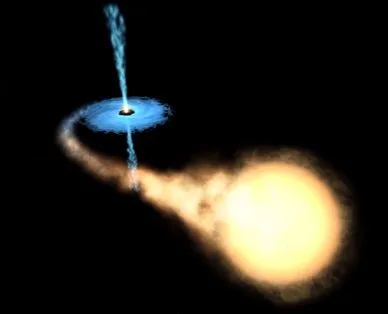
They are observed through the entire electromagnetic spectrum, from Earth and via satellites. They are powerful and distant explosions in Gamma radiation detected in X-rays, in the optical and in radio recently, only for the last 10 years; before they were studied but without evidence at other wavelengths like the one that happened in 1997 thanks to the BeppoSAX satellite. Those violent explosions last from milliseconds to hundreds of seconds, but they leave an effect on the environment where they have happened that can be seen for hours and even weeks. We are talking about cosmological distances, that is, they take us almost to the beginning of the universe. They are explosions so extreme that their brightness can be more powerful than that of the entire galaxy that hosts them. They are some of the most distant objects in the universe.
----------
-Where in Italy are you from?
I was born in Bologna, I got my degree in astronomy at the University of that city and then I did my doctorate at the University of Padua, the other Italian university where that career is studied. I got my doctorate in 1997 and in 1998 I returned to Bologna to work at the Institute of Space Astrophysics and Cosmic Physics (INAF-IASF). Before, this site was called the Institute of Technologies and Study of Extraterrestrial Radiation.
-Attractive name
When they gave us the mail they would say: you are the extraterrestrials, right?
-Where has your astronomical taste gone and where is it going?
It is an observational taste and I started in the optical because the University and the Observatory of Bologna have one of the largest telescopes in my country and there I developed my undergraduate thesis as an optical observer, I continued in Padua with the optical study of galactic X-ray sources, particularly galactic X-ray binaries and then, when I returned to Bologna I joined the group of Prof. Frontera, at the IASF. I really like working in the optical because it is one of the most interesting windows. Among other things, it provides a lot of information about the distance of GRBs.
My group was one of the builder groups of the BeppoSAX satellite (Satellite per Astronomia X, "Beppo" in honor of Giuseppe Occhialini) that observed for the first time the "afterglow" of a gamma-ray burst.
-Afterglow?
It is the interaction between the explosion and the environment around the explosion.
-And how long is that environment affected?
It can last days and even weeks, in fact it can last indefinitely but what we can manage to see is something that can last a few weeks. For a terrestrial observer it lasts that long but it is not known what may continue to happen. On a longer scale - more or less as is in fact an explosion of a supernova - what we see in those cases is the material expelled by the explosion even after thousands of years. In the Crab Nebula a cloud produced by the expansion of the expelled gas is still seen. But in those extremely distant objects we cannot see the same situation because we do not reach with the sensitivity of our current instruments.
Through the BeppoSAX satellite one of the instruments that detected a GRB, we began to investigate them not only in X-rays but also in the optical; Frontera created a group within the Institute so that we could do that type of observation; it was a great intuition since at that time there was not much experience in that.
The first GRB was detected on February 28, 1997, through an optical observation, by a group of Dutch from the University of Amsterdam, guided by Jan van Paradijs, and almost simultaneously by a group from the University of Bologna of which I was a part.
-What is the minimum requirement to observe a GRB? What type of instruments are needed?
It all depends on how much the object cooperates! There are Gamma-ray bursts that can be seen with telescopes that could even take spectra and that are 1.5 meters in diameter but the object cooperated because it was very bright.
In other cases the first phases of the Gamma-ray flash were observed with 40 or 60 cm telescopes. The Swift satellite - which has been operating since late 2004 - has as its main objective to study the enormous and mysterious Gamma-ray bursts; it is capable of doing so in the Gamma-ray, X-ray, ultraviolet and optical spectrum. Once it detects some flash or explosion of Gamma rays, it immediately passes the information to telescopes and interested people who in real time can observe from Earth; in parallel it also informs the robotic telescopes that then observe the affected part of the sky.
-Are there many telescopes of this type?
Yes there are several: for example, there is a network of North American telescopes called Rotse (Robotic Optical Transient Source Experiment) that are placed in several places around the world, to cover the sky as much as possible.
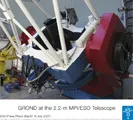
With my group we are involved in the REM (Rapid Eye Mount) telescope at the ESO Observatory of La Silla, in Chile. We also use the National Galileo Telescope, Italian and located in the Canary Islands (3.5 meters in diameter).
There are other missions capable of detecting GRBs: HETE-2 (High Energy Transient Explorer) which is a small scientific satellite that continued the task of BeppoSAX and is still active; INTEGRAL, dedicated to the study of Gamma rays emitted by various cosmic sources; and the recently launched Italian satellite AGILE; but Swift is dedicated to the study of GRBs and therefore has a higher GRB detection rate.
-In your talk you spoke of metallicities, what kind of information do those elements give?
Astronomers call all elements heavier than helium "metals." Those data refer to the chemical composition of distant galaxies; in the optical spectrum it is possible to detect emission lines produced by these metals and redshifted, and those lines tell me the distance and also the time of origin of those galaxies; by going farther in distances we go farther back in time and we know or try to know how the enrichment of metals in the universe has been. At the beginning there were no metals, there was pure hydrogen and helium. When metals appear, there was obviously an enrichment due to the explosion of supernovae; nuclear fusion reactions produced several elements heavier than helium, such as magnesium, nitrogen, oxygen. That can give you an idea of how the various elements in the universe developed over time.
-Time. When have these GRBs occurred?
The "redshift," the redshift of galaxies (a measure that shows the expansion of the Universe) gives us an epoch that could be placed in some cases at about one billion years after the Big Bang, according to the most current theories. This, in astronomical terms, is very close to the beginnings of the Universe.
-These Gamma-ray explosions have been observed in very distant galaxies.
Yes, and in general they are galaxies not as large as those usually seen at those distances and that show many star births. They are observed with a bluish color.
-You mentioned a Gamma-ray explosion due to some particular characteristics. Exactly they called it GRB030329. Tell us why it is special.
In April 1998, a Gamma-ray explosion and a very powerful supernova -explosion of a very massive star- were detected. Some said it was a coincidence and other groups pointed out that both events could be connected. It was the first example of a possible connection between a GRB and a supernova.
Due to a matter of position in the sky, there were groups that made the physical connection between the two objects, that is, that the Gamma flash was produced at the moment of the supernova explosion. But in this case the afterglow was not clearly detected and many scientists said: "Then the two events have nothing to do with each other, because the afterglow should be seen and then the supernova." In the case of GRB 030329, detected in March 2003, we had the possibility to see the Gamma "flash" and then the afterglow, and through spectroscopic studies how this "transformed" into a supernova.
-On which side were you standing when this happened?
Until that moment I was not convinced but I had to convince myself because the case of GRB030329 was very strong evidence; this GRB was detected by HETE-2 and then observed with optical telescopes.
-How many GRBs have been detected so far?
BATSE, one of the four instruments on board the Compton Gamma Ray Observatory, revealed more than 2700 GRBs, but only now the Swift satellite has very precise accumulated information, with a positional and spectral localization of more than 200 GRBs. With this, it has already been possible to begin building an important statistical analysis.
-What do you think observing GRBs in the optical will bring you?
In my talk I showed results that are messing up the nice little picture of the theory of Gamma-ray explosions. The data that Swift provides us raise more doubts than certainties, which in a way is what one seeks, although it often makes you very angry!
For example, two GRBs without a supernova were seen and a very bright supernova should have been seen. But only an afterglow was seen, meaning there was no obscuration in the area that would have prevented seeing the supernova. That means the line of sight was clear but the supernova was not seen. What could have happened? That the GRB was actually beyond the observed galaxy? Was it behind and much farther away and had nothing to do with the galaxy we thought? Did the explosion result in the birth of a black hole and the supernova collapsed completely inside it?
Another option is that the supernova was much weaker than those associated with this type of object. It is not clear what happened.
-Is there a detection rate of GRBs according to the two hemispheres?
No. Only that it is easier to observe from the ground in the northern hemisphere because there are more telescopes but not because of a matter of sky regions.
-And also because there is more money available.
Yes! And also more land, in the sense of continental platforms to build telescopes, than in the southern hemisphere.
-Could we have a GRB in our galaxy? What would happen?
There are studies about that. There were several articles by an American group, led by A. Melott of the University of Kansas in North America, that studied the possible effects of a GRB in our galaxy and it could be very complicated. That energy would have the capacity to completely ionize the atmosphere facing the GRB and could produce a very strong imbalance within the atmosphere itself and even produce climate changes.
That group put forward the hypothesis that one of the great extinctions -not the dinosaur one but an earlier one, the Ordovician period extinction- could have been produced by an event of this type. They are serious studies published in several specialized journals.
-We must observe our galaxy carefully looking for GRBs.
Exactly, because GRBs are the "flashes" and supernovae the "thunder."
Sources and related links