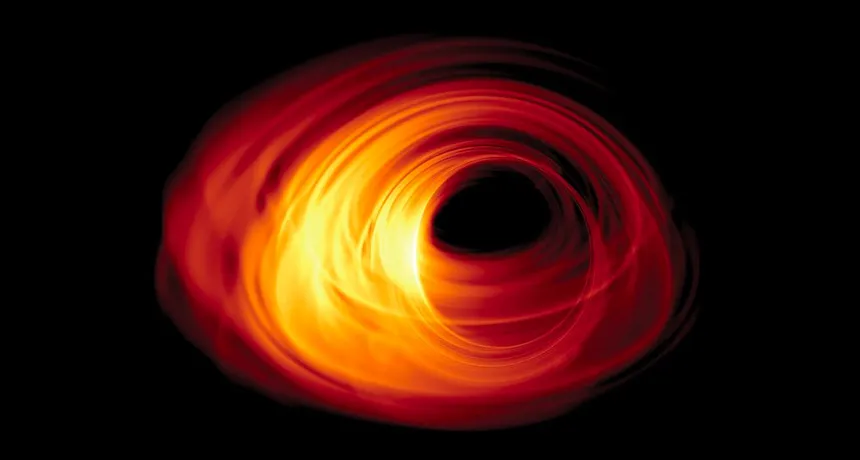
Astronomers detected radio emission coming from a region 30 million kilometers from a dark object thought to be the colossal black hole that lies at the center of our galaxy.
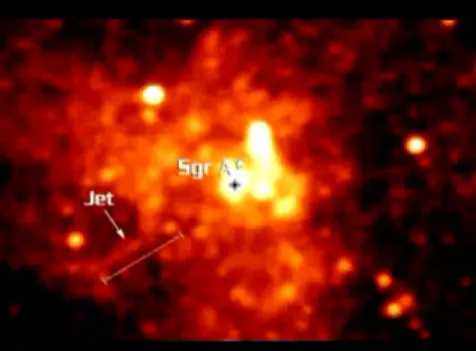
Previously, astronomers could not see closer than 100 million kilometers from the object, called Sagittarius A* (SgrA*). The new observation is three times closer to the black hole's event horizon.
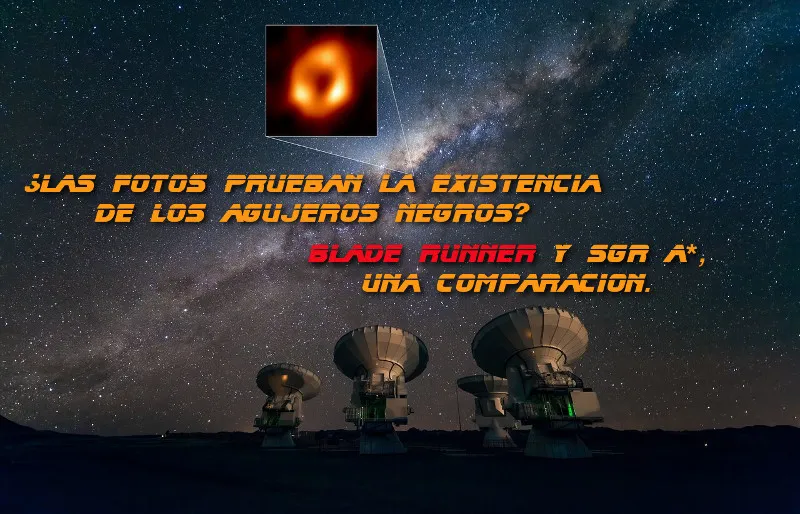
The radio waves were collected in April 2007 using three separate observatories in Hawaii, Arizona and California, linked to form a giant telescope 4,500 kilometers in diameter. The technique, called Very Long Baseline Interferometry, reveals many more details than a single antenna.
The emission must come from the hot gas of a massive star, but it is not clear whether the gas will be swallowed by the hole or not.
In the coming years, closer observations will be possible with the new generation of telescopes like the Atacama Large Millimeter Array in 2010, which will allow extending the array of telescopes even further and allow the use of shorter wavelengths.
The preliminary discoveries were described by Sheperd Doeleman of the Haystack Observatory at the Meeting of the American Astronomical Society in Austin.
The VLBI array consisted of the Combined Array for Research in Millimeter-wave Astronomy (CARMA) in California, the James Clerk Maxwell Telescope (JCMT) in Hawaii and the Submillimeter Telescope Observatory (SMTO) in Arizona.
Sources and related links
- *NewScientist: Milky Way's black hole probed closer than ever before
- *PDF: 230GHz VLBI Of SgrA*: Getting To The Event Horizon
About the images
YouTube video:
The animation zooms into the center of the Milky Way using images from the Chandra X-ray Observatory. It ends with an artistic conception of the central black hole, Sgr A*, and a disk of matter with an outburst as it falls into the black hole.
Courtesy of NASA/CXC