On investment in science and technology transfer.
In what way could astronomy, which studies black holes, galaxies, nebulae, stars, planets, the interstellar medium, etc., generate greater exports?
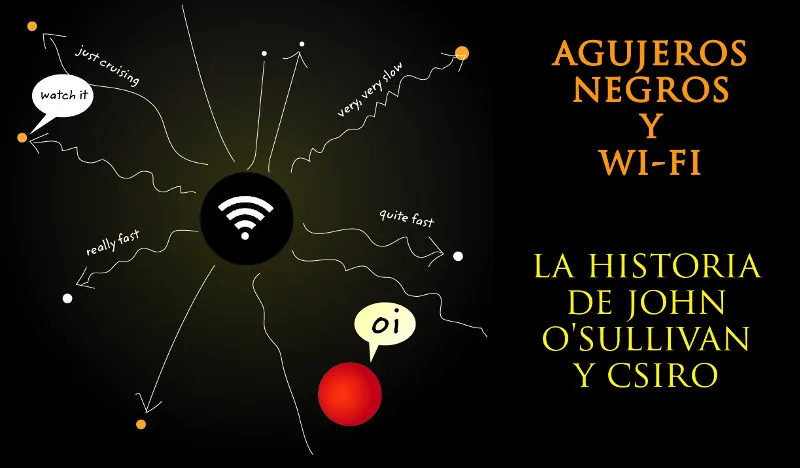
Astronomy is one of the sciences with the least impact on daily life. Although there are exceptions. I want to tell here about one of those developments arising from astronomy that has had and has a great impact on daily life and has generated millions in global profits: Wi-Fi.
BLACK HOLES AND FOURIER TRANSFORM
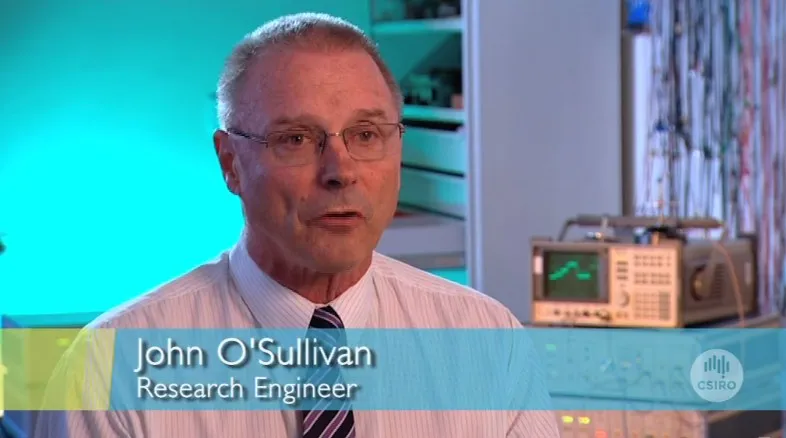
After graduating as an electrical engineer from the University of Sydney, John O'Sullivan took a doctorate as a student and worked on the development of the Fleurs Synthesis Radio Telescope. He completed his doctorate in 1974 and was at a radio telescope in the Netherlands (ASTRON). He was Head of the Engineering Group, making major contributions in the area of signal and image processing. In 1983, Dr. Sullivan returned to Australia to work on signal processing in the astrophysics division of CSIRO (Commonwealth Scientific and Industrial Research Organisation).
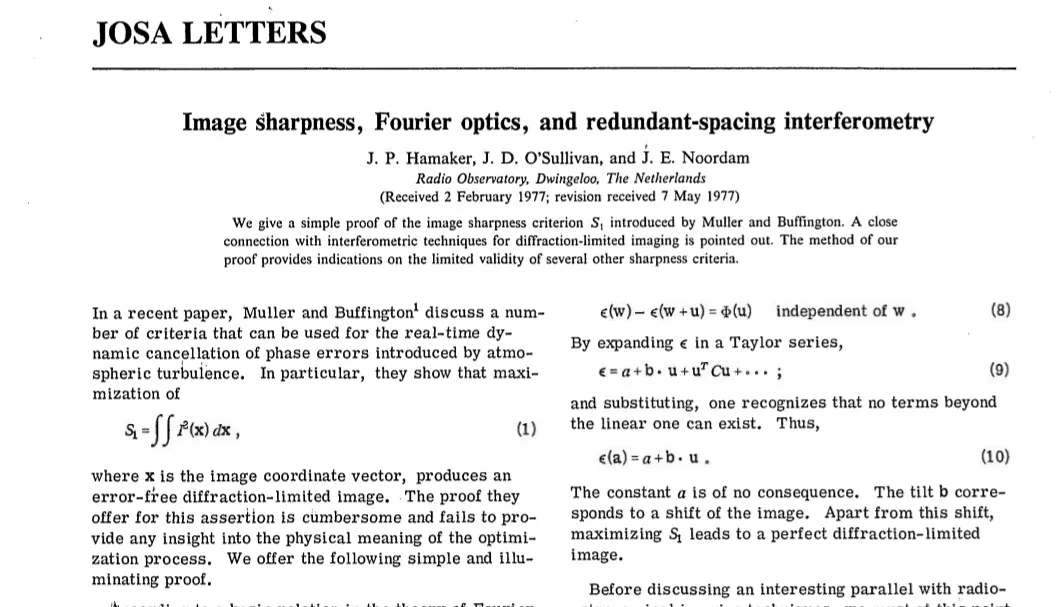
In 1977 he published a paper with two colleagues titled "Image sharpness, Fourier optics, and redundant-spacing interferometry" where he used the Fourier Transform for signal processing.
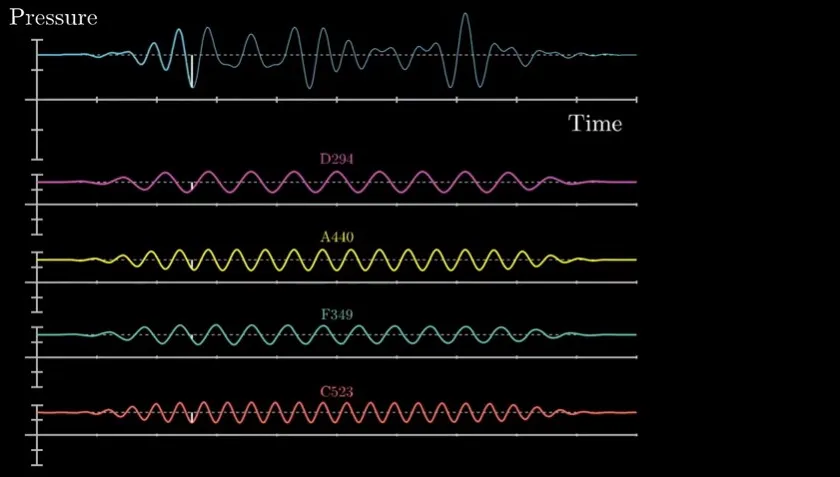
The Fourier Transform is a mathematical procedure widely used in physics that allows a signal to be separated into frequencies. Let's give a simple example:
Let's say you have an audio signal, generated by different air pressure. That signal can be graphed over time. Then you have a second audio signal, different. Both signals can be added. They can also be separated. If you obtain the synthesis of both signals, with the Fourier Transform you can separate it into its original frequencies.
This is important in radio astronomy because the signals that arrive from deep space objects to the antennas pass through the atmosphere, where they get "contaminated" with other signals. So if you want to study the original signal, you have to separate the received signal into different frequencies.
Sullivan was interested in applying these methods to study mini-black hole explosions, although he never got to do it. It's that in 1974 Stephen Hawking had published his work on the radiation that bears his name and so astrophysicists were interested in the possibility of detecting Hawking Radiation from black holes.
FROM BLACK HOLES TO THE A4 CHIP
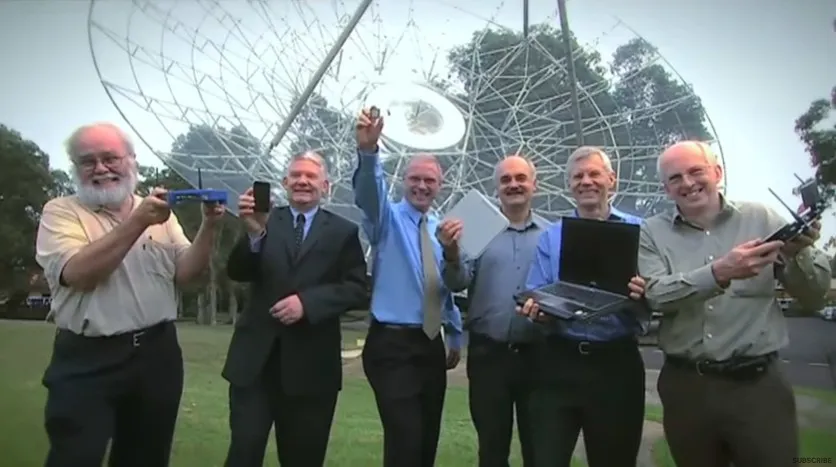
Instead, Sullivan formed a working group at CSIRO, together with Graham Daniels, John Deane, Diethelm Ostry and Terry Percival with whom he developed a microchip that used the Fourier Transform to solve a technical problem in wireless communications.
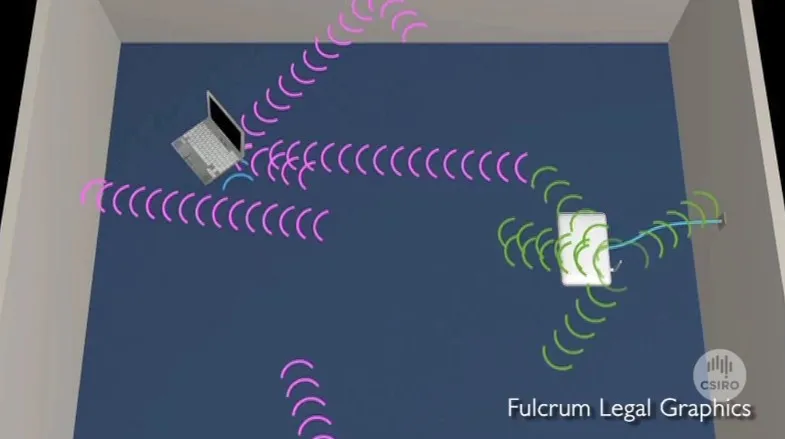
The problem was the "echo" or interference of a signal with the environment. When emitting a signal, it bounces off surrounding objects and arrives at the receiver "mixed," with a lot of noise. One way to deal with the issue is to divide the signal into parts and assign it a different frequency, so that each one travels in a different lane and they do not interfere.
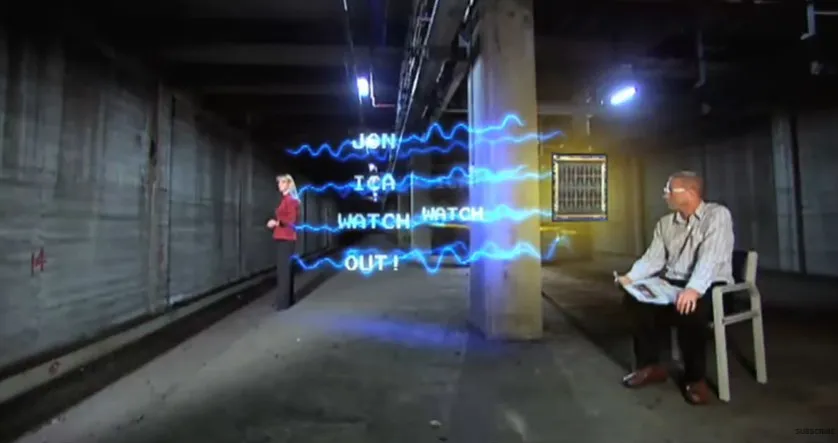
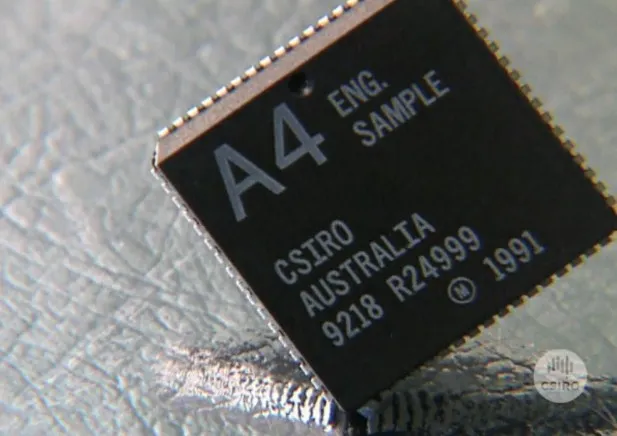
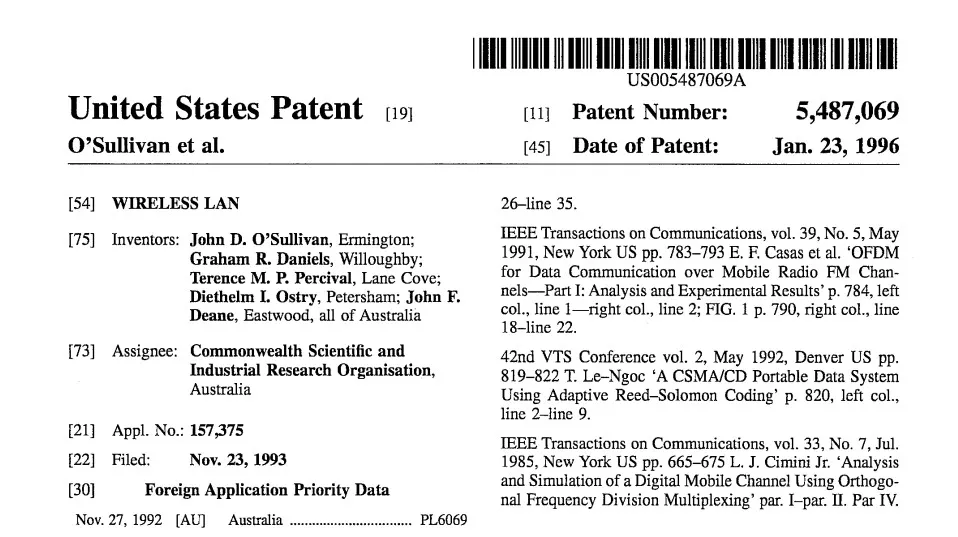
Sullivan and his group managed to build a chip that worked that way, called A4. According to CSIRO and Google, a patent was filed in 1992. Finally, it became an IEEE standard, which is now known as Wi-Fi.
CONCLUSION
Sullivan had no idea what he might achieve in the future with the application of the Fourier Transform to signal reception, in 1977. Nor could anyone else imagine the economic consequences of that development. If investment in science had depended on a technocrat based on the supposed "return," Sullivan would have received nothing.
There are several open problems, like the Collatz Conjecture. What practical use could its eventual proof have? Chi lo sa? It serves to know more. And we want to know because we can; because we are not snails, snails!
It is important to increase GDP and exports. But first you have to import knowledge, not from other countries, but from Nature, through human work. It makes sense to do it, because the Universe is there.☉
Sources and related links
- John O'Sullivan (engineer)
https://es.wikipedia.org/wiki/John_O%27Sullivan_(ingeniero) - John O’Sullivan
https://csiropedia.csiro.au/osullivan-john/ - CSIRO achievement Wireless LANs.
https://csiropedia.csiro.au/wireless-lans/ - CSIRO Medals 2009 – Chairman’s Medal – Wireless LAN Research Team
https://csiropedia.csiro.au/csiro-medals-2009-chairmans-medal-wireless-lan-research-team/ - CSIRO Medals 1992 – Research achievement – Fast Fourier Transform Technology Team
https://csiropedia.csiro.au/csiro-medals-1992-fast-fourier-transform-technology-team/ - The story of Wi Fi
https://www.youtube.com/watch?v=esA9YhdgvIg&ab_channel=ABCScience - The Strange Origins of Wi-Fi – An Australian Invention?
https://www.youtube.com/watch?v=McbsxihcQS0&ab_channel=ColdFusion - Wireless LAN
https://patents.google.com/patent/US5487069A/ - Image sharpness, Fourier optics, and redundant-spacing interferometry.
https://ui.adsabs.harvard.edu/abs/1977JOSA...67.1122H/abstract - Winner of the European Inventor Award 2012 in the category Non-European countries
https://www.epo.org/news-events/events/european-inventor/finalists/2012/osullivan.html - Bringing WiFi to the world
https://www.csiro.au/en/research/technology-space/it/Wireless-LAN - What is the Fourier Transform? A visual introduction
https://www.youtube.com/watch?v=h4PTucW3Rm0&ab_channel=3Blue1BrownEspa%C3%B1ol