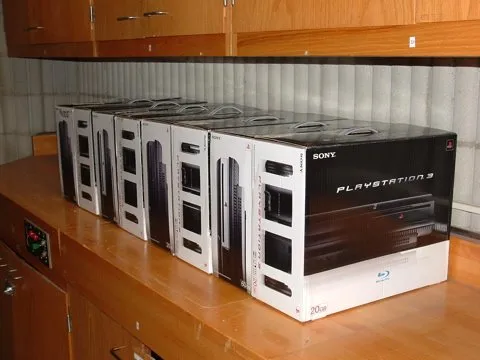
Scientists hope that a new supercomputer to be built by the Department of Physics at Syracuse University (SU) could help them identify the sound of a black hole. The supercomputer was nicknamed SUGAR (acronym for SU Gravitational and Relativity Cluster. The word sugar means sugar in English). SUGAR will soon receive a massive amount of data from the California Institute of Technology (Caltech) that was collected over a two-year period at the Laser Interferometer Gravitational-Wave Observatory (LIGO).
Gravitational waves are produced by violent events in the distant Universe, such as the collision of black holes or supernova explosions. The waves travel across the Universe at the speed of light. Although Albert Einstein predicted their existence in 1916 in his General Theory of Relativity, it took decades to develop the technology to detect them. The construction of LIGO was completed in 2005. Recently scientists concluded a two-year scientific test of the detectors.
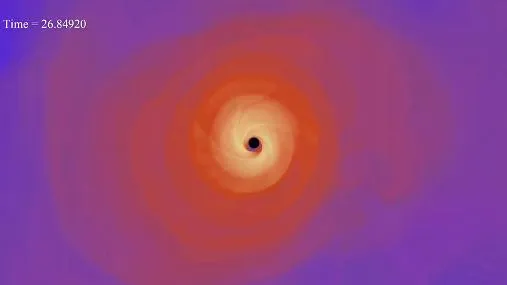
Before being able to isolate the sound of a black hole from the LIGO data, scientists must imagine what such an object would sound like. Working with colleagues from the Simulating eXtreme Spacetimes (SXS) project, SUGAR and Einstein's equations will be used to create models of gravitational waves from black hole collisions. SXS is a collaborative project with Caltech and Cornell.
Black holes are massive gravitational fields in the Universe that result from the collapse of giant stars. Since black holes absorb light, they cannot be studied using telescopes or other instruments that rely on light waves. However, scientists believe they can learn more about these objects by listening to their gravitational waves.
In reality, with current instruments, it is possible to study these cosmic creatures, but indirectly, through the disturbances they generate in nearby stars and the jets of matter they expel. What is now proposed is another complementary form of study.
Duncan Brown, a member of the Gravitational Wave Group at Syracuse University, who is assembling SUGAR, says: "Searching for gravitational waves is like listening to the Universe. Different kinds of events produce different wave patterns. We want to try to extract a wave pattern—a special sound—that matches our model, from all the noise in the LIGO data."
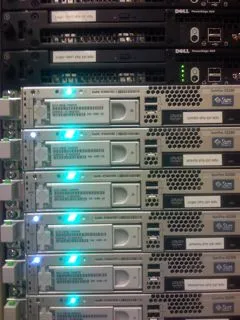
Massive amounts of computing power and data storage are needed to analyze the data against the wave models. SUGAR is a collection of 80 computers, with 320 CPUs of power and 640 gigabytes of RAM memory. Oh, and it has 96 Terabytes of disk space to store the data (!!!!).
A dedicated high-speed optical network is also needed to transfer the data between Caltech and SU. To achieve this, SU in collaboration with NYSERNet created a special path for LIGO data on the high-speed fiber optic network that crosses the United States.
Both the supercomputer and the network are expected to be running by the end of February. Once the data is transferred, Brown and his colleagues will be listening to the "cosmic symphony."
The scientist reflected that "We have never seen Einstein's Theory in this form."
Sources and related links
- *EurekAlert:Listening for the cosmic symphony: New SU supercomputer will help scientists listen for black holes
- *SU:Listening for the cosmic symphony: New SU supercomputer will help scientists listen for black holes
- *LIGO Scientific Collaboration
About the images
Photo of the SUGAR Group on the page The Syracuse University Gravitation and Relativity (Sugar) Computing Cluster