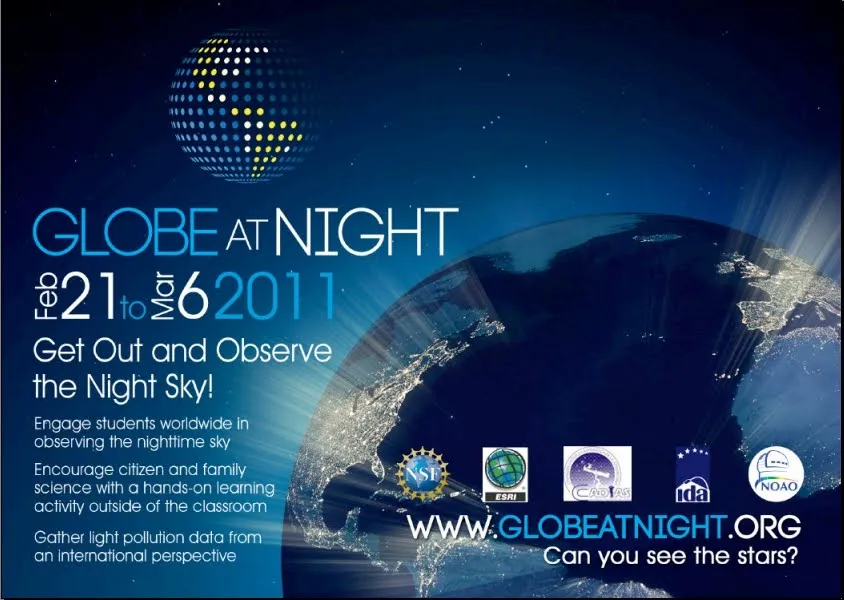
From October 20 to November 3, 2008, Windows to the Universe is organizing a worldwide event designed to raise awareness about the night sky and to encourage people to learn astronomy.
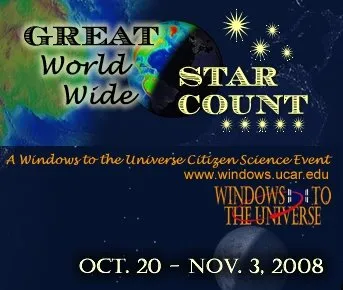
This international event invites everyone to observe the night sky and count the number of stars they see in certain constellations, and report their observations online.
During the inaugural event in 2007, more than 16,000 people from 64 countries and all 7 continents participated in this campaign that measures light pollution globally.
The star count was designed to raise awareness about the night sky and to encourage people to learn astronomy.
At the end of this event, a map will be published showing the results of this citizen science campaign.
The second Great Worldwide Star Count will take place from October 20 to November 3, 2008.
Instructions in Spanish:
http://www.windows.ucar.edu/citizen_science/starcount/GWWSC2008_ActivityGuide_SPANISH.pdf
For more information see:
www.windows.ucar.edu/starcount
When?
Any night between October 20 and November 3, approximately one hour after sunset.
For inhabitants of the Northern Hemisphere, they are asked to observe a part of the Constellation Cygnus, specifically "The Northern Cross".
For those living in the Southern Hemisphere, they will observe "The Teapot" in the constellation Sagittarius.
After the observation, a report must be filled out with the date and time, which constellation was observed, and the observed magnitude.
To determine the magnitude, there are materials on the site, including a pdf guide that indicates how many stars would be visible for each magnitude.
The site also provides an interactive tool that allows visualizing graphs of the different magnitudes and practicing observation.
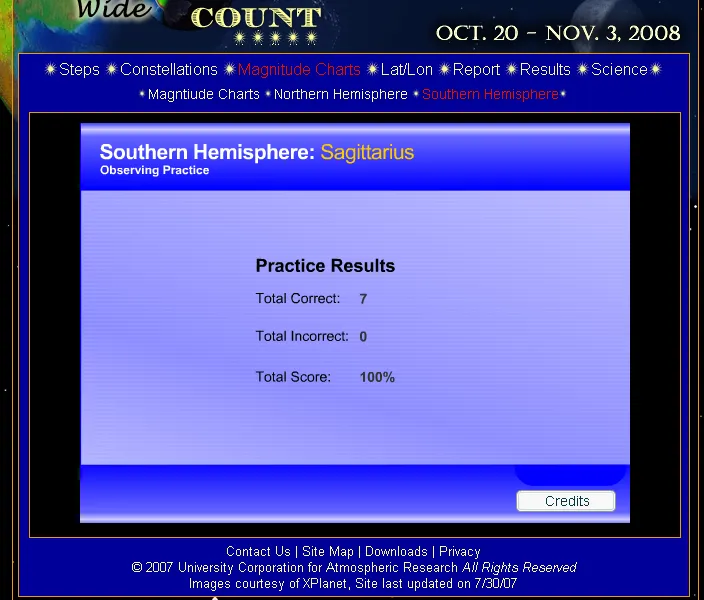
In this way, according to the stars we see, we can indicate the magnitude.
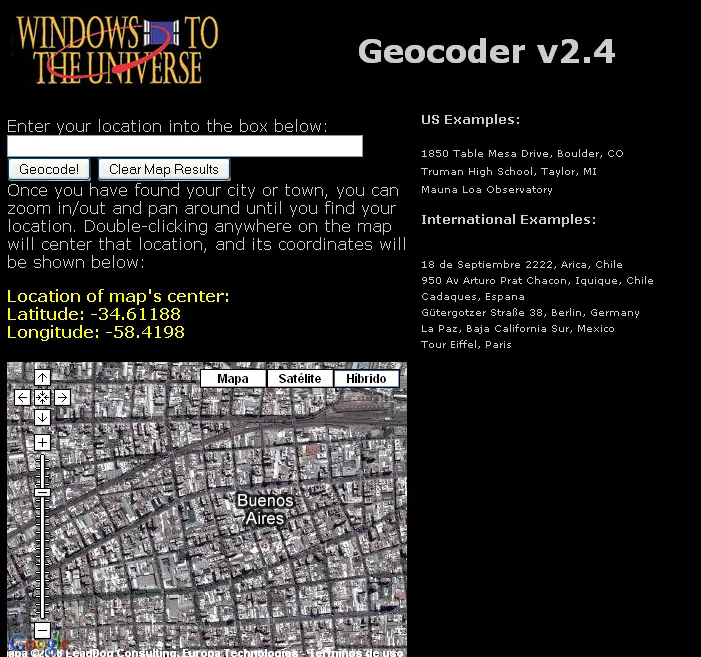
It will also be necessary to report the latitude and longitude from where the observation was made. For that, the same site has a locator, called Geocoder, using Google Maps technology.
Sources and related links
- Windows to the Universe: Star count
About the images
Credit: Windows to the Universe