Where does space begin? According to new data collected and analyzed by scientists, the frontier between Earth's atmosphere and outer space is located 118 km above sea level.
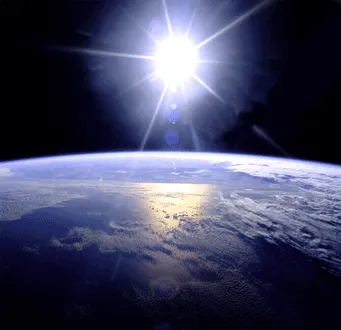
Scientists from the University of Calgary created an instrument that allows determining the transition between the relatively gentle winds of the Earth's atmosphere and the more violent flows of charged particles in space. The data confirm that space begins 118 km from Earth.

The instrument, called Supra-Thermal Ion Imager, was launched on January 19, 2007. It traveled to an altitude of 200 kilometers above sea level and collected data during the five minutes it moved through this zone. The ability to collect data in that area is significant because it is very difficult to take measurements in that region, which is too high for balloons and too low for satellites.
"It is only the second time that direct measurements of charged particle flows have been made in this region, and the first time that all the ingredients, such as upper atmospheric winds, have been included," said David Knudsen, a professor of physics and astronomy at Calgary.
According to the scientist, the results allowed them to take a closer look at space, which is a benefit for space science research. But it also allows them to calculate the energy flows in Earth's atmosphere that could help understand the interaction between space and our environment. This would mean a better understanding of the relationship between sunspots and our planet's climate and about how space weather affects communication and power systems on Earth.
Sources and related links
- Rocket‐based measurements of ion velocity, neutral wind, and electric field in the collisional transition region of the auroral ionosphere
Sangalli, L., D. J. Knudsen, M. F. Larsen, T. Zhan, R. F. Pfaff, and D. Rowland (2009)
J. Geophys. Res., 114, A04306, DOI:10.1029/2008JA013757 - EurekAlert:Scientists pinpoint the 'edge of space'
About the images
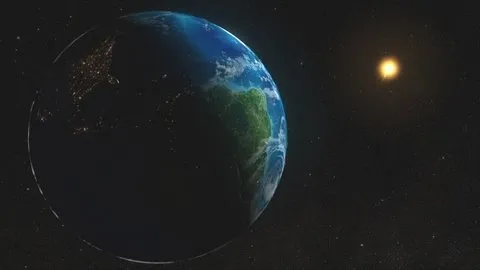
Planet Earth. Credit: NASA
Layers of Earth's atmosphere (Not to scale):Wikipedia