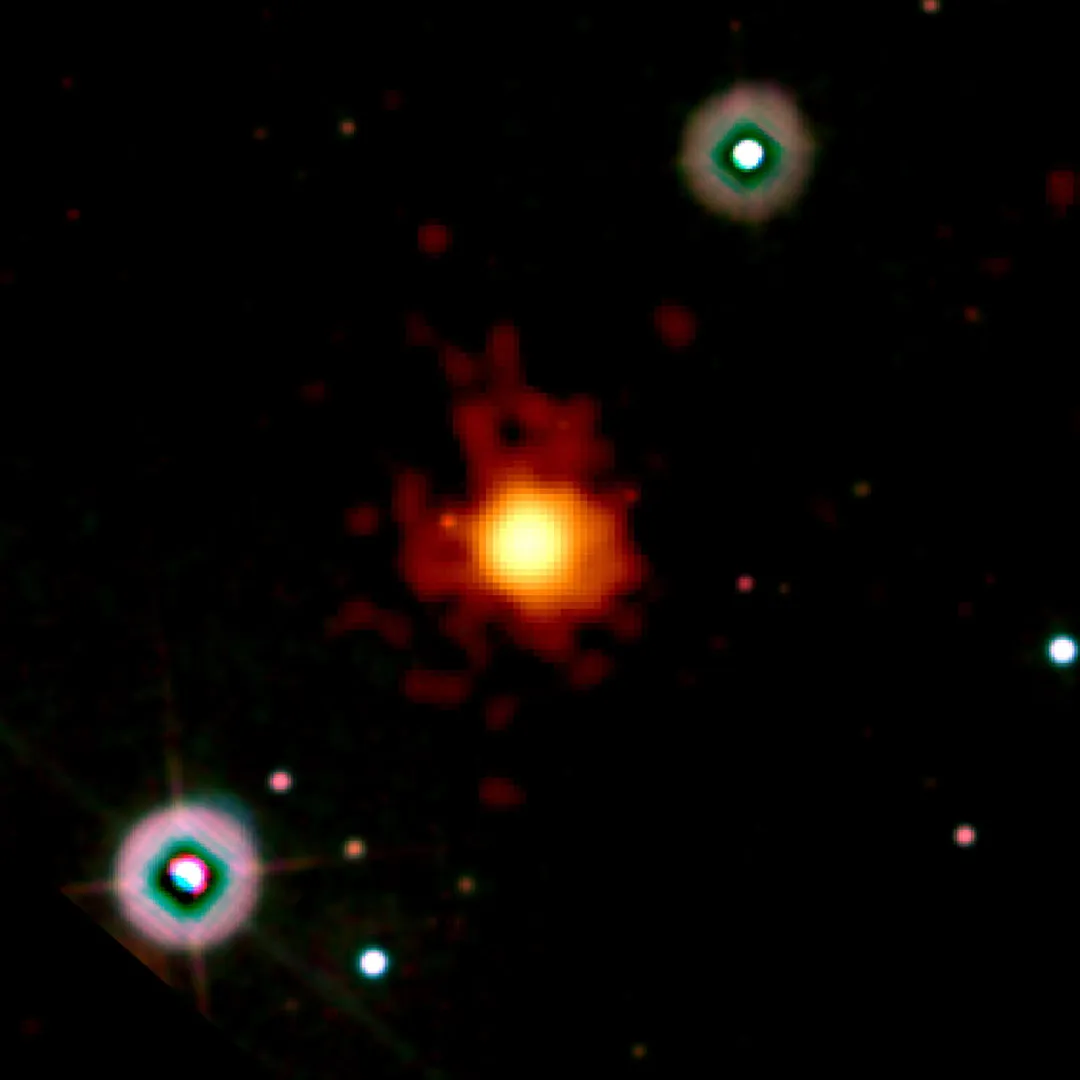
What happened in the first trillionths of a trillionth of a trillionth of a second after the big bang? That's what the super sensitive microwave detectors that will be part of a new experiment in Chile will try to find out.
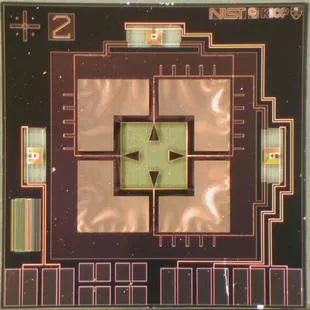
The new sensors were described at the meeting of the American Physical Society (APS) in Denver. They were created at the National Institute of Standards and Technology (NIST) for an experiment in collaboration with several universities.
The detectors will search for subtle "fingerprints" in the cosmic microwave background radiation (CMB) from gravitational waves produced by the violent birth of the universe, more than 13 billion years ago. Those waves, it is thought, would have left a weak but unique imprint on the direction of the electric field of the CMB, called "B-Mode Polarization".
If found, these waves would be the clearest evidence in favor of the inflation theory, which suggests that the entire observable universe today expanded rapidly and exponentially from a subatomic volume.
The data could also help scientists better understand universe models from string theories and other physics theories.
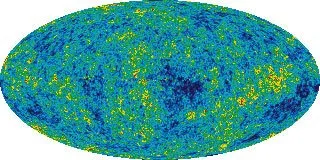
Recent CMB measurements focused on measuring the temperature variations that existed 380,000 years after the big bang. These radiation patterns allowed scientists to characterize the early distributions of matter and energy that evolved into today's stars and galaxies.
In contrast, the new detectors are designed to measure not only temperature but also polarization. These signals are much harder to detect as they are more than a million times weaker than the temperature signals.
To achieve their goal, the detectors will collect significant amounts of radiation efficiently, and will be free of moving parts and traditional sources of systematic error, such as vibrations and magnetic interference, according to Kent Irwin, a NIST physicist leading the project.
Another project had been started with the same purpose. It was CLOVER, a project of UK universities consisting of two telescopes. However, the Astrophysics site of the University of Oxford recently indicated that the project was canceled by the Science and Technology Facilities Council (STFC). The Sky Polarization Observatory project, from the Italian space agency, was also canceled due to its dependence on the space shuttle.
Let's hope the same doesn't happen in this case, and that the new experiment begins, as planned, in approximately a year, in the Chilean desert. However, it is not the only project that will be able to make measurements of this type. Next May 14th is scheduled for the launch of Planck, the first European mission to study the CMB. Other related projects are EBEX, PolarBeaR and QUIET, a project that brings together collaborations that made CMB measurements.
Sources and related links
- EurekAlert:NIST super-sensors to measure 'signature' of inflationary universe
- Phisicsworld:It’s all over for Clover
- What Happened In The First Trillionth Of A Second After The Big Bang? Let's Look Back In Time And See
- The polarization of the cosmic microwave background
About the images
Map of anisotropies of the cosmic microwave background radiation obtained by the WMAP satellite.
Credit:NASA / WMAP Science Team
Micrograph of a NIST prototype detector that will be used in the search for b-mode polarization. Cosmic radiation will be received by two antennas in the middle of the detector that will separate the radiation into two different polarization directions at a frequency of 145 gigahertz. Finally, the radiation from each polarization will be converted into heat by sensors that will measure the energy using a superconducting metal that changes resistance in response to heat.
Credit:NIST