The imminent retirement of NASA's space shuttles started a competition for transportation of that kind, capable of sending cargo to the International Space Station. In a few days a new Japanese vehicle will be launched toward the ISS.
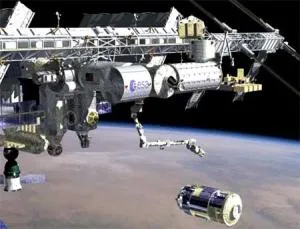
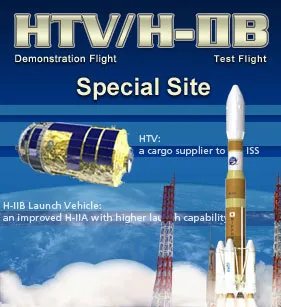
The latest unmanned vehicle is a work of the Japanese Agency JAXA, called H-II Transfer Vehicle or HTV and offers varied new capabilities.
Unlike previous unmanned spacecraft that docked automatically or under human control, HTV stops next to the ISS and is taken by a robotic arm that brings the vehicle to the Harmony module.
The advantage of this system, according to Masazumi Miyake, a JAXA spokesperson, is that HTV does not need an elaborate guidance and docking system and thus space is freed up for payload.
Furthermore, the vehicle has separate compartments for pressurized and unpressurized cargo, allowing astronauts to unload goods like water, food and laptops from the pressurized section more easily.
The other section can host racks for experiments and equipment designed to be outside the ISS. That equipment can be removed from HTV by the robotic arm and installed on the Kibo platform, the Japanese laboratory on the ISS. Two of the experiments on HTV's first flight will be atmospheric devices to monitor the chemistry of the ozone layer.
The options of the star fleet
Unmanned missions to space stations, the current ISS and the defunct MIR, have been carried out by the veteran Russian spacecraft Progress, a version of the Soyuz capsule.
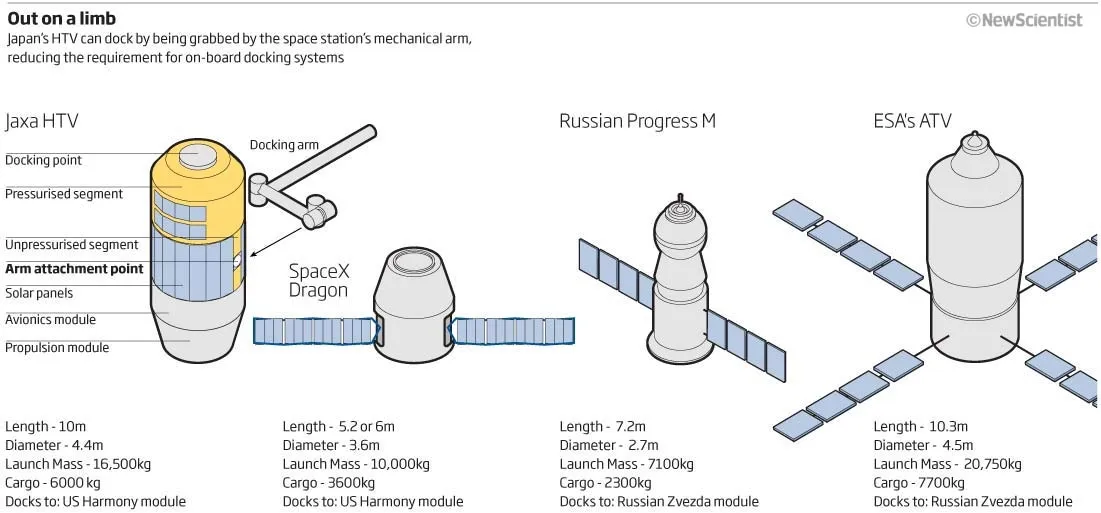
Last year another alternative emerged with the successful flight of the European Space Agency's ATV spacecraft to the ISS, carrying three times the cargo of the Progress vehicle. These two spacecraft, Russian and European, dock to the Russian Zvezda module of the ISS.
The third option that Japan brings, on the other hand, will dock to the American Harmony module.
Cosmic garbage barges
These spacecraft carry their payload and then become giant garbage barges. When they are filled with waste from the ISS, they are removed and burn up upon entering the atmosphere.
A less wasteful option is SpaceX, the civilian spaceflight firm, which has won a contract with NASA to send cargo to the ISS. There would be 12 resupply flights between 2012 and 2015. And the upper capsule of SpaceX's new spacecraft, Dragon, which resembles the Apollo spacecraft, is recoverable.
Last week, SpaceX's program took a step forward, by supplying NASA with a UHF radio system that will allow Dragon to dock with the ISS.
But JAXA also plans for an upgrade to HTV to turn it into a reusable vehicle.
The launch of HTV is scheduled for the 11th of this month (in three days) and it can be seen online from the JAXA site, aboard a launch vehicle that has never flown before (and the record of successful first flights is poor).
Promotional video of HTV/H-IIB http://www.youtube.com/watch?v=ShGS4_UkdzY
And more on the JAXA on Youtube channel
Sources and related links
- NewScientist: Cargo spaceship meets the catcher in the sky, by Paul Marks
About the images
- Illustration of HTV approaching the ISS. Credit: JAXA
- Comparison between HTV, ATV and Progress. Credit: NewScientist
- Image of HTV/H-IIB Credit: JAXA