Recently, the astronomer who helped improve Wi‑Fi technology was awarded. At the same time, a report published on Monday indicates that the proliferation of wireless networks significantly affects radio astronomy.
On October 28, John O'Sullivan of the Commonwealth Scientific and Industrial Research Organisation (CSIRO) was awarded the Prime Minister's Prize for Science in Australia. It's because when we use a wireless network at home or the airport, we use technology born from the work of this engineer and radio astronomer. In 1977 O'Sullivan was co-author of a paper about the use of a set of equations known as Fourier transforms to improve optical images distorted by the atmosphere. These equations are key in digital signal processing and their use allows canceling noise in the data. The researcher developed the technique while searching for radio waves emitted by black holes. But the consequences of that work allowed us to cut the cables and free ourselves from what tied us to the desk and turned laptops into ubiquitous tools.
Paradoxically, a report on spectrum management for science in the 21st Century points out that interference from wireless devices hinders the collection of signals in radio astronomy.
The warnings come from a work published by the Committee on Scientific Use of the Radio Spectrum, of the National Research Council of the United States.
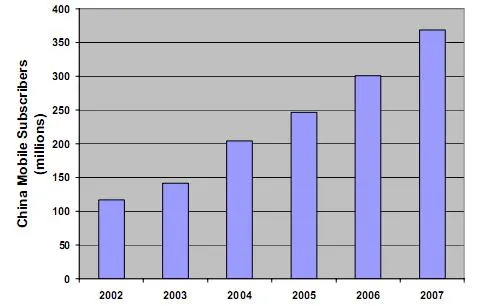
The use of the spectrum for astronomical observations is regulated by a complex system of national and international rules, but the recent explosion of wireless technology is challenging engineers' abilities to mitigate unwanted interference from active services (cellular telephony and Wi‑Fi networks) and the rules have not evolved with the technology, the report notes.
The Research Council makes two recommendations:
That the Department of Commerce and the Telecommunications Agency work with the National Science Foundation (NSF), NASA and the Atmospheric Administration (NOAA) to develop a spectrum valuation system that can handle radio waves based on the spatial and spectral density of emitters.
And that these same organizations develop technology that filters or modulates unwanted signals to protect the radio emissions studied by radio telescopes and geoscientific instruments from being "stepped on" by stronger signals.
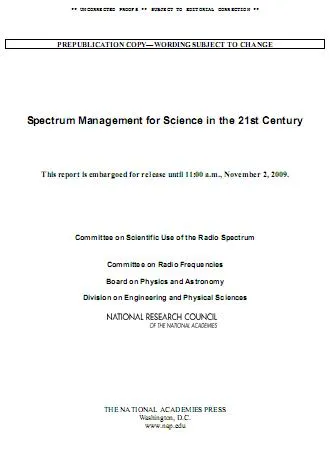
"The committee chose to consider only the passive scientific applications of the radio spectrum and, specifically, to analyze how spectrum requirements might evolve over the next two decades. The decision does not imply prioritizing passive over active use of the spectrum, but stems from the committee's recognition that passive users have unique tasks to accomplish, as well as limited time to complete them," states the introduction of the report.
The text has 5 chapters, in which it develops an introduction; the use of Earth exploration satellite services; the radio astronomy service; Technology and Opportunities to mitigate RFI (Radio Frequency Interference); and a final chapter with recommendations; plus several appendices.
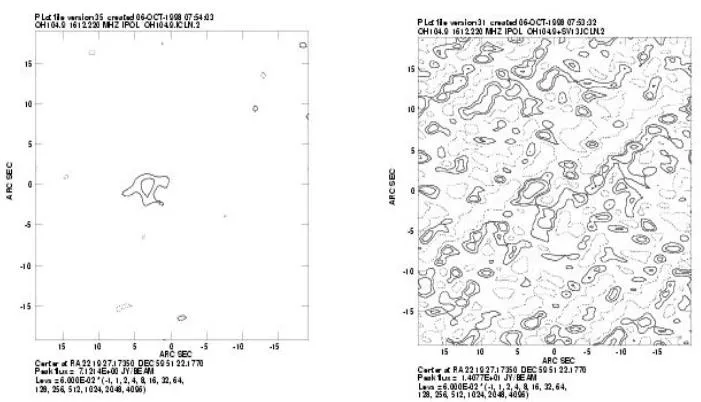
Example of interference in a protected band
The third chapter addresses interference and indicates some examples of the "noise" generated in an antenna when an Iridium satellite passes.
Radio astronomy, by TV
After the analog switch-off in the U.S., the skies of that country are cleaner than usual, as a segment of the radio spectrum has been freed. But that space will be filled again in a short time by cell phone and internet companies. Meanwhile, astronomers have a "new window" to spy on the universe.
Before the change, radio waves in frequencies between 700 and 800 megahertz were occupied by analog TV signals, preventing astronomers from investigating the cosmos through that band. Now, a receiver has been installed at the Arecibo Observatory in Puerto Rico, to take advantage of that space.
The band allows astronomers to have their first views of galaxies that were thriving when the universe was half its current age and they hope to be able to measure how much hydrogen galaxies had back then. "It's a once-in-a-lifetime opportunity, to see galaxies in this range," said researcher Chris Salter. "We are able to see an epoch that has not been observed before with radio eyes," Salter explained to New Scientist.
The new window could also help hunt pulsars: neutron stars that emit beams of radio waves from their poles. In this part of the spectrum, those beams are easier to observe. This boosts the possibilities of seeing exotic stars, according to Duncan Lorimer of West Virginia University. Together with his colleague Mitch Mickaliger they hope to find a pulsar orbiting a black hole.
But this opportunity will not be open forever. Much of this band has already been allocated and astronomers at Arecibo might have only a year of clear skies, said Donald Campbell of Ithaca University.
Sources and related links
- Scientific American: Wireless tech taking a toll on Earth science and astronomy, by Larry Greenemeier
- 2009 Prime Minister’s Prize for Science
- Odisea Cósmica: The astronomer inventor of Wi‑Fi receives award
- WiFi in the Sky
- Spectrum Management for Science in the 21st Century
at National Academies Press - Committee on Scientific Use of the Radio Spectrum;
Committee on Radio Frequencies;
Board on Physics and Astronomy (BPA)
Engineering and Physical Sciences (DEPS);
National Research Council
ISBN-10: 0-309-14686-0
ISBN-13: 978-0-309-14686-9
Note: For visitors to the NAP site, coming from developing countries, they should be able to download the PDF, free - NewScientist: TV switch-over triggers rush to see rare stars, by Rachel Courtland
About the images
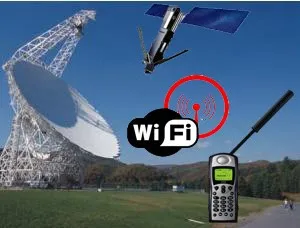
- Composite image "Radio astronomy and Wi‑Fi". Contains a photo of the Robert C. Byrd Green Bank Telescope (GBT). Credit: NRAO / AUI / NSF
- Cover of the report, Iridium RFI graphic and Mobiles in China. Credit: Committee on Scientific Use of the Radio Spectrum