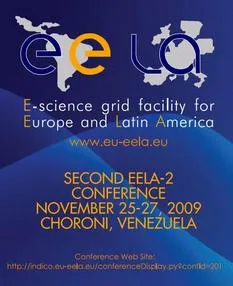
Between November 25 and 27, researchers from Latin America and Europe met in Venezuela for the second EELA-2 conference, a project to promote grid technology on these two continents.
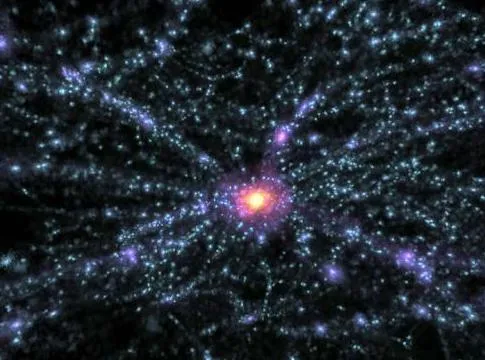
GRID technology connects hundreds of large computers so they share not only information, but also computing capacity and large storage spaces and also the availability of software and tools necessary for the user interface to be interactive.
These networks allow sharing resources and information between different institutions.
Funded by the European Commission, the EELA-2 project (E-science grid facility for Europe and Latin America) began four years ago and is a high-capacity, production-quality grid. It uses the CLARA and GÉANT2 networks to create a digital bridge between Europe and Latin America.
At the 2nd conference there were 13 posters plus over 45 presentations (with eight invited talks) covering various topics, including the proposal of GISELA as a grid initiative for virtual communities on these two continents.
For Verónica Uribe and María José López Pourailly in ISGTW, the conference demonstrated that the region has caught up in terms of infrastructure, but to keep up the pace Latin America will need more scientists, researchers and engineers.
The Argentine participants registered at the 2nd EELA-2 Conference were:
Argentine participants
Universidad Nacional del Sur (Bahía Blanca):
Prof. Jorge ARDENGHI and Prof. Javier ECHAIZ
Universidad de Buenos Aires:
Juan Francisco GARCIA EIJO and Dr. Marcelo RISK (nice last name for someone in computing, right?)
Hospital Italiano de Buenos Aires:
Adrián GÓMEZ
Head of the biomedical department
Marcela MARTINEZ
Head of software design
Federico MILANO, Federico
Engineer
LINTI-UNLP
Prof. Lia MOLINARI
LINTI-UNLP
Universidad Nacional de Misiones:
Prof. Eduardo SOSA
Universidad Nacional de Río Cuarto:
Dr. Oscar TAURIAN
The series of conference papers are gathered in the "Proceedings of The Second EELA-2 Conference" which can be accessed from CIEMAT and contain the works:
Towards a Global Sensor Network Interconnection. A German-Argentinean Field Trial
E.O. Sosa, S. Fischer, F.J. Díaz
An automatic femoral distance measurement algorithm on a grid environment
Federico Milano, Lucas Ritacco, Juan Francisco García Eijó, Adrián Gómez, Marcelo
Risk, Fernán González Bernaldo del Quirós, Guillermo Marshall
From November 2 to 6, a tutorial for EELA-2 users was held at UBA
The high-quality internet networks that join the American continent with the European one
The main difference between these Advanced Networks and commercial Internet is that they are reserved for the academic communities of the different countries, so that scientists and technologists can exchange information and communicate in a more agile and effective way. A differentiating technical element of Advanced Networks is the so-called Quality of Service, which in simple terms implies the absence of excessive congestion and failures in communication.
In Argentina: Innova-red
On December 18, 2006, an agreement was signed between the National Secretariat of Communications (SECOM), the Secretariat of Science, Technology and Productive Innovation (SECYT), and the National Council for Scientific and Technical Research (CONICET), by which the INNOVA-T Foundation (an entity linked to CONICET) was entrusted to carry out the necessary procedures to obtain the international connection with the Advanced Networks system, also known as Internet 2, and to take charge of its national operation within the project called Innova|Red.
The Innova-T Foundation is an NGO (Non-Governmental Organization) created in 1993 by CONICET under law 23,877 to develop the following Institutional objectives:
"To promote technological innovation through research and development, the teaching of courses, seminars, chairs, publications and all other teaching and academic activities, technology transfer and technical assistance, as an instrument for improving the productive activity of goods and services." (from the Social Statute)
Launch Workshop of the National Grid Initiative (ING)
Within the framework of the National Systems of Large Equipment and Databases Program, the Secretariat of Scientific and Technological Articulation (SACT) held a meeting on Wednesday 21 and Thursday 22 October 2009 to launch a National Grid Initiative, as a first step towards a National e-Science Program.

Current situation
After the two stages of calls for Equipment Modernization Projects (2003 and 2006), a significant number of computer "clusters" have been set up in Argentina, intended to solve problems that demand extraordinary computing resources. Around these clusters, a community of technicians and users with shared basic knowledge has been generated. The current and developing communication systems through the National Advanced Network INNOVA-RED would allow linking them, generating a computing infrastructure common to the entire national S&T system.
Purpose
To develop a national system integrating these clusters into a computing Grid that allows optimal use of the installed facilities and serves as a basis for developing a National e-Science Plan.
Results
At the launch meeting, five international specialists in the field of cluster integration and Grid development were invited to illustrate the case with their respective experiences. Each gave a seminar followed by a workshop where the guests shared their experiences in cluster management and discussed the Grid architecture that best fits the existing resources and capabilities. From the meeting emerged a series of recommendations that will later be incorporated into the activities of the future Advisory Council of the National High Performance Computing System (SINCAD) which will be in charge of advising SACT on the subject.
The CLARA Network

CLARA is an initiative of the academic networks of Argentina, Bolivia, Brazil, Chile, Colombia, Costa Rica, Cuba, Ecuador, El Salvador, Honduras, Guatemala, Mexico, Nicaragua, Panama, Paraguay, Peru, Dominican Republic, Uruguay, Venezuela, to materialize a Latin American network with advanced characteristics intended for the academic and scientific environment.
Clara will connect more than 700 universities and research centers in Latin America and will stimulate regional cooperation in educational, scientific and cultural activities, in addition to promoting direct integration with Europe. Argentina participates in CLARA through INNOVA|RED
A Christmas gift for Latin America: IGALC
The Latin America – Caribbean Grid Initiative (IGALC) is being born:
www.igalc.org
Sources and related links
About the images
- Group photo from the 2nd EELA-2 Conference. Credit: EELA-2 Group on Flickr
- EELA-2 logo