Following the recent impact on Jupiter, a sort of Pandora's box has been opened regarding possible future changes, which can generate some fear or uncertainty. Here I reflect on how the problem is not only the concept of change, but the method.
First part: prehistory
A: Change does not exist. Organisms never change. They were created in the divine image and likeness.
B: The universe is static. It has been as it is and is as it will be. It is immutable.
C: Life is monotonous in the universe of apes.
Second Part: The instrument
A: Charles readies his ship HSM Beagle to venture into distant waters and lands in search of the unknown.
B: Edwin prepares the most powerful telescope in the world to find missing answers.
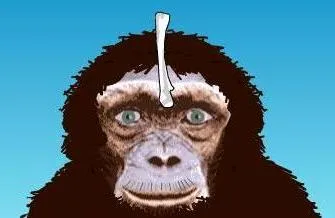
C: An ape discovers that a bone can serve as a tool and a weapon.
Third part: the path
A: Charles compares fossil remains with current organisms, noticing similarities and differences. Could there perhaps be some relationship?, he hypothesizes.
B: Edwin finds that galaxies are moving away from each other. He wonders if the universe is expanding.
C: The monkeys reach space in search of the unfathomable.
Interlude: The weight of mandates
The fable of the monkeys illustrates how some of the ideas we hold arise and the implicit need to re-examine them.
Video with Spanish subtitles of The fable of the monkeys
http://www.youtube.com/watch?v=ouTBOk2eRiU
Fourth part: Ideas
A: Charles believes the world is the stage for a struggle for resources, which the fittest win.
B: If Edwin's universe is expanding, it was denser and hotter before, Lemaitre deduces.
C: The monolith is sighted.
Fifth part: The problem of change
A: While Charles and his successors gather evidence of evolutionary change, others prefer to ignore such evidence and seek other evidence to support the idea of no-change.
B: The universe, despite expanding, could be "steady-state", if matter were created proportionally.
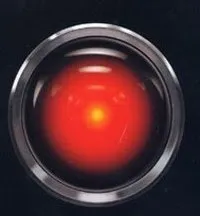
C: Malfunction: the mission is too important to jeopardize.
For a long time I wanted to write something about "imposed ideas" and it had occurred to me to take as paradigmatic examples the theory of evolution of species and the big bang theory.
Regarding the first one, I am reading Darwin 2.0 by Valeria Román and Luis Cappozzo, as well as What is (and what is not) evolution, by María Susana Rossi and Luciano Levin, among other texts.
In that case, as in the big bang Theory debate, what I glimpse in the background, I would say from a philosophical point of view, is that both scientific theories are identified with the idea of change.
Those who oppose these two theories, on the contrary, are usually proponents of ideas of no-change (called Creationism or Steady State in each case).
It goes without saying that I consider valid the "proven" scientific theories over the "whimsical" postulates.
However, in both cases, the theories have their gaps, their different versions, their flaws.
These two great paradigmatic theories revolutionized science and have managed to capture the consensus of the majority of experts in both areas.
As often happens in other areas of society, with David and Goliath, we usually have greater sympathy for the former, for the weaker one, which leads many to oppose the "establishment theories", just for that reason.
This happens, many times, due to ignorance of the history of both statements, which, in their time, were not the most esteemed, but quite the opposite. And that they are now, not by the simple imposition of the number of "followers", but by the preference of scientists to adopt ideas that gather evidence in their favor.
Does this mean that we must then accept without question only the ideas agreed upon by the majority and discard the others?
In my opinion, there are two positions regarding the question. I am one of those who think not, absolutely not. I believe in keeping hypotheses open, while continuing to search for evidence in their favor.
Others, however, assume that responding in this way is opening a Pandora's box, so they prefer to flatly refuse.
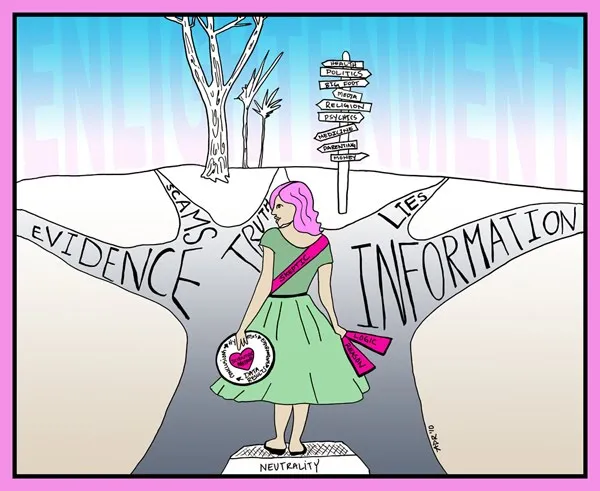
In my view, absolute denial only brings anger and suspicion from those who think differently, leading us to scenarios of quasi-warlike confrontation, in which only the ends matter and not the means. On the other hand, blindly believing something - anything - is contrary to the critical spirit, as illustrated by the fable of the monkeys.
I do not agree with that position, but it is true that an "intermediate" position effectively opens paths in any direction, distorting the goal of seeking the Truth.
It seems to work like this: if science, with its precise techniques and instruments, is fallible and subjective, its conclusions are not absolute, it can be wrong. Many other things different from those postulated by science can happen. Ergo, anything can happen.
What brings this about
In recent days we have been learning about a new impact on Jupiter, which adds to last year's and that of comet Shoemaker-Levy 9 in 1994.
In the story at the beginning, the inclusion of references to 2001: A Space Odyssey is no coincidence.
In light of reasonings like those mentioned above, I have received inquiries that seem to arise from the idea that those phenomena on the gas planet are the beginning, the announcement of greater changes to come.
Scientific theories are perfectly aware of the existence of change, but the idea is precisely to understand how and why those modifications arise, within a framework regulated by certain procedures.
There are, then, at least three lines of thought related to change:
Those who disbelieve in it, under some mystical conception.
Those who openly believe in change to the point of accepting that any change can occur, based on popular stories or other non-scientific sources.
And those of us who accept change as part of nature and, therefore, it is possible to quantify it, observe it, measure it, detect it, with the aim of understanding how it occurs, for what causes and under what conditions.
Ultimately, of the three lines, we can synthesize, if I may, into two:
Those who accept supernatural phenomena as causes.
Those of us who accept only natural phenomena as causes.
There have been other impacts on Jupiter before and there will probably be more in the future.
Earth has also witnessed a turbulent past and our Moon attests to it with its craters.
That asteroid and comet impacts on Jupiter have left "scars" as large as the Moon's diameter is as true as the fact that the gas colossus is 300 times more massive than our pale blue dot in space.
That the idea that the Moon may have arisen from a large body's impact with Earth, thus altering this place in the Solar System, has been postulated as possible, does not mean that the June 3 impact will alter Jupiter's system in such a way.
The idea also circulates that if one speaks of an "impact," it implies that Jupiter is not a gaseous body, as we were taught. Phil Plait seems to get similar questions on the matter.
Pandora's box is easy to close here as well: when a large rock on Jupiter does so at a high speed (even more than 80 km/s), it runs headlong into the air and the enormous pressure, which violently compresses the gas and heats it up. The rock moves more slowly, converting its motion energy into heat, breaking apart into several smaller pieces that burn up in the atmosphere. As this happens very quickly and a lot of energy is released, it can be understood as an explosion, which can be equated, according to the rock's mass, to the energy released by thousands or hundreds of thousands of atomic bombs. That is commonly called an impact.
Comparing those phenomena with our planet would lead one to think that here the event would be catastrophic. It would surely cause very serious damage, but here, besides being on a much smaller object than Jupiter, we have life and organized life. It would truly be a catastrophe due to the loss of human lives (also of animals and plants) and due to the other consequences on climate, geology, economy, etc.
Those consequences cannot be applied to Jupiter, certainly.
To conclude, the same Pandora's box gives rise to the idea that this is a warning or sign of what will happen in 2012. It seems that some see in this recent impact (together with the one from the previous year) a rapid growth of these events as an alert of what is to come.
Science not only does not rule out the use of forecasts, in a way it is based on predictions. A hypothesis must be predictable. However, those ways of glimpsing the future are based on theoretical models and evidence.
Making any kind of prediction, based on any kind of argument, lacks support.
If I wanted to know if it will rain tomorrow, I would not look for the answer in a sacred book or in the revelations of who knows who. I would surely be guided by weather forecasts, which arise from the systematic study of different climatological variables that are understood and followed over time. It is not 100% certain. The "simple" three-body problem warns us of systems very sensitive to small changes and their initial conditions. But that it is not completely certain does not then allow one to say anything.
We must reexamine what we think with a critical spirit. We have been educated with different mandates, like the monkeys in the fable. That this reflection allows us to "open our brains" does not mean we should do it to the point of letting them fall to the floor.
It is very good that we are critical of consensus ideas. After all, science is fallible, we human beings are. But not with the concept that the end justifies the means. Critical thinking is not such if the methodology is not rigorously logical, based on the observation of natural phenomena.
2001: A Space Odyssey and its sequel 2010: The Year We Make Contact, are Stanley Kubrick films based on the novels by Arthur Clarke. Although in both there are elements very linked to science, there are also others not related at all. At the end of the first, the message seems to be that the human being evolved with a great dependence on instruments or machines, until they failed and we were left with nothing. The essential thing, it would seem to suggest, was to recognize that we are body and soul.
In the second, the planet Jupiter is transformed into a small star, through the accumulation of monoliths from a superior civilization, which generates an alteration that ends with the creation of Europa.
That just in 2010 there is another impact on Jupiter may seem, in that context, significant. I repeat, it is a fiction film. The label of science-fiction is given by elements that are indeed scientific. These latter ones are not. There is nothing "special" about the recent impact, beyond the astronomers' own interest in discerning its origin and cause and, perhaps, some perturbation of Jupiter's climate.
Final questions
When I refer to Pandora's box, I am referring to those who postulate "supernatural" ideas or concepts, that is, those who appeal to non-observable, non-falsifiable, non-empirical phenomena, as revealed truths. When those same phenomena are posed as hypotheses, things change.
Those supernatural ideas are often associated with a certain sense of life. There is a soul, there is a "beyond" (call it heaven, parallel dimensions, alien civilizations) to aspire to, which is better than the "here and now".
We all have some aspiration for transcendence and seek to find meaning in our daily journey. Is it not possible to find meaning in life using only natural phenomena?
Is it necessary to believe in spirit or soul - impossible to prove so far - to understand that by tying ourselves only to technology we are nothing?
Is it necessary to postulate that advanced alien civilizations visit us and gift us the pyramids or something similar, to understand that we have made limited use of our capabilities?
I allow myself to answer that no, that no supernatural postulate is needed to understand the value of solidarity, collaboration, altruism, generosity. Of caring for the environment. That it is possible that, together, we achieve greater social well-being, more just and equitable.
No "force" need accompany us, other than the common good and our rationality.
Sources and related links
- About 2001: A Space Odyssey, there is a website (it works with flash) with an interpretation of the film.
Note: the site first checks that we have Flash installed and takes a few seconds. It may show an error page. If we have Flash, we reload the page and that's it. The site is in Spanish, besides other languages.
Kubrick 2001 - Astroseti: New impact on Jupiter
About the images
- Images from 2010: The Year We Make Contact.
- Image of ape with tool from Kubrick2001.com