Since we believe there is no single frame of reference to which to relate and compare everything, but rather multiple contexts and circumstances, the idea of relativism arises. What value is there in there not being a single truth, but several? What are the limits of this?
One of the most interesting recent web creations is 13.7 Cosmos and Culture, a collaborative blog I have already cited several times here. Its authors are astrophysicists and biologists who talk about the "beyond" of science. That beyond is the frontier between science and philosophy. Their articles have solidity and depth, although they are not submitted to a publication with peer review like papers. Although readers, with their comments, enrich the content.
I want to refer to two posts from that blog:
The blog has been discussing the interference of science in morality and, ultimately, what science is and what it represents. In the post "On the Laws of Nature and the Nature of laws", Marcelo Gleiser talks about the Laws of nature: are they out there and discovered by scientists or are they a way in which human beings interpret reality?
It seems the theoretical physicist agrees more with the latter. We observe patterns in Nature, from the smallest to the largest. Some are related to symmetries, which can be expressed mathematically.
However, Gleiser says, when a physicist says "energy is conserved," they only "know" it is a fact within their measurement precision. As tools advance, their measurements improve over time, but they are always limited to a certain precision. As a consequence, the author says, we cannot turn the expression "energy is conserved" into an absolute statement.
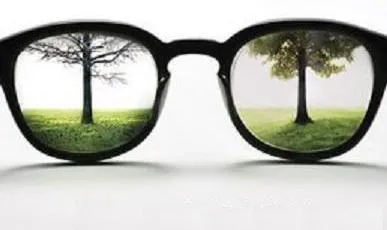
From this pragmatic perspective, he points out, absolute statements do not exist, even in the context of physics. We build models to describe, as best we can, the reality we are capable of measuring. As humans we are bound to see the world always out of focus. The lenses we invent can make the image a bit sharper, but there will always be missing details (more or less important) here and there.
We cannot leave this aside. The "human side," imperfect, imprecise, will always be there, despite attempts to make science as objective as possible.
If intelligent extraterrestrial beings existed and described Nature quantitatively, they would surely arrive at something similar to what we call science, but it will be "their fiction," based on their cognitive abilities. They will have their own eyeglasses to correct their own vision, with a result that may be more precise, but not perfect.
Every potential mind in the Cosmos is bound to its own perspective of things, concludes Gleiser. I don't want to exaggerate, but reading the article I felt something akin to joy. Not the kind that provokes laughter, but a certain inner rejoicing, hard to describe.
While studying to be a systems analyst, with a couple of classmates (José and Alejandro), with whom I had a certain affinity and we talked about things other than algorithms, the topic came up many times.
They don't think the same. José, for example, when I argued in favor of this "relativism," by which it is only partially valid to state things like "The sum of the interior angles of a triangle is 180º," believed that was not true, but that "absolute" postulates did exist.
Certainly there are different ways of seeing the matter:
It is possible to think that even if we don't know with extreme, infinite precision, the value of something, a constant or whatever, that does not mean that something does not intrinsically have a specific measure. Or, said even more simply: relativity lies in the human being, not in Nature.
It is also possible to think that this relativism does NOT exist, when we circumscribe our statements to a specific context. "The sum of the angles..." is a statement that can be understood as "absolute," in the context of plane geometry.
Of course, it's not the only possible geometry, there is no single absolute frame of reference to which to tie our statements. They are dependent on that frame of reference. They are relative, in that sense.
And surely there are frames of reference we are unaware of. Recently I cited Donald Rumsfeld with that thing about "unknown unknowns," what we don't know we don't know.
And we can also understand it by what the relativism I refer to is not. It is not that kind of absolutism by which it is possible to make statements we believe are "perfect," impossible to change an iota, valid always and in every context and circumstance, even unknown ones.
Ergo, stating that such a human statement is absolute, contains a bit of egocentrism.
The history of science, the history of humanity, should have taught us to be more humble. We are no longer the center of the universe, the planets do not revolve around us. It's the opposite. Our vision of the place we occupy does not change overnight. But it's about time, isn't it?
Something beyond
Ursula Goodenough, a biologist and also a contributor to 13.7, on the other hand, writes from another perspective, which also seems interesting to me.
She believes in what can be called a "religious naturalist" perspective, although the term "religious" has a meaning here that does not include rites (nor scripture, nor tradition, nor magisterium).
She says, quoting musician Carl Smith, that there are three types of truth:
-Empirical truth (evolution occurred)
-Consensual truth (it's good to be good to each other)
-First-person truth.
I stop at this last one. It would be the truth that emerges spontaneously, for example, in the creation or apprehension of art.
From what I understood, her thinking is something like this:
Religious naturalists believe in Nature, they do not discard empirical (scientific) truth, but they add that, among the unknown, there may be "something more" to the natural world. Something that perhaps gives them a value or purpose for existing, something that may or may not be related to the natural world we observe daily.
The "beauty" we can find in natural perfection, I think, gives rise to this idea of "something more." Philosophy (and science, as natural philosophy) arises, they say, from wonder, curiosity, and in difficult times (those in which we ask ourselves "why me? what is the meaning of all this?").
What I take from this perspective is also something we could call "relativism": personal truth, which arises from our own unique life experiences, education, socialization process, values, does not have to have the same consensus as morality or empirical conclusions. They are just that, personal.
And although, I at least believe that with only this third truth we would be on the wrong path, its conjunction with the other two, even if it may create an area of contradictions, is valid and expected. Human beings are not electrons. We are different from each other. And this is something to celebrate. The global homogeneity of first-person truths is a very depressing concept, the biologist points out. And I agree.
In no way do I maintain that, since everything is relative, nothing matters. Or as some think, that then everything goes. There is a whole undiscussed discussion in the world's societies on this matter, especially regarding moral issues.
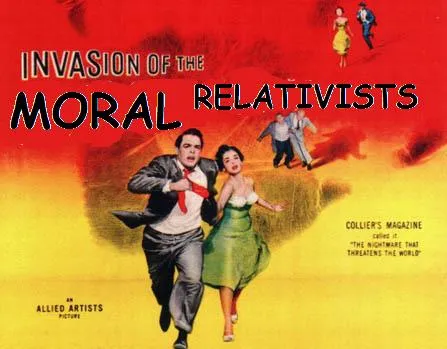
In Argentina, the topic has slipped back into the parliamentary debate to pass a "gay marriage law" and also when discussing lowering the age of criminal responsibility. One even hears talk of "dictatorship of relativism" when concepts like "family" are questioned, as if only one single definition created by whom? should exist.
Relativism, in this framework, enriches, because it allows us to glimpse differences between human beings and take them into account. To assume that only one set of people are "normal," dogmatically, is the same as thinking that the Earth is flat and the planets revolve around us.
The value of science, here, is indispensable. I am more sympathetic to the conclusions of the so-called "hard sciences," more tangible and demonstrable. But as I have already said, people are not photons. Social interaction is also fundamental and the contribution of the other sciences is important, although concepts like "consciousness" seem somewhat obscure and malleable to me.
And, beneath this, are our personal sensations that perhaps allow themselves to go a little further. Not to make extraordinary claims impossible to prove, not to pass laws or conduct experiments, but as a sort of personal feeling, unique and non-transferable. Sometimes it arises when looking into another person's eyes. Sometimes when reading things like these:
3
We carry a sign on our forehead and another on the nape of our neck.
Sometimes it seems to us that ahead is the sign of life and behind the sign of death.
But there are days when the order is reversed.
And there are still other days when we carry the same sign ahead and behind.
In any case, this game proves to us that we exist between two signs or at least within one.
However, another possibility remains:
that it is a matter of no sign and two points of view.
11
My shadow's initiative has taught me to be humble.
It draws me indifferently on the worn-out seats of early morning trains, on the seamless walls of cemeteries, or in the penumbra of the shortcuts that betray the city.
The frame does not matter, nor do the crippled captions.
My shadow contradicts me at every step, misleads me in the hollow of every corner and does not answer my questions.
My shadow has taught me to adopt other shadows.
My shadow has placed me in my rightful place.
Roberto Juarroz, Séptima poesía vertical, 3 and 11.
From Poesía Vertical (Antología) Ed. by Francisco José Cruz Pérez, Visor, Madrid, 1991.
Sources and related links
On The Laws Of Nature And The Nature Of Laws
A Religious Naturalist’s Perspective On Truth
Is the Search for Immutable Laws of Nature a Wild-Goose Chase?, by Adam Frank.
El ataque de los relativistas
About the images
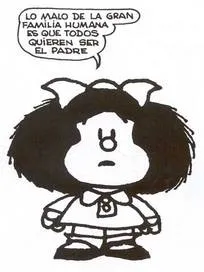
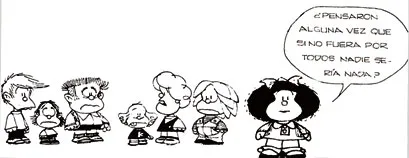
Images of Mafalda from ClubCultura.com. Credit: Quino.
"Attack of the Relativists" from Diario de un copépodo.