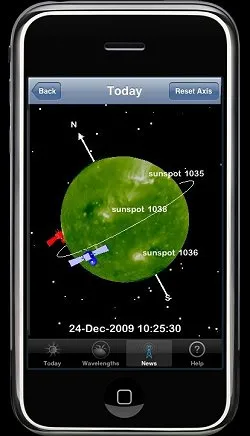
Searching for photographs of astronomical images seems quite simple, thanks to the internet. The LookUP web application allows searching for photos and data of astronomical objects and uses the new concept of Astrotags.
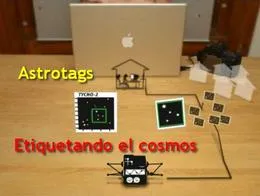
In this blog we had already commented on LookUp: Find astronomical objects where we gave an account of the use of new media in astronomy.
The news about the web application is that the developer linked images from Flickr, some of which were protected by copyright, so that was corrected.
It is good, then, to consider this when uploading our astronomical images to Flickr, using an appropriate license.
But we can also do something more: include astrotags.
What are astrotags?
We are already accustomed in web 2.0 to sharing information, such as images, and adding a tag to them. With tags we will be adding information about the people or, in the case of astronomical images, objects that are in the photograph.
Video: Introducing astrotags
http://www.youtube.com/watch?v=A_awDW9oIa4
An initiative to make finding images of the cosmos easier and more efficient is to include tags related to the object in the image.
If we search for the wonderful galaxy M51 in LookUP the result will provide us with the location (RA/DEC), images in different wavelengths (using Chromoscope), images via DSS, Wikisky, the possibility to view the object in Microsoft's World Wide Telescope, find recent papers and images of the object on Flickr using the designation to search in the astrotags, the tags that can be included in the photographs on Yahoo's image site.
How to include astrotags on Flickr?
The initiative comes from the Royal Observatory Greenwich which has a group on Flickr that they use for the Astronomy Photographer of the Year competition. The photos in the group are scanned by a Astrometry.net robot, which identifies stars, resolves the celestial coordinates by comparison with reference catalogs, and leaves a comment on the photo.
The comment includes data such as RA and DEC, orientation, field size, object designation, etc.
We can see an example of IC434 in Orion, the famous Horsehead Nebula:
http://www.flickr.com/photos/36418300@N02/3362016992/
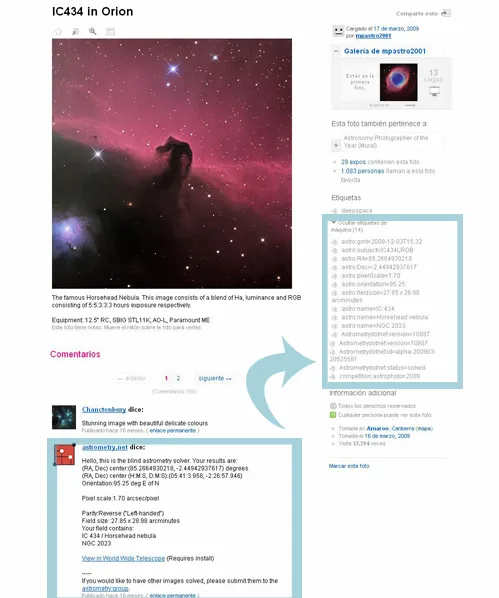
There we will see that below the image there is a comment from Astrometry.net with this data.
But the idea is for this information to become tags. As seen in that image, to the right of it are the tags for the case.
The procedure for parsing this data into tags is explained in Generating astrotags for Flickr photos.
What was created to make this easy is a form in which we indicate the Flickr photo, which as I said before must be in the Royal Observatory's Flickr group and have been scanned by Astrometry. If that happened, the idea with this form is to convert the comment with data into tags.
The form uses YQL which is a Yahoo search language - SQL style - to filter, search and join data across web services.
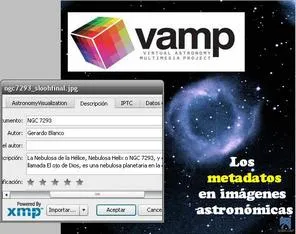
It is not the only idea about improving the search for astronomical images. A while ago we talked about the VAMP project in A review of virtual astronomy about Astronomical Metadata Visualization.
For the images of the cosmos that we share on the internet to have metadata or tags is an attempt to make the search for photos simpler and more consistent, consolidating the information of the objects. The idea seems to be that from web and desktop applications that allow viewing astronomical objects, the different available resources can be linked. But for this there will need to be a standard for the inclusion of metadata and simple implementation procedures.
The initiative of the Greenwich Observatory and the use of tags on Flickr, also linked from LookUP, is a good example of the use of metadata, although it has its limitations. Surely in the near future we will be able to tag (classify and share) images of the universe just as we use social tagging today.
Sources and related links
- LookUp blog posts
- Get excited and make things with science
- Astrotags explained
- London web standards: Introducing astrotags
About the images
- Screenshot of the IC434 image on Flickr. Credit Flickr/mpastro2001
- Video by Jim Le Fevre and Mike Paterson