The concept of Liquid Publications vs. solid ones
Scientific knowledge has been shared in the same way for a long time. A European project proposes replacing articles and peer reviews with a new process inspired by the social web.

The initiative is called LiquidPub. The development team is led by Fabio Casati, a professor at the University of Trento.
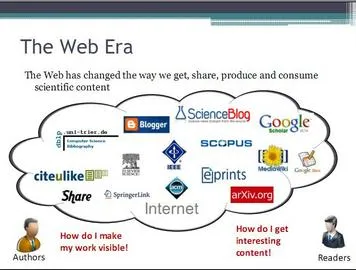
The project's website points out that the world of scientific publications has been alien to the advent of the web and advances in ICT (Information and Communication Technologies).
The dissemination of knowledge is still based on the traditional notion of publishing "papers" (scientific articles) and on peer review as a method of quality assessment. The current approach encourages authors to write many papers (and in an incremental way) to gain more credit, often generating unnecessary dissemination for themselves and for the community of reviewers.
And the reuse and evolution of publications is not encouraged or supported: when a small progress is made on a certain topic, a new paper is written, reviewed and published, sometimes several months later. The situation, they point out, is analogous, if not worse, for textbooks, for which they propose Liquid Books, that is, books with content outside of them (presentations, code, videos).
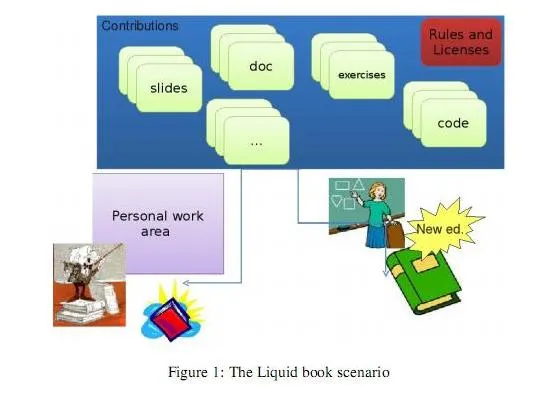
The LiquidPub project proposes a paradigm shift in the way scientific knowledge is created, disseminated, evaluated and maintained, both for the production of scientific journals, books or conferences. To this end, they use the concept of Liquid Publications, which are evolutionary, collaborative and composable. The concept is based on a parallel between scientific knowledge and software and therefore, on the lessons learned in software development (agile, collaborative, open), as well as on Web 2.0 in terms of collaborative evaluation.
Review, under review
The new approach offers an alternative to the peer review process. This process (in English, peer review) is used to validate scientific works through a number of authors who are supposedly experts in each area of knowledge. That is, the work done by one researcher is reviewed by another "peer". The review may suggest small or major changes, which must be corrected for the article to be accepted for publication.
This method can be very restrictive in some publications that only accept a small percentage of what is submitted and is also costly.
Some recent attempts to change this entire process are also pointed out, through conferences with rebuttal, community review, open or invitation-only formats.
Scientific knowledge and software
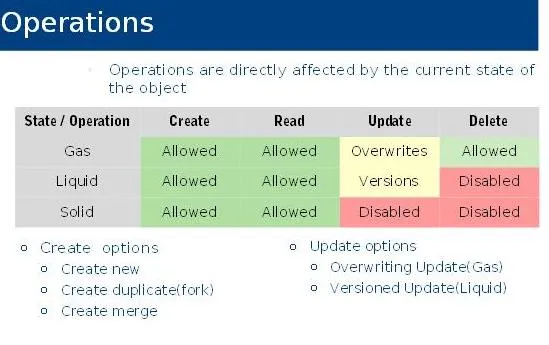
The parallel mentioned earlier can be expanded by considering that in software, code is developed and improved. New functionalities are added over time and in some cases the code is "evaluated" quickly beforehand. In programming, when changes are made to a class, the function name is not changed, but it is a new version of the class. In the same way, there are different versions of a scientific article and small changes should not result in a new paper but in a variation or extension.
Collaborative open-source development, the agile modeling process and other features of programming can be related to the production of scientific articles, according to these authors.
The context is completed with the new tools provided by technology that would not be being exploited to their full potential with the now old paradigm developed so far.
Liquid publications: A new paradigm?
To achieve an evolutionary and collaborative approach for papers, separate the dissemination-evaluation-recognition aspects and define efficient and innovative quality methods, what is proposed is to use what they call Scientific Knowledge Objects (SKO), as digital counterparts of papers.
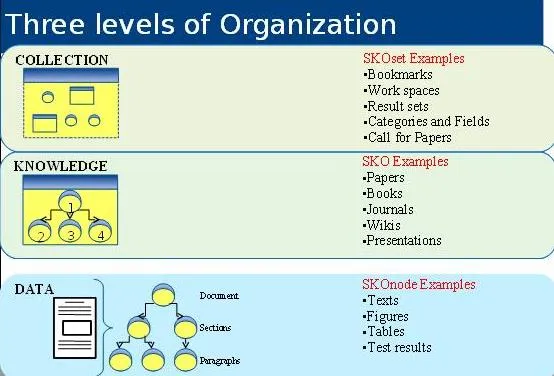
SKOs are conceived as files or structures with substructures called SKOnodes that represent the different pieces of data that come together in the SKO, and SKOsets that are collections and aggregations of other structures.
As if it were a three-level structure in which SKOnodes are the organized data that form, with the SKOs, the ordered knowledge, beneath which there is related data in categories.
There is a whole development about these structures that, ultimately, is a way to standardize how data is organized so that its storage and distribution is richer.
Is there any example at hand?
While reading these ideas I wonder how these concepts differ from current digital papers, available from the web versions of specialized journals and through file repositories.
According to Casati and others, the same paper in which they disseminate these ideas is an SKO because it is an evolutionary version of a previous one, has been developed collaboratively and uploaded to the web where it can get comments and, in fact, it did (as they themselves say). The material that may result in the future from that same paper, such as presentations, will be complementary to the SKO.
In the same way, they point out, a textbook can be complemented by a web page.
We can take a look at LiquidPub through a demo, as well as the video below:
Liquid journals demo
http://www.youtube.com/watch?v=iPmG1iQjjh0
From the computer science comparison to the physics one
Another comparison is established between the model of scientific contributions and the states of matter, by proposing three transitional states of evolution: gas, liquid and solid. That is, from the most abstract (which would be the gaseous) to the definitive and unmodifiable (the solid).
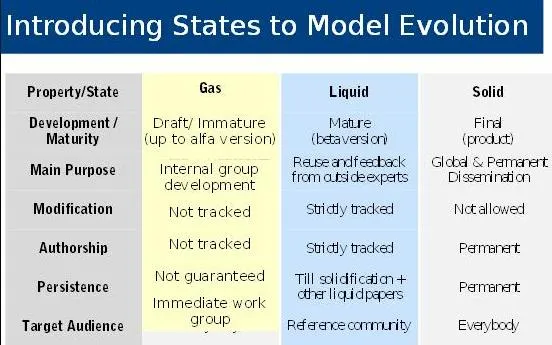
In summary:
What is proposed is not, in my view, a new paradigm, but the need to think about it. It is not the first time we have talked here about different initiatives in this regard. In this case, the redefinition of pre-existing ideas and the creation of new interesting concepts, such as that of liquid vs. solid publications, SKO, etc., may finally result in useful and efficient ideas or die in a sea of words.
However, the search for alternatives is healthy, but precisely speaking of health, when an article reaches conclusions that may affect the psychophysical integrity of a living being, double caution should be taken in its dissemination and scientific acceptance.
I'm not saying that in other branches of knowledge it isn't necessary to know if the conclusions are true, but nothing serious will happen if an astrophysicist is wrong in a theoretical analysis regarding the potential size of a star. On the other hand, in matters related to health, for example, a system that filters what is published with greater rigor seems reasonable. However, nowadays, it is possible to access medical papers that quickly have an echo in the media and are, at the very least, preliminary studies that are not at all conclusive.
It seems to me that, together with other initiatives we have commented on here (see Science 2.0), they are an attempt to think of a new way of creating and distributing scientific knowledge in the current technological context.
News syndication (blogs, rss), the distribution of music and other types of files (P2P networks, iTunes, Dropbox), data organization (from trips with Google Maps to photos with Flickr), etc., added a potential that the production and dissemination of knowledge is not fully exploiting.
Peer review has been questioned for years. What is proposed here is a community review in which there are no "gatekeepers". To evaluate that review, some mathematical tools are proposed, but it essentially lies in the filtering power of the community.
Some of all this is already happening. Even though Liquid Books are not the most common, the series of books and magazines from RedUsers contain links, their own pages and complementary material, as well as interaction with the editors through Twitter or the publication's website, to give an example.
LiquidPub is, for the reasons stated, an interesting project to follow. It has the LiquidPub blog and a LiquidPub Twitter account.
Sources and related links
- LiquidJournal
- ICT Results: New paradigm for scientific publication and peer review
- Liquid Publications: Scientific Publications meet the Web
Changing the way scientific knowledge is produced, disseminated, evaluated and consumed
Fabio Casati, Fausto Giunchiglia, Maurizio Marchese
https://dev.liquidpub.org/svn/liquidpub/papers/deliverables/ - Publish and perish: why the current publication and review model is killing research and wasting your money
ACM Ubiquity 8(3), Feb 2007.
http://www.acm.org/ubiquity/views/v8i03_fabio.html - Scientific articles in a humorous key
About the images
- Images from LiquidPub.