The night sky of Buenos Aires, around this date, brings us a beautiful dance of planets, with the intrusion of the Moon. Something to look up at all night.
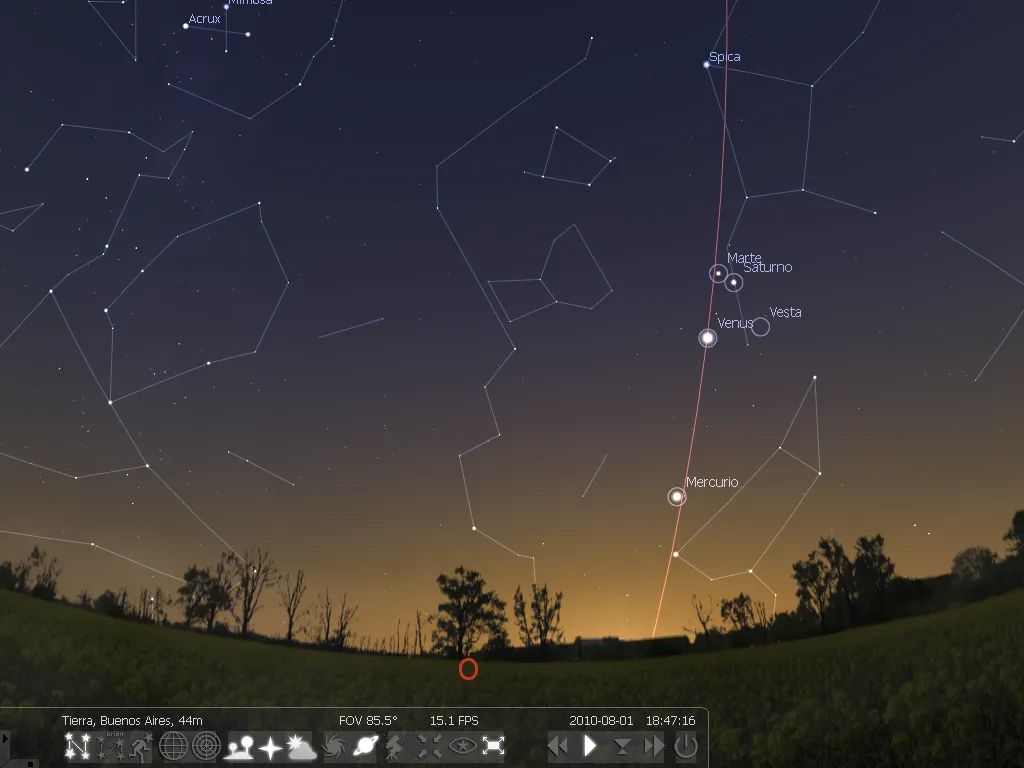
A few days ago, on July 28 specifically, a reader (Lorena) asked me about a bright object in the sky:
I don't know where to ask about the extremely bright star (or planet) visible in the city's sky towards the northwest, near the horizon during this month.
Besides answering her about this sky spectacle, I took the liberty of recommending she consult other sources. The idea is for us to know what tools we have so we can clear up these doubts on our own. Not because the question bothers, not at all, but because it is much more gratifying.
My response included an image taken with Stellarium, a fantastic desktop planetarium. It's not the only one I have on my PC, although it's the one I like to use the most.
But if downloading, installing, and using a planetarium might seem complicated and one wants to know what objects are visible in the sky tonight or any other night, we can do something similar without installing anything: online planetariums. Whikisy and Neave are two fantastic web applications.
For example, to know what objects we could see on July 28, in Neave:
http://www.neave.com/planetarium/?lat=-37&lon=-58&alt=11.3&azi=301.3&t=201007282125
Note that the URL that is formed includes the latitude and longitude, as well as the date.
And, by the way, we can consult websites and blogs with specific and very complete observational astronomy information. For example, Sur Astronómico is an extremely complete and beautifully designed site. I never tire of recommending it every time I receive queries of this type. In the blogroll, on the left side of this blog, there are other blogs that are worth visiting regularly.
And, when it comes to observational astronomy, the Amigos de la Astronomía are always an inexhaustible source of precise and didactic data. About this celestial spectacle, they have just released a press bulletin that can be downloaded from their website in pdf format.
The day of the cosmic friend?
In the bulletin from the Asociación Argentina Amigos de la Astronomía, before pointing out what we can see from now on, they ask us to pause for a second on something that has already passed... unnoticed.
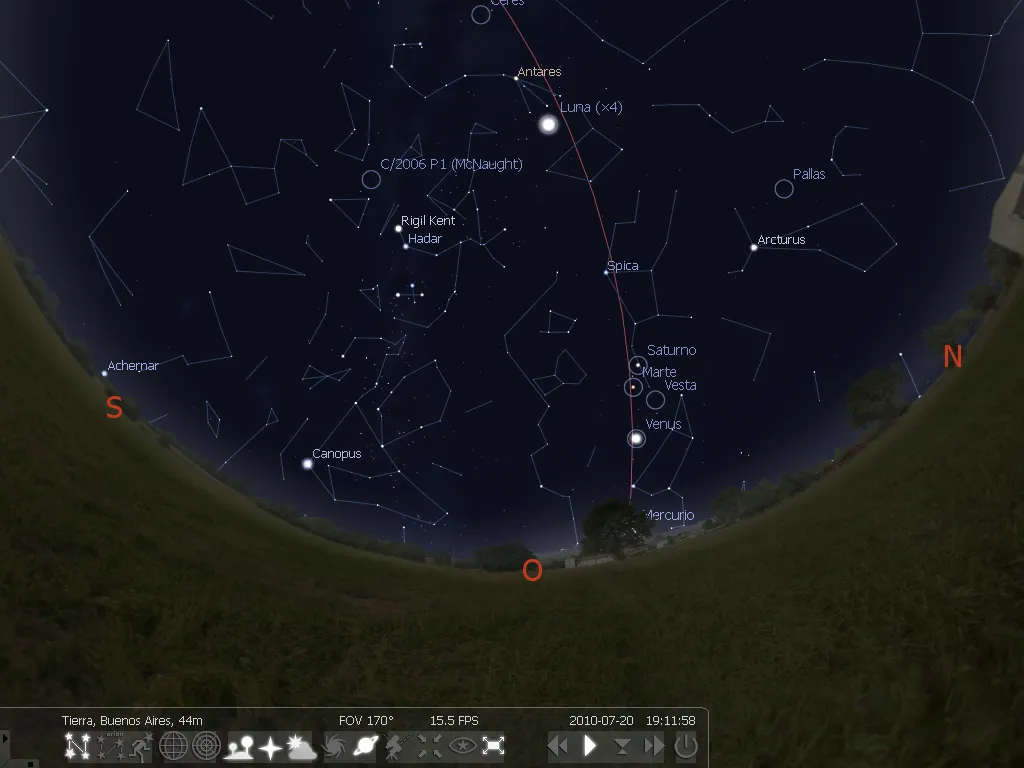
On Friendship Day, last July 20, these celestial bodies seemed to arrange themselves in a "celestial order" as can be seen in this image:
In such an arrangement, it seemed as if they had taken pity on all of us and took advantage of Friendship Day to give us a little help that allows us to easily visualize the direction and orientation of the ecliptic plane. But immediately they went back to their old ways.
A week later, on July 27, Mercury and Regulus (the brightest star in Leo) were separated by only a scant 16 arcminutes. But this didn't end here. Always looking west, a little after 18:30 hours we will see much more.
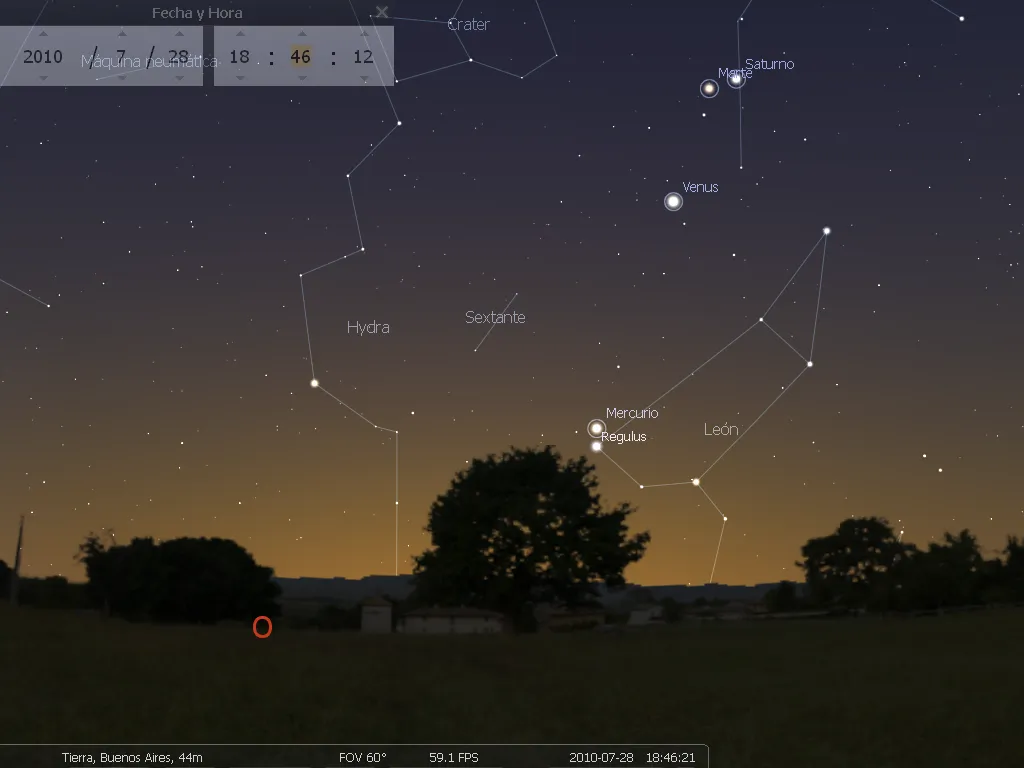
The spectacle of the August sky
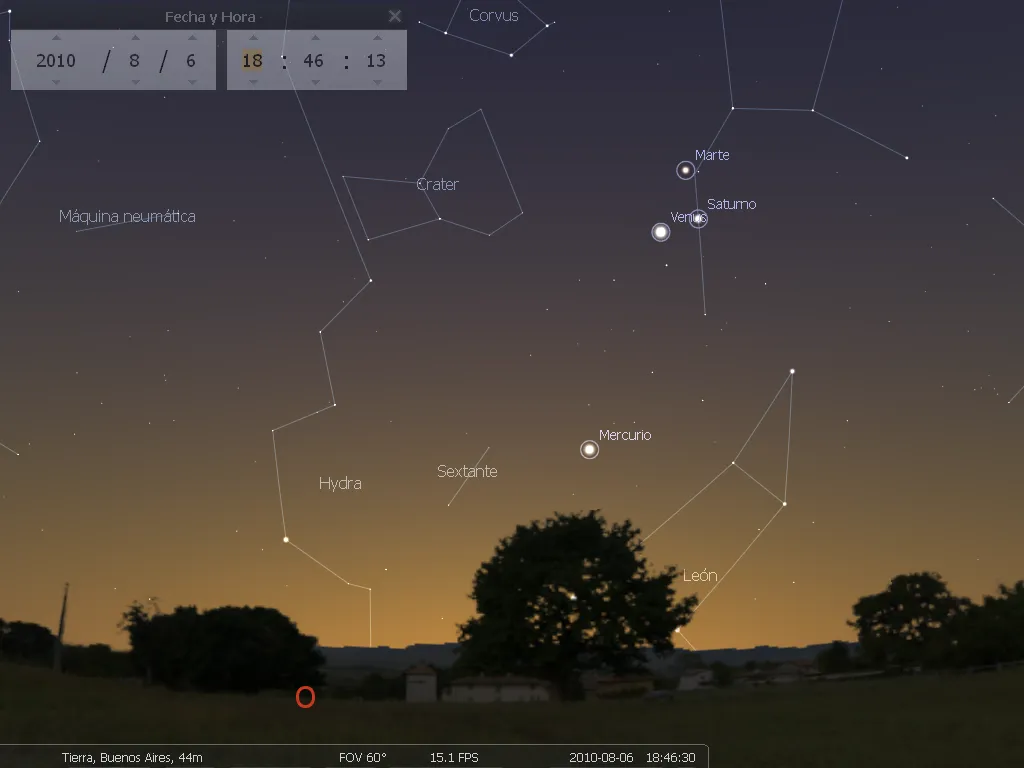
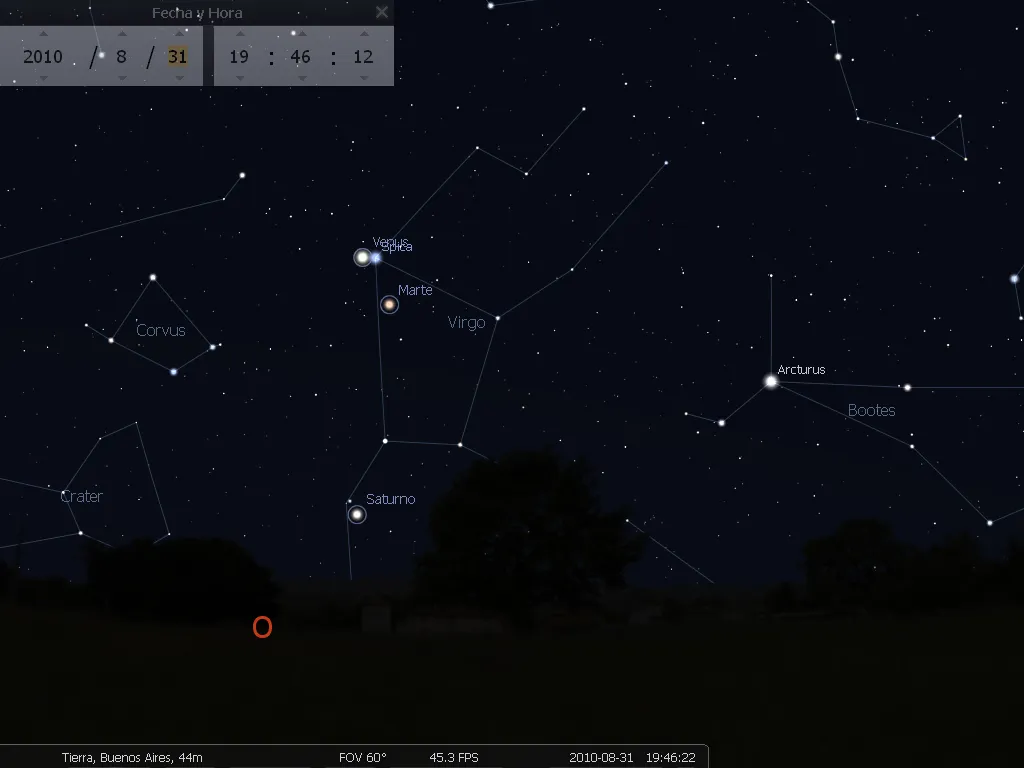
On August 6, a true show of celestial objects begins. Venus, Saturn, and Mars form a triangle. One in motion because it will change with successive nights.
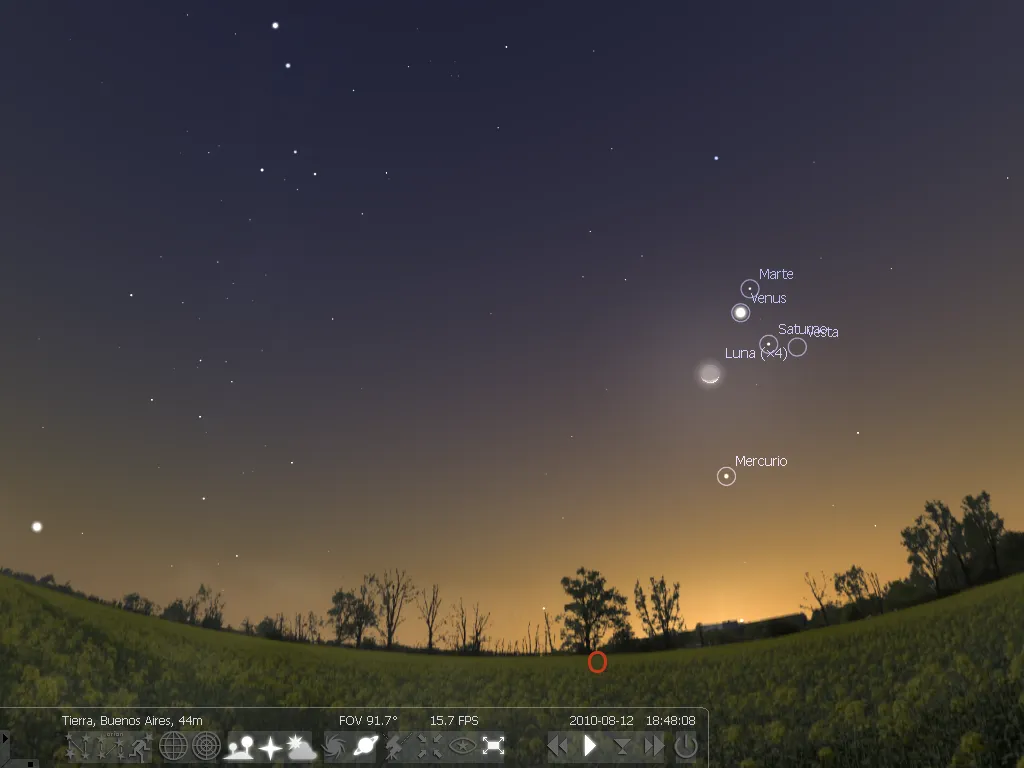
On August 12, the Moon joins the planets:
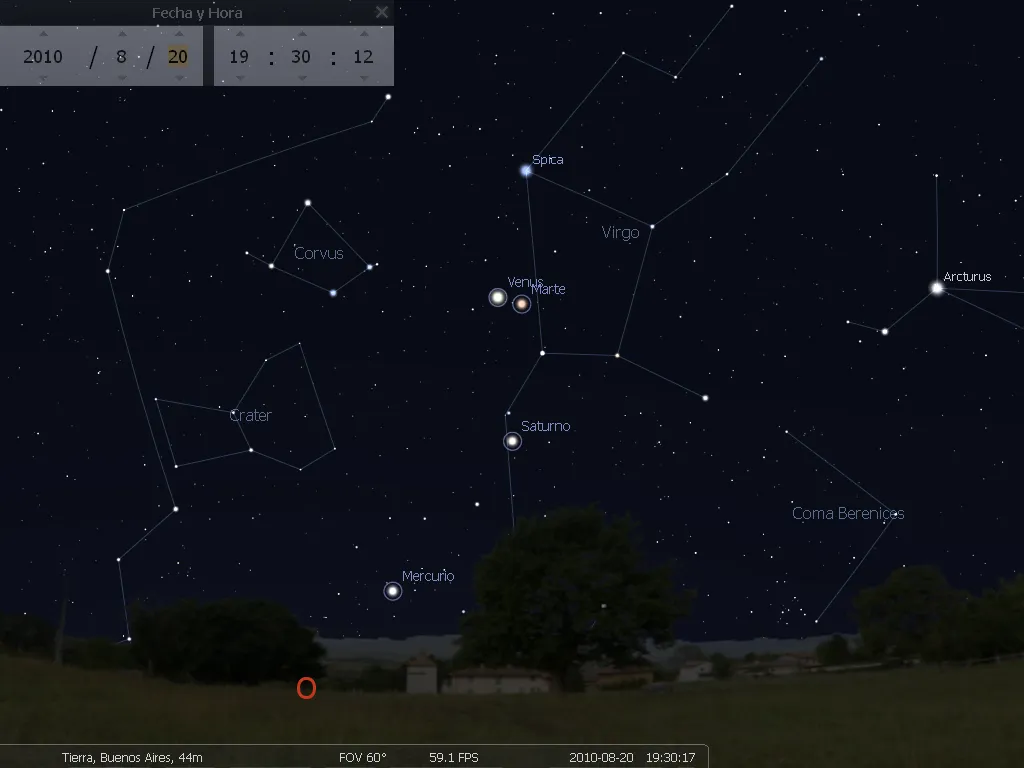
On August 20, it will be the turn of Venus and Mars (love and war) which will approach to about 1.9 degrees, that is, almost four Moons. But the Moon will already have distanced itself from them.
And on August 31, the Moon will meet Spica (only 1 degree to the right) and below, Mars will watch, jealous.
The information provided here was supplied by the Asociación Argentina Amigos de la Astronomía and completed with the Guide to the Night Sky, by Pedro Saizar, which appeared in the latest issue of the Revista Ciencia Hoy.
Sources and related links
About the images
- All images are screenshots created with Stellarium.