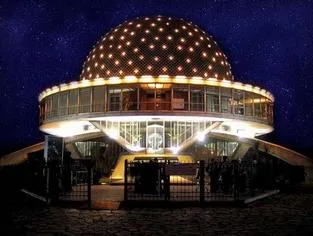
Coming soon, during this month of August, two astronomy courses begin at the Planetarium of the City of Buenos Aires. For adults and children.
The Planetarium of the City of Buenos Aires announces two astronomy courses to be held towards the end of the month.
Free course: General Astronomy
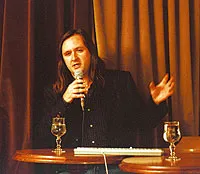
Instructor: Lic. Mariano Ribas
Location: Planetarium hall
Target audience: general public, from 12 years of age. No prior knowledge required
Start date: Wednesday, August 25
Duration: 10 classes
Frequency: one weekly meeting, Wednesdays from 19:00 to 21:30 hours
Certificate: an attendance certificate is granted to those who attend at least 8 of the 10 classes.
Contents:
The “new” Solar System. Our star: profile and functioning of the Sun. The 8 planets and their moons. New discoveries. “Asteroid Belt”. The asteroid threat. “Kuiper Belt”. Pluto and the “dwarf planets”. Comets: history, theories, and current revelations. The current definition of “planet”. Past, present, and future space missions. Special class: Mars, history, exploration, chances of life. Extrasolar planets: history, detection methods, the “Hot Jupiters”, current and future searches. ?Extraterrestrial life?: analysis of possible biological scenarios.
Stars, a first look: sky and constellations. Myth and reality of the zodiac. Great discoveries about stars: distances, sizes, masses, colors, temperatures. “HR Diagram” and stellar spectra. Star clusters: open and globular. Nebulae: stellar cradles. Types of nebulae. Life and death of stars. Supernovae, white dwarfs, neutron stars, and black holes. The cosmic connection: the stars and us.
Telescopes: from Galileo to the great observatories of the world. Current super telescopes (space and ground-based). Future “hyper telescopes”: GMT, TMT, and E-ELT. Telescopes for amateurs: how to choose them, operation, notions of handling, accessories, practical advice and formulas.
Milky Way: history and profile of our galaxy. Current revelations: “Milky Way 2010”. Dark matter halo. Neighboring galaxies. Cosmology. Quasars, dark matter and gravitational lenses. Galaxies: origin and evolution of the “islands of stars”. Galactic collisions and mergers. Hubble classification. Clusters and Superclusters of galaxies. The macrostructure of the universe: galactic filaments and “voids”. Expansion of the universe. Big Bang theory. The “Sagan Year”. Dark Energy. Theories about the fate of the cosmos. The universe and the human perspective.
Special talks with guest speakers: “The Pluto Case”, “Sky observation with instruments”, “Planetary Geology”, “Aconcagua: the stone sentinel”, “The Local Group of galaxies”. Others to be confirmed.
Free course: Discover, observe and enjoy the sky
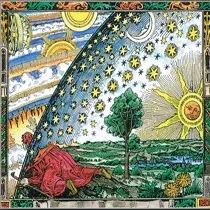
Instructor: Diego Luis Hernández.
Location: Planetarium hall
Target audience: general public. No prior knowledge required
Duration: 10 classes
Frequency: one weekly meeting, Thursdays from 19:30 to 21:30 hours
Start date: Thursday, August 26, 2010
Certificate: an attendance certificate is granted to those who attend at least 8 of the 10 classes.
Facebook page: http://www.facebook.com/diegoluih?v=wall
Contents:
Tonight's sky, tomorrow's, next week's, next month's, the coming months', next year's and beyond.
Stars and constellations that can be observed in different seasons of the year.
The sky of the southern hemisphere.
The sky of the Equator.
The sky of the South Pole.
The sky of the northern hemisphere.
The sky during the day. Movement of the Sun.
The Moon: movements and its phases.
The planets: their apparent movements in the sky and their real movements around the Sun. How to follow their trajectories over time and how to identify them.
Mars and its retrograde motion.
Mercury and Venus, their morning and evening positions.
Jupiter and Saturn.
Observation of the Milky Way and the Magellanic Clouds.
A nighttime observation outing to the countryside is held, taking advantage of a dark sky to observe with the naked eye and through telescopes.
Registration, in both cases, can be done:
By phone: 4771-9393 and 4771-6629, Tuesday, Wednesday and Thursday from 11 to 16 hours. (Ask for Mrs. Graciela Toledo).
Data required for registration:
First and Last Name.
Address
Telephones
Email address.
Title
Occupation (if a student, of what major).
Date of birth
ID
Or by mail, through the email addresses indicated on the Planetarium's courses page.
Sources and related links
- Courses at the Galileo Galilei Planetarium
About the images
- Photo of Mariano Ribas. Credit: Jorge Larrosa/Página 12.
- Planetarium background image by Bruno Sebastián Solar on Flickr