Observing the night sky is wonderful, except when it's cloudy. By day too, especially when there are clouds.
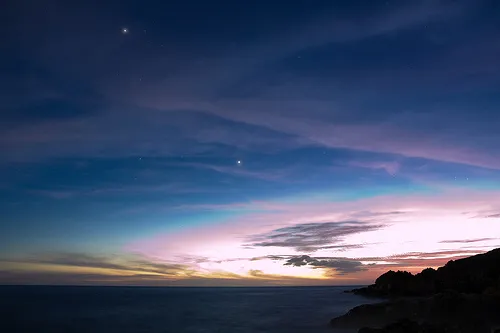
In the dark night sky, clouds get in the way. Well, not always. The Moon, particularly when full, being "transited" by clouds creates a separate spectacle.
But by day the opposite occurs. The beautiful blue sky to which we can sometimes find several shades becomes "boring" if it stretches like a regular blue tapestry to the horizon.
Clouds appear there as another natural phenomenon worthy of awe and admiration.
I won't state the obvious: there are several types of clouds, formed at different heights and with different shapes.
On the Encuentro channel, a BBC documentary on cloud appreciation has been airing. It's about telling not only what clouds are, their types and shapes, but also about spreading the Cloud Appreciation Society, created by Gavin Pretor-Pinney.
Despite what one might think, Pretor-Pinney is not a meteorologist nor a scientist from another discipline, but a designer and author of The Cloudspotter's Guide.
In this space I usually spread events or content in which art and science are mixed. There is no doubt that cloud appreciation is a way to bring both human expressions closer.
Often the word "cycle" is used when talking about a series of television programs, for example. Clouds are then one of the best programs of the "water cycle".
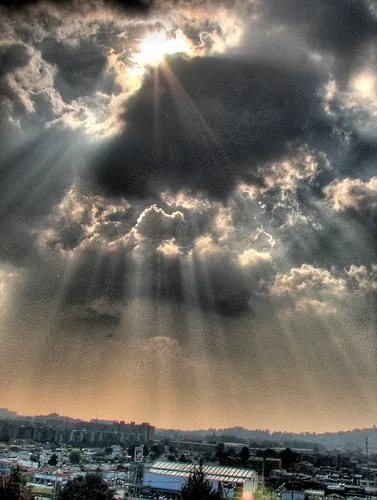
The BBC documentary aired by Encuentro is not available in the download area of the Argentine channel's website, due to copyright issues I suppose. However, they still repeat it and, if we search the web, we will find some pages with material about it.
Of course, the Cloud Appreciation Society has its own page from which we can access excellent image galleries, poetry, etc.
We can also join this organization, which means they will send us a printed certificate, with our membership number (24366 for the writer).
Joining has a one-time cost of 4 pounds (about 6 dollars), to which we must add an additional cost for shipping outside England (the Society's headquarters), of a little less than 2 pounds. Roughly, it's almost 6 pounds, almost 9 dollars ($36 in Argentina at the current exchange rate, approximately).
The documentary mentions the artist John Constable for his cloud studies.
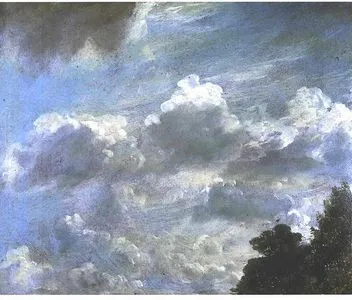
So the suggestion is natural. Look up to appreciate the clouds. We can try to identify what type they belong to, figure out their direction, find shapes, appreciate their colors and shadows.
At dawn and dusk, the sun's rays produce clouds with colorations that can leave us speechless. It's a beautiful, simple phenomenon that we can enjoy alone, listening to music perhaps, or in company. Who didn't "play" with clouds as a kid?
That said, let's be careful not to look directly at the sun. Even with dark glasses it's dangerous and this precaution must be explicitly told to children especially.
In Buenos Aires we are enjoying nice days (quite hot already) and it's the ideal time to occupy the city's squares.
Let's not forget to take photos, even though Nature is unpredictable and the best cloud will always appear when we don't have the camera at hand...
Sources and related links
- The celestial plot
- The man in the clouds
- Cloud manifesto
- With your head in the clouds
- MultiURL: photos and videos of clouds in several links (browser) and list format
About the images
- Stars and clouds, by Cestomano, José Ángel on Flickr.
- Clouds, by the DVD, David Peña on Flickr