Several years ago, the only search for dark matter ever conducted in Latin America to date was carried out in the Argentine Republic. I met with two members of the team that carried out the DEMOS experiment (“DEtección de Materia Oscura”).
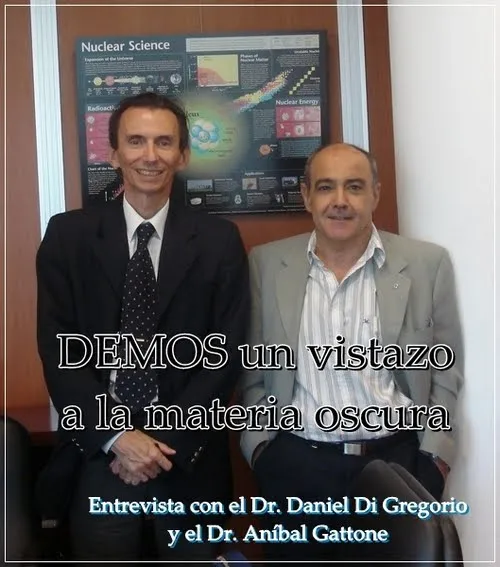
Between 1994 and 1999, the DEMOS experiment was carried out in a mine in Sierra Grande, Río Negro, by Argentine scientists, in an international collaboration that also included researchers from the University of South Carolina and the Pacific Northwest Laboratory (PNL) in the USA and from the University of Zaragoza, Spain. Among those participating from Argentina were Drs. in Physics Aníbal Gattone and Daniel Di Gregorio from the TANDAR Laboratory (CNEA).
I contacted Dr. Di Gregorio, currently vice-rector of the National University of San Martín, who granted an interview in which Dr. Gattone participated.
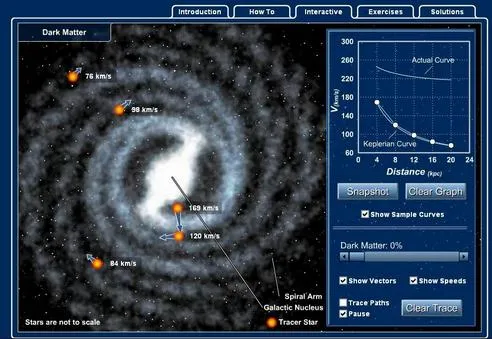
What will be discussed here is dark matter. Evidence for the existence of dark matter arises from observations of the dynamics of certain objects in the Universe (spiral galaxies, elliptical galaxies, galaxy clusters, and gravitational lenses) as well as from simulations, which indicate that these objects move at speeds greater than they should have if only the gravitational attraction of the detectable luminous mass were taken into account. There must be more mass (non-luminous, ergo dark) that is missing to explain the higher observed speeds; or else the theories should be reformulated (something that has also been attempted).
There are several experiments in the world searching for dark matter. Two ingenious ideas are the annual modulation and the daily modulation, which we will try to address here.
On Tuesday, March 13 at 13:30 h on university premises, I was received very cordially by Drs. Di Gregorio and Gattone, with whom I conducted the interview transcribed below.
How did the Sierra Grande experiment come about?
The experiment originated from the visit to Argentina by Dr. Frank Avignone, from the University of South Carolina, who was encouraged by Dr. Horacio Farach, an Argentine physicist residing in the USA, to come to our country to propose the dark matter detection project. Frank Avignone was dedicated, at that time, to conducting dark matter detection experiments in the USA and in Spain, using a technique called annual modulation.
Juan Collar, one of his students, became interested in the topic of dark matter and began working on a new idea; it consisted of using planet Earth as an attenuating shield for the flux of dark matter reaching the detector. He called this new method diurnal/daily modulation. That is, there would now be two ways to identify dark matter particles by their signatures in the detector: one of annual modulation and another of diurnal or daily modulation.
What is annual modulation?
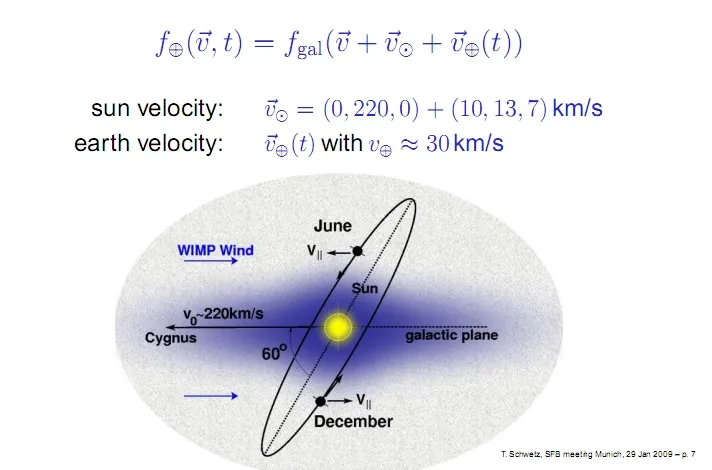
The idea is as follows: the solar system moves around the center of our galaxy (the Milky Way) at 220 km/s and the Earth moves around the Sun at 30 km/s. At some stage of the Earth's rotation around the Sun, those speeds add up (220 km/s + 30 km/s) while six months later, they subtract (220 km/s – 30 km/s). Therefore, the flux of dark matter particles received by a detector located on Earth (revolving around the Sun and both around the galaxy) fluctuates during a year, reaching maximums and minimums. This phenomenon is called annual modulation.
Many experiments have been conducted in the last twenty years that use annual modulation as a method for identifying dark matter. In fact, one of them, DAMA/LIBRA [1], states that its data show annual modulation.
And the diurnal modulation?
That's where Juan Collar's idea comes in: what would happen if the Earth were an attenuating shield? The basic idea is, at some point in the day a detector located on Earth will face the flux of dark matter particles; twelve hours later, due to the Earth's rotation on its axis, the detector will be hidden behind the Earth, and if those dark matter particles interact (scatter) with the Earth, then the detected flux will be smaller. This phenomenon will give rise to a diurnal/daily modulation. In English they called it "diurnal" but we, in Spanish, reserve that word for what happens in the morning, the more accurate description should be "daily". That is, daily modulation.
There is a paper, published by Avignone and Collar [2], which determines that there is a range of latitudes on Earth that serve to maximize the effect of diurnal modulation.
Indeed, the Earth's axis relative to the Earth-Sun rotation plane is 23º and relative to the rotation plane of the Solar System and the center of the galaxy is 43º. Between those two latitudes, the optimum must be found where you have the largest fraction of Earth serving as a shield.
The paper concludes that the greatest attenuation due to the Earth's effect occurs at southern latitude in the range of 35 to 45 degrees. On our planet, those latitudes occur in Argentina, Chile, Australia, and South Africa. This fact and the existence of groups of physicists in our country determined the proposal to carry out the Dark Matter Search by Diurnal Modulation project in Argentina.
A visit to Argentina and the step forward
Over coffee, Di Gregorio and Gattone told me the origin of the project.
"In April 1992, Frank Avignone and Horacio Farach, researchers from the University of South Carolina, came to Argentina. Farach is an Argentine physicist born in 1923 and one of the many scientists who had to emigrate in 1966 after the sad and well-known Noche de los Bastones Largos, when police forces violently broke into the Faculty of Exact and Natural Sciences of the UBA. He was residing in the United States until 2006, the year he decided to return to Argentina.
Avignone, who at that time was head of the Department of Physics and Astronomy at that North American university, presented the idea of performing a dark matter detection experiment by diurnal modulation at a seminar that was taking place at the Instituto Argentino de Física del Espacio (IAFE) in Buenos Aires.
It was then, after Avignone's presentation, that a group of physicists from the TANDAR laboratory of the CNEA, we accepted the challenge and proposed to do the experiment in Argentina in collaboration with them.
The search and management of the site
The experiment required the installation of an underground laboratory at a depth of at least 300 meters or an equivalent rock cover in a tunnel in a mountain.
"The search began first in the province of San Juan until we finally met Dr. Isidoro Schalamuk, then Dean of the Facultad de Ciencias Naturales y Museo of the Universidad Nacional de La Plata. Dr. Schalamuk, a geologist who knew almost all the mines in Argentina, was the one who indicated the place to us, the HIPASAM iron mine (Hierro Patagónico Sociedad Anónima) located in Sierra Grande, province of Río Negro. At that time, mid-1992, the mine was closed and intervened by the national government. In 1993 the mine was transferred to the province, began to be called HIPARSA, and mining activities were partially reactivated. We made a request to the then governor of the province, Dr. Hugo Massaccesi. These efforts fortunately were satisfactory and we were authorized to use a place in a mine tunnel at 380 meters depth to install a detector in the underground laboratory. The installation was carried out in the second half of May 1994."
The detector
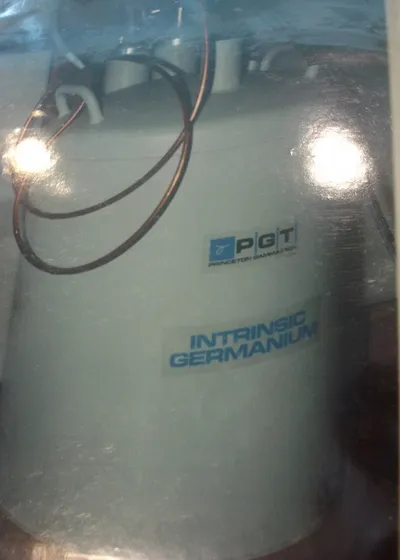
The detector consists of a germanium crystal cooled in a thermos containing liquid nitrogen. This instrument, capable of generating a signal from a collision with dark matter particles, is also capable of receiving signals produced by other particles: muons, neutrons, cosmic rays or known electromagnetic radiation. If the detector were placed 'naked' and at sea level, it would receive many known signals that would prevent 'seeing' those particles potentially coming from dark matter. In order to reduce the flow of known signals, the detector is provided with several selective filters. The hundreds of meters of rock allow reducing the flow of muons produced by cosmic rays in the atmosphere and that reach the Earth's surface. To filter the natural radioactivity present locally in the vicinity of the detector, it is shielded and isolated with several layers of lead bricks of approximately one cubic meter in volume. Paraffin blocks and cadmium sheets, external to the lead shielding, are used to suppress the presence of neutrons.
A lead castle
The shielding with lead bricks took the shape of a castle in the form of a cube with edges approximately one meter on a side. The castle was formed by layers or walls made of lead bricks that had three different origins: 2,000-year-old Roman lead, German lead distilled 70 years ago, and more contemporary lead.
The Roman lead that shielded the detector in the first layers was provided by the Spanish researchers, members of the collaboration. This lead had been recovered from Roman galleons sunk in the depths of the sea off the coast of Spain. Naturally, lead has an isotope, 210, which is radioactive with a half-life of 22 years. That isotope after 2000 years decayed almost 100 half-lives and ceased to have residual radioactivity. The older it is, the less residual radioactivity from the lead-210 isotope and consequently the lead bricks are 'cleaner' from a radioactive point of view and shield (protect) the germanium detector better.
Sierra Grande on Google Maps
Sierra Grande is a town belonging to the Departamento de San Antonio, in the southeast of the Province of Río Negro. It is located at 41º36' South Latitude, 65º21' West Longitude. It can be seen on Google Maps
-Was the objective of the experiment achieved?
-We did not manage to identify a candidate if that is the meaning of the question. But we advanced substantially in reducing possibilities. The probability of detection depends on two variables; the probability of interaction with an atom of our detector, called the coupling constant, and the mass of the dark matter candidate. These two properties characterize dark matter. Having a unique detector in the world, under also unique conditions, not identifying a signal means that many other signals that other experiments cannot resolve and ours can, are immediately discarded. In jargon we say we closed the window of possibilities a little more. But, clearly, we did not see an identification signal.
The scientific collaboration that carries out the DAMA/LIBRA experiment, on the other hand, is talking about identification. They see the annual oscillation curve and say: 'I identify the mass and the coupling constant because only one mass and one coupling constant can explain my data.' That is identification.

-And what did you expect to find, that is, neutrinos, neutralinos?
-Our detector worked by 'recoil'. A dark matter particle 'hits' a germanium atom (the material of the crystal), makes it recoil, this ionizes its neighbors (that is, removes electrons from their orbits) and the voltage at which the detector is maintained carries those electrons to the anode generating an electrical pulse. This is what we measure; pulse intensity and its energy. For the recoil to occur, the mass of the candidate must be comparable to that of the germanium atom; if it were very light the atom wouldn't even notice (a bullet makes a hole in a truck but doesn't make it recoil) and if it were very heavy, the signal would be so clear that someone would have already seen it. That is, with DEMOS we were looking for so-called 'heavy' candidates. In English they are called WIMPs (Weakly Interacting Massive Particles). These are candidates for cold dark matter because their kinetic energy is less than their mass.
Neutrinos have a tiny mass and we could not detect them. Neutralinos have not been detected yet, but theory suggests they have no mass or it is very small; we could not detect them either. These are candidates for hot dark matter.
-And axions?
-With a very low-background detector like ours, magnitudes that manifest with very low signals can be measured because we are prepared to search for them. One of them is the axial coupling constant. This occurs inside the detector's crystal; it does not depend on anything coming from outside and has to do with the behavior of protons and neutrons within the nucleus of each germanium atom. It is related to the way protons and neutrons react to a hypothetical virtual particle called an "axion." What we achieved, as in the previous case, is to set new limits on the strength of this interaction.
-You also wrote a paper on using an LHC magnet to detect axions. [3]-
-That was another idea from Juan Collar and served the same purpose, to set a limit, but not to identify.
ANDES
The Agua Negra tunnel, in what is called the Bioceanic Corridor, is a clear possibility for realization. The interview took place a few days before President Cristina Fernández's visit to Chile, where, among other topics, this project would be discussed with President Piñera. ANDES [4] is the possibility of installing a set of scientific experiments in an underground laboratory in that tunnel, among which there could be one similar to DEMOS. But everything depends on the construction of the Tunnel. "If Agua Negra exists, it is most likely that ANDES will be done," Gattone told me. And Di Gregorio added: "With the comparative advantage that it is ad hoc, that is, from scratch."
LET'S GIVE IT AN ENDING
The reader might think that the experiment's result was not satisfactory and that, therefore, the whole experience was in vain. Allow me to tell how I got to UNSAM. I started looking for papers on dark matter and Argentina. The first one I found is an abstract by Robert Foot [5] from the University of Melbourne in which he points out that if the CoGeNT detector (in the Soudan mine, Minnesota) -an experiment in which Juan Collar participates- were moved to Sierra Grande, a discovery (5 sigma; that is, with more than five standard deviations) could be obtained in 30 days of operation. Foot's work is from November 2011.
On the other hand, if ANDES is realized, the experience with DEMOS would be valuable. And it is, anyway, for the reasons mentioned before, for restricting the possibilities, which is generally what science is about. But it is also a fabulous effort, little known and recognized by the general public, to search for a not insignificant component of the universe.
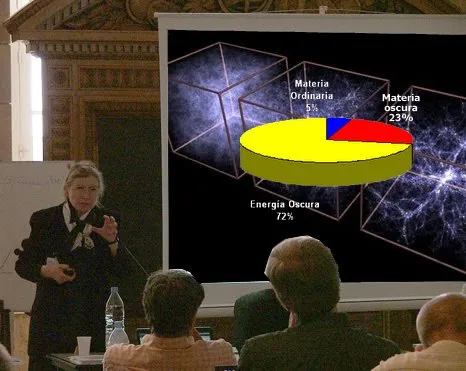
I left UNSAM thinking that I could shake the hands of two Argentine physicists who should be part of any historical narrative of the search for matter that makes up 23% of the mass of the universe. On the way back, it occurred to me that one of the analogies used in the interview had become reality. To some extent, the work of Argentine researchers often goes unnoticed, like WIMPs, and some "epic feats" -within the framework of science- become difficult to detect, they are dark. Until for some reason, Thump! a collision occurs. And a discovery that sheds light on the past.
Note written for the XXX Carnival of Physics, in this edition hosted by Enciclopedia Galáctica. To join and read the entries, there is a social network on Ning.
Sources and related links
- [1]DAMA is a project containing several experiments in search of dark matter. In the DAMA/LIBRA experiment, it is claimed that they identified the annual modulation.
http://people.roma2.infn.it/~dama/web/home.html - [2] Effect of elastic scattering in the Earth on cold dark matter experiments
J. I. Collar and F. T. Avignone, III
Phys. Rev. D 47, 5238–5246 (1993)
DOI : 10.1103/PhysRevD.47.5238 - [3] A Decommissioned LHC Model Magnet as an Axion Telescope
K. Zioutas, C.E. Aalseth et al
arXiv:astro-ph/9801176v2 - [4] Laboratorio Subterráneo ANDES
http://fisica.cab.cnea.gov.ar/particulas/experiments/laboratorio_subterraneo/ - [5] Diurnal modulation due to self-interacting mirror and hidden sector dark matter
R. Foot
arXiv:1110.2908v3 [hep-ph]
Papers published by the collaboration (some)
- Effects of Diurnal Modulation in Direct Cold Dark Matter Searches. the Experiment in Sierra Grande
D.E. Di Gregorio, A. Gattone, H. Huck, A.O. Macchiavelli, S. Gil, J. Collar, F.T. Avignone III
arXiv:astro-ph/9311049v1 - Search for an annual modulation of dark-matter signals with a germanium spectrometer at the Sierra Grande Laboratory
D. Abriola, F.T. Avignone III et al
Astroparticle Physics Volume 10, Issues 2–3, Pages 133-273 (March 1999)
arXiv:astro-ph/9809018v2
DOI: 10.1016/S0927-6505(98)00047-4 - Cold dark matter identification: Diurnal modulation reexamined
F. Hasenbalg, D. Abriola et al
Nuclear Physics B - Proceedings Supplements Volume 70, Issues 1–3, January 1999, Pages 114–116
10.1016/S0920-5632(98)00399-5
arXiv:astro-ph/9702165v2
Other related publications
- Search for dark matter in Argentina, by Dr. Aníbal Gattone, in Mirando al cielo con frialdad, by Héctor Rubinstein, Ciencia Hoy Vol. 7 Nº 39 (1997)
http://www.cienciahoy.org.ar/hoy39/cielo.htm - Búsqueda de Materia Oscura y Axiones Solares en el Laboratorio Subterráneo de Sierra Grande
http://www.tandar.cnea.gov.ar/grupos/astropar/moscura.html
About the images
- Fig. 1: Image taken from a presentation by Thomas Schwetz: “Dark Matter and the DAMA/LIBRA annual modulation signal”, T. Schwetz, SFB meeting Munich, 29 Jan 2009.
Another diagram can be seen (with the galaxy drawn as seen from above, at http://math.temple.edu/~cmartoff/transps/drift/index.html ) - Initial image: Drs. Di Gregorio and Gattone posing in the former's office at UNSAM photographed by the author of the note.
- Images 2 and 3: Credit: Dr. Daniel Di Gregorio.