A collection of links to music, images and videos that relate art and science. Today: Images of NGC 2266; NGC 4388; NGC 7026; and NGC 2419. Music by JovianOfficial. And a video with incredible images of the universe.

Images of the decade
NGC 2266
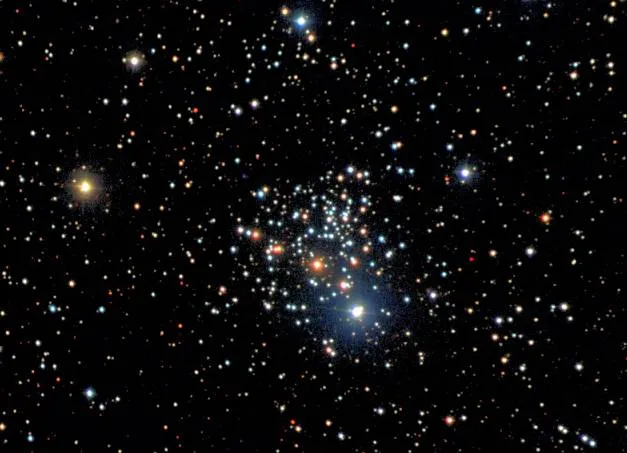
This cluster is entry number 2,266 in the New General Catalogue. It lies 10,000 light-years away, in Gemini.
Red giant stars are clearly perceived in this open cluster. The brightest stars do not belong to the cluster.
The image is a composite, taken with the 1.23m instrument at Calar Alto and with three filters (I, V and B).
Although the image is from 1995, it was NASA's Astronomy Picture of the Day (APOD) on June 1, 2002.
Also in Observatorio.
Credit: Till Credner & Sven Kohle, Bonn University (Allthesky.com)
NGC 4388: A smoking galaxy
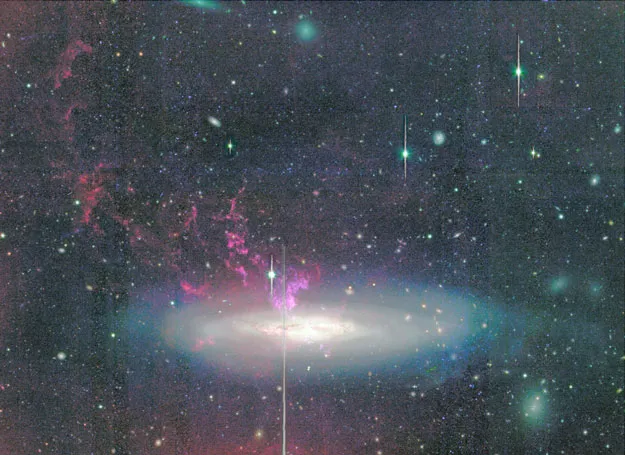
The extent of the gas clouds in this galaxy was unexpected until the Subaru Telescope took this image.
NGC 4388 is a spiral, 60 million light-years away, and belongs to the Virgo Cluster. It is also a Seyfert galaxy, meaning it has an active nucleus.
The interaction between the intergalactic medium and its neighboring galaxy M86 and the galaxy's motion through the cluster could explain those gas clouds or hydrogen filaments that have lengths of up to 30 kpc.
Credit & Copyright: Suprime-Cam, Subaru Telescope, NAOJ
It was NASA's Astronomy Picture of the Day (APOD) on June 3, 2002. And in Observatorio.
Images of the week
The swan and the butterfly
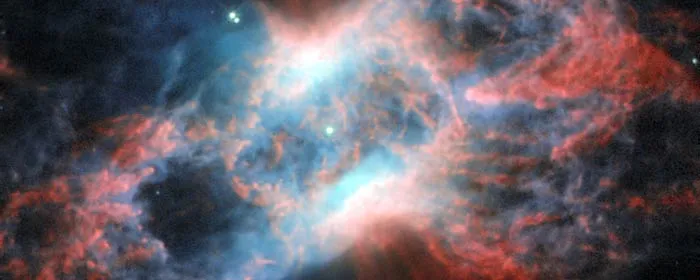
The image taken with the Hubble Space Telescope shows NGC 7026, a planetary nebula. Located near the tail of Cygnus, this cloud of gas and dust (which some see as having a butterfly shape) is the destruction of a star similar to our Sun.
Planetary nebulae occur at the end of the life of an average star. When a star runs out of hydrogen, it expels its outer layers, leaving only the star's core. That expelled gaseous envelope heats up, atoms become excited, and they light up like neon signs.
The image of NGC 7026 shows starlight in green, light from bright hydrogen in red, and light from oxygen in blue.
The nebula is located about 7,000 light-years away.
A version of this image entered the Hubble Hidden Treasures Contest, by contestant Linda Morgan-O'Connor.
Credit: ESA/NASA Hubble
It was the Space Telescope Image of the Week.
Intergalactic Wanderer
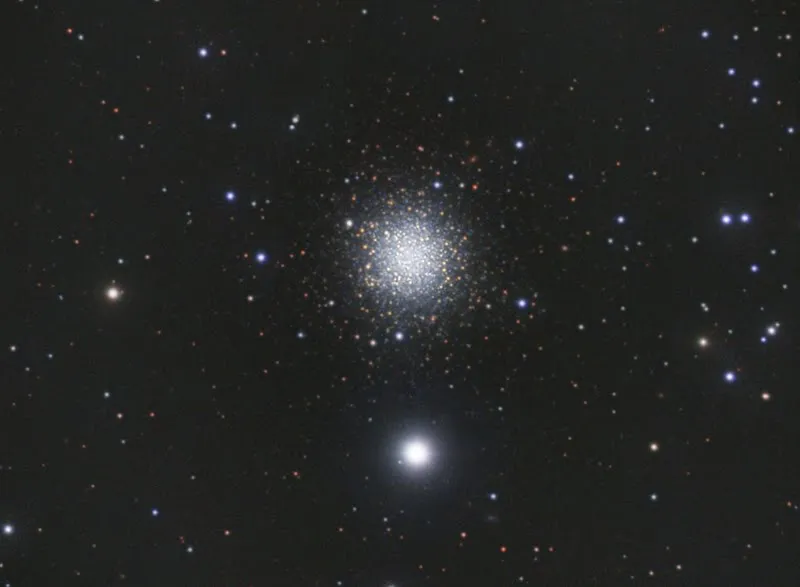
NGC 2419 is a globular cluster in the constellation Lynx, about 300,000 light-years away.
It was nicknamed "Intergalactic Wanderer" because it was thought to be an object that did not belong to our Milky Way.
The image was taken with an LX200R 10" from Àger by Eduard García Ribera and was the Amateur Astronomy Picture of the Day (AAPOD) on June 2, 2012.
Copyright © Eduard Garcia-Ribera
Space Music
Today: Planetary Nebula by JovianOfficial
JovianOfficial is what Jordan Romero (USA) calls himself, a teenager who uses "reason" to make music.
Among his work is this track, "Planetary Nebula" available on the new SoundCloud.
Ah...and on Soundcloud it is also possible to find the alien sound of NGC 2419.
Animated Science
Today: The Space We Live In
The universe we live in, seen by great instruments and excellent background music.
http://youtu.be/AxfDoCI5l7g
To access previous editions of this section, consult the Multimedia Selection Series. The series attempts to show that the immensity of the universe can be perceived in different ways. I choose some images from a decade ago -so they don't fall into oblivion- and from the current week that ends, as well as sounds/music and videos that are artistic forms of expression with content related to astronomy and related sciences.