A collection of links to music, images and videos relating art and science. Today: Images of Abell 1689; 0313-192; NGC 6872; Caldwell 5; and an R2, the robonaut. Music by No Rules. Video: Gastón Giribet - Space-time and black holes, at TEDxRiodelaPlata.

Images of the decade
Abell 1689
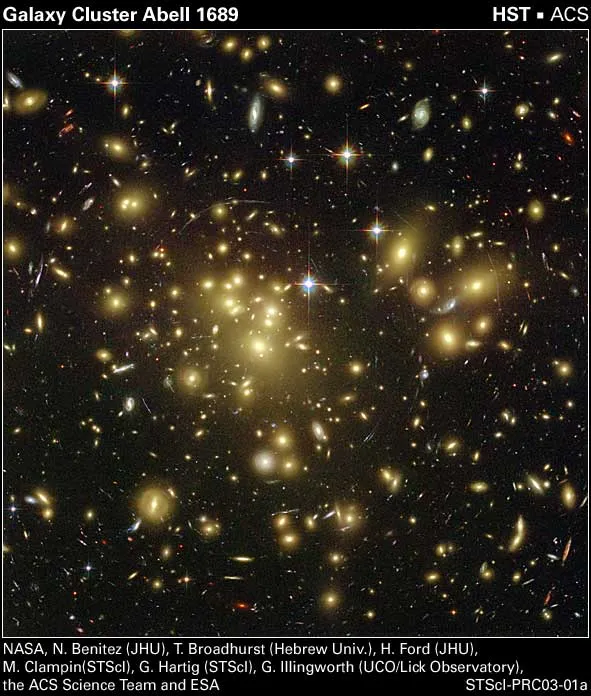
With the Hubble Space Telescope, astronomers were able to spy through the center of one of the most massive galaxy clusters known, 2,200 million light-years away from Earth, for 13 hours. The cluster, in turn, served as a lens, since being very massive, its strong gravity causes the light from even more distant galaxies to curve, which allowed researchers to know about remote galaxies that otherwise they could not. A couple of those galaxies are as faint as those previously recorded in the Hubble Deep Field. Astronomers think that some of the faintest objects in the image lie more than 13 thousand million light-years away.
Credits: NASA, N. Benitez (JHU), T. Broadhurst (Racah Institute of Physics/The Hebrew University), H. Ford (JHU), M. Clampin (STScI), G. Hartig (STScI), G. Illingworth (UCO/Lick Observatory), the ACS Science Team and ESA
The photograph was published on HubbleSite on January 7, 2003.
0313-192
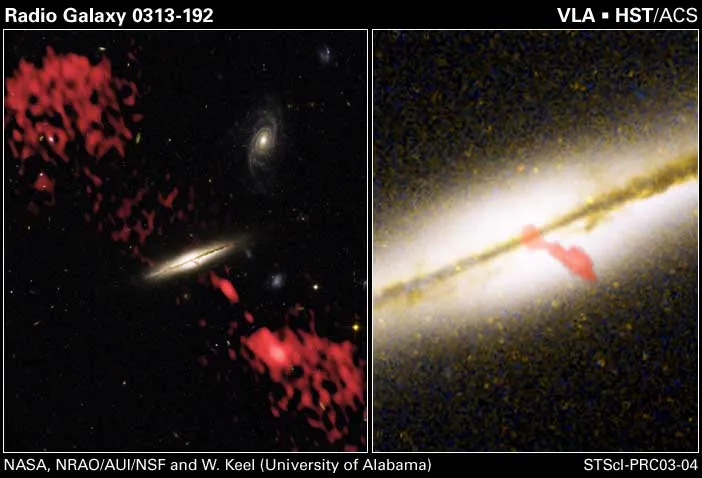
Giant jets of subatomic particles moving at speeds close to that of light have been found coming out of hundreds of galaxies in the universe, but always from elliptical galaxies or those in the process of merging. Until that changed. Using the technical capabilities of Hubble, the VLA and the Gemini South Telescope, astronomers discovered a huge jet of particles or jet, in a spiral.
Astronomers think that those jets originate in the nuclei of galaxies, where supermassive black holes provide the tremendous gravitational energy needed to accelerate particles to those speeds. The formation of jets could be explained by magnetic fields twisted by the disks of material sucked in by the black hole. Those fields would narrow the fast particles into jets. The discovery was made in the spiral 0313-192.
Astronomer Frazer Owen began investigating 500 galaxy clusters using the VLA to obtain radio images. Later other researchers joined the project. Their work gave clues that 0313-192 was a spiral galaxy, but the results were not conclusive. But after many years of work, astronomers no longer have doubts about what kind of galaxy it is. This spiral resides in the galaxy cluster Abell 428, which is not very dense. Perhaps that is why this spiral, which shows signs of interaction with others, has survived. In a denser cluster, it would have merged with other galaxies and would eventually be a giant elliptical.
The image was published on HubbleSite on January 8, 2003.
Credits: NASA, W. Keel (University of Alabama), M. Ledlow (Gemini Observatory), F. Owen (NRAO) and AUI/NSF
Images of the week
NGC 6872
January is always a month of many astronomical news. This is because it is common for an annual meeting of astronomers to be held in the United States.
Several discoveries were announced this week. The revelation of the largest known spiral galaxy stands out.
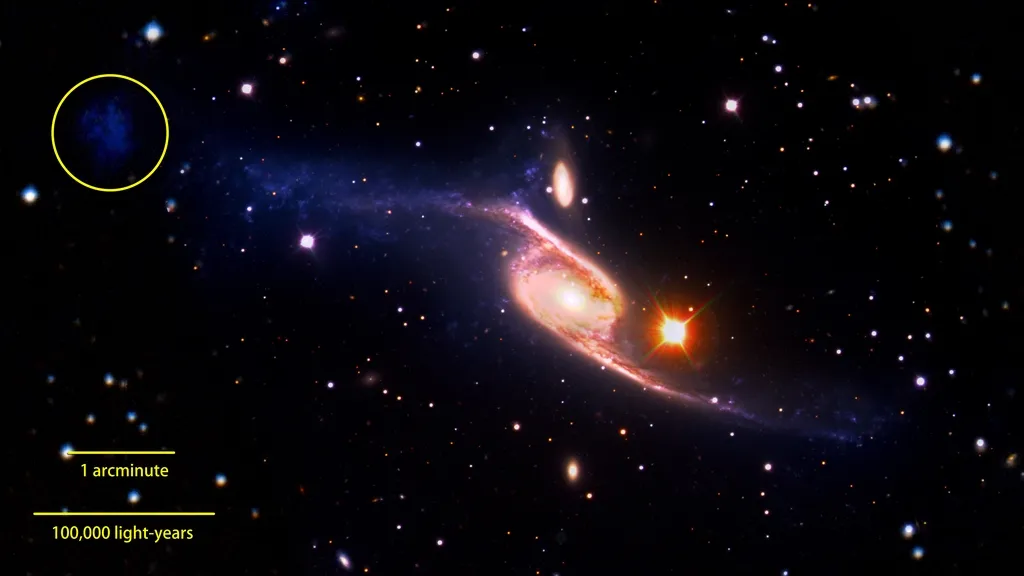
The giant barred spiral NGC 6872 was recorded by GALEX in ultraviolet, VLT in visible light and Spitzer in infrared to achieve this combination.
The circle marks the position of a dwarf galaxy. IC 4970, the small disk galaxy interacts at the top of the center of the spiral.
NGC 6872 has a diameter of 522,000 light-years, about five times the size of the Milky Way.
This measurement could be made thanks to the combination of wavelengths that allowed observation (particularly in ultraviolet) of how far this giant extended. Its rare shape is due to the interaction with IC 4970, which has one-fifth the mass of the larger one. Both are located 212 million light-years away from Earth.
It is often said that larger galaxies are formed from galaxy interactions. In this case, the opposite would occur, since the interaction between these two would have formed a small tidal galaxy (in the place marked with the circle).
The news and images were published on NASA on January 10, 2013.
Credit: NASA's Goddard Space Flight Center/ESO/JPL-Caltech/DSS
IC 342, Caldwell 5
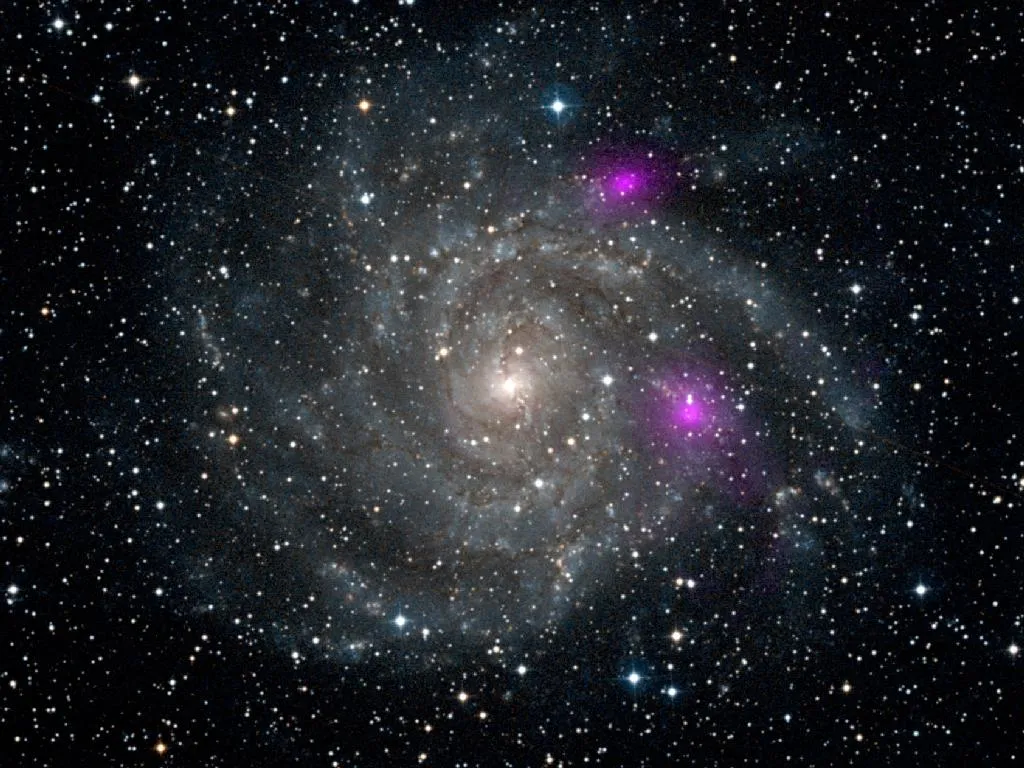
This spiral galaxy known as IC 342 or Caldwell 5, includes data from NuSTAR. The high-energy X-ray data were color-coded magenta, over a visible light image. The two violet dots are black holes, previously detected with Chandra.
With the complementary data from NuSTAR, more will be known about these objects.
The galaxy lies 7 million light-years away.
Credit: NASA/JPL-Caltech/DSS
The image was published on NASA on January 11, 2003.
R2, the robonaut
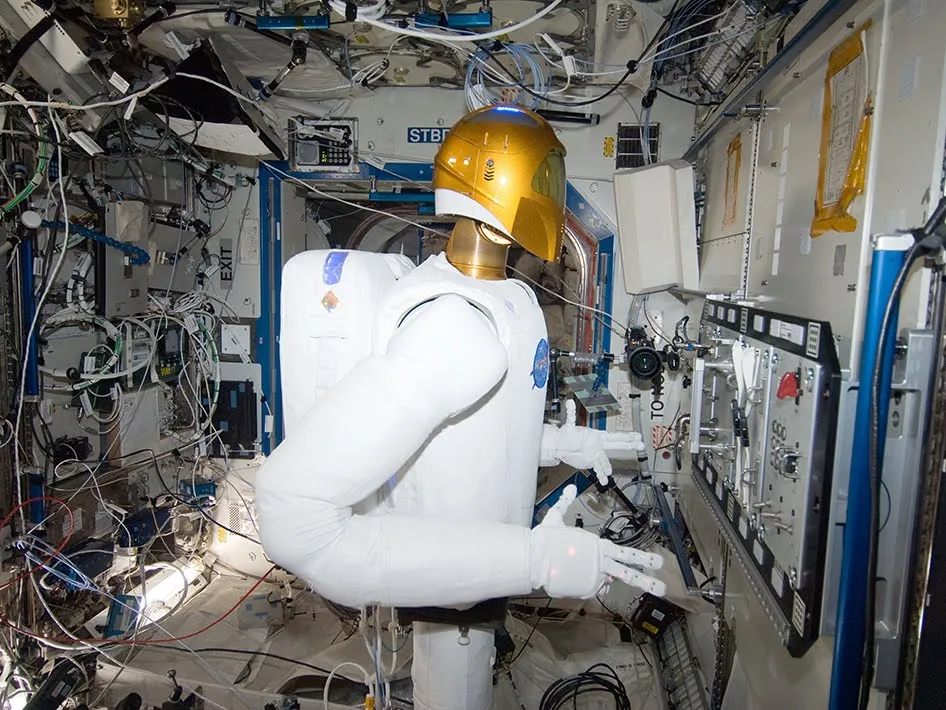
A robonaut operates a panel in the Destiny laboratory on the International Space Station. Robonaut 2 was photographed on January 2 during a round of tests for the first robonaut in space.
It is very common for one to dream of being an astronaut when one is a child. Perhaps robots don't just dream of electric sheep...
Robonaut 2 is also known as R2, which in English is pronounced "Ar-too".
Credit: NASA.
Space Music
No Rules: Abell 1689
No Rules is the artistic name of Konstantin Krasavin, from Russia. From Soundcloud it is possible to listen to this track about Abell 1689.
Animated Science
Gastón Giribet - Space-time and black holes
This is a talk at TedxRiodelaPlata by Dr. Giribet.
To access previous editions of this section, consult the Multimedia Selection Series. The series attempts to show that the immensity of the universe can be perceived in different ways. I choose some of the images from a decade ago -so they don't fall into oblivion- and from the current week that ends, as well as sounds/music and videos that are artistic forms of expression with content related to astronomy and related sciences. I am also collecting these materials in the Pinterest account