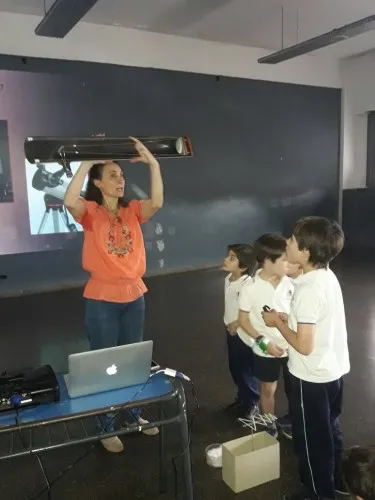
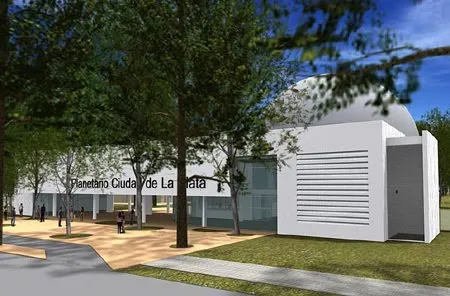
This Thursday I was getting to know the recently inaugurated facilities of the country's new Planetarium, in the city of La Plata.
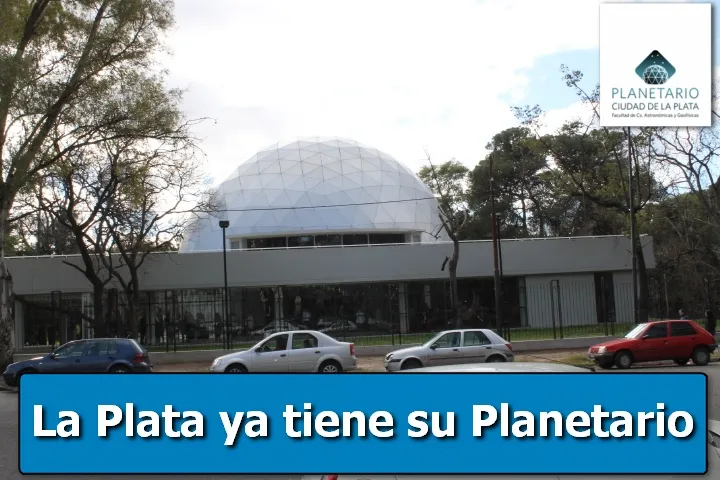
In March 2010 we reported here, based on notes recorded on the UNLP website and on other sites such as Todo Arquitectura, that a planetarium was going to be built in the city of diagonals.
The first ideas for its design can be traced back to 2002/2003. After a competition among different projects from the university itself, the architects Murace, Willemoes, Ruiz, Santinelli and San Juan worked jointly on the architectural design, finally approved in 2006.
According to the University of La Plata: "Within the framework of the UNLP Works Plan, the Planetarium began construction in 2010 and the works were carried out by the La Plata company Construcciones Málaga S.A. The total investment was 16 million pesos. The government of the Province of Buenos Aires, through the Ministry of Economy, contributed 8 million; the Nation, through the Secretariat of University Policies, invested 5 million; while the remaining 3 million pesos were financed by the University itself".
This is the first relevant fact and -in my view- perhaps the most important: unlike the other planetariums in the country -Malargüe, Rosario, Buenos Aires- which are directly related to the municipalities of each region, the one in La Plata is a work of the University. It lies on the same grounds as the Faculty of Astronomy and is directed by a professional astronomer, Dr. Carlos Feinstein.
It should be noted, however, that the other planetariums also have relationships with universities, such as Malargüe with UTN or Rosario with IFIR at the time.
Technical characteristics
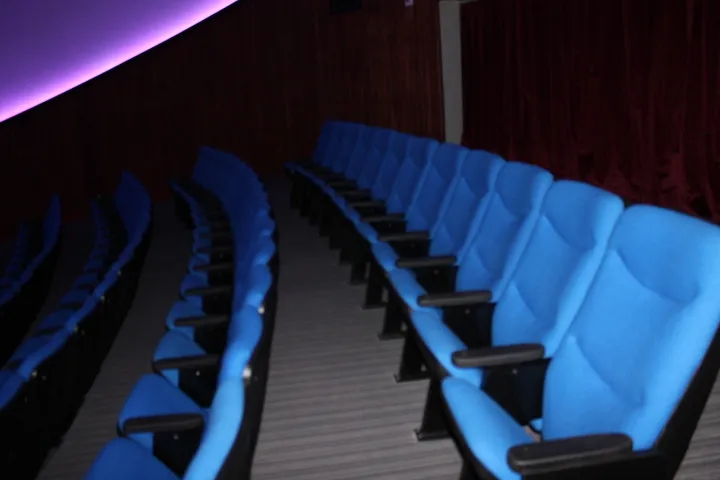
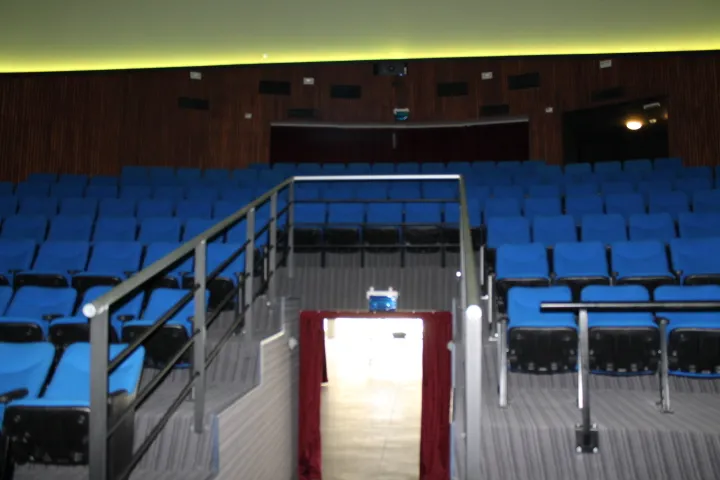
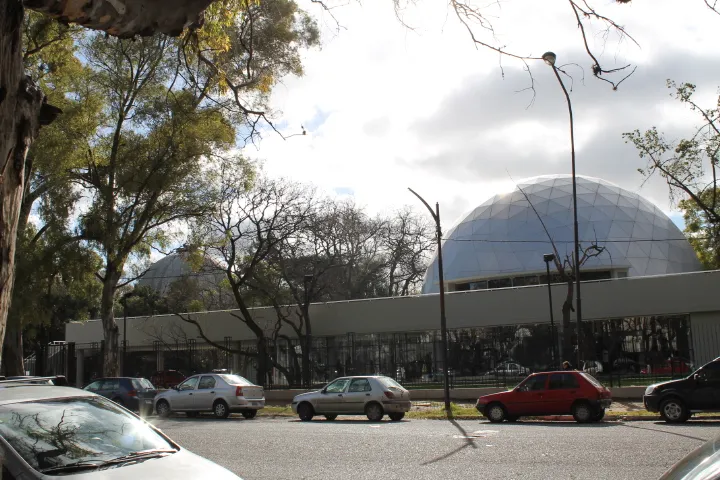
The La Plata Planetarium has a 17-meter diameter hemisphere with a 20º inclination, with a capacity for 175 people seated in an amphitheater configuration. It has a magnetic loop (which is a device that allows the hearing impaired to enjoy a show without interference) and locations for people with motor disabilities in wheelchairs. It also has other areas and restrooms.
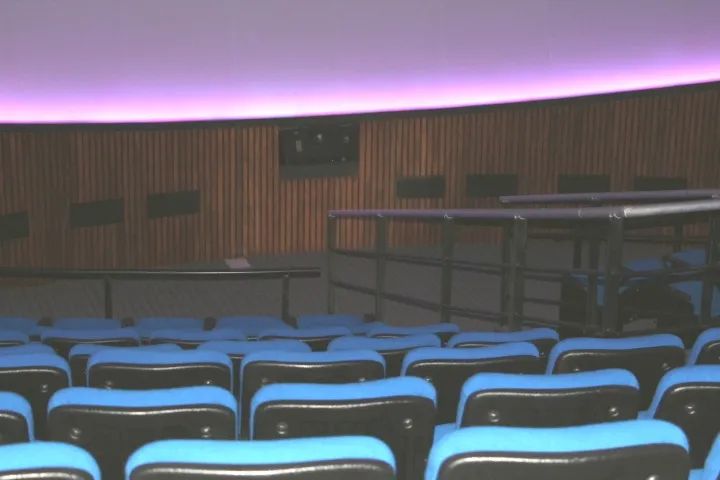
It has two 4K Full HD projectors, JVC brand, and a powerful audio system. The equipment was acquired -turnkey- from the company Evans & Sutherland, which is a world-leading supplier in the field. The system offered by this company is called Digistar 5.
This system has its own software (which runs under Windows) and contains multiple libraries, a drag and drop system and all the expected functionalities: launching a pre-created show, real-time effects to show the positions of objects according to their celestial motion, as well as the possibility of visualizing an astronomical event from past and future dates.
The software has its own programming language with which the staff in charge has already been familiarizing themselves.
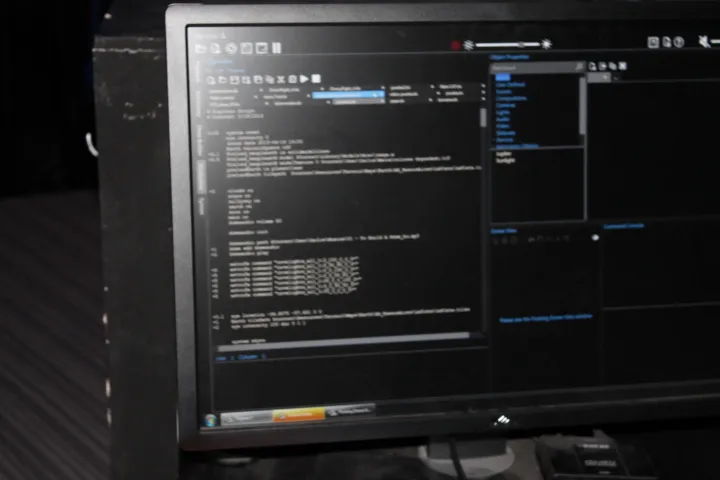
There is a key element here: the professional astronomers -who are used to learning quickly and know how to program, although they prefer free operating systems- have in their hands a tool that they will be able to get the most out of quickly.
However, creating a show from almost scratch and doing it well takes time and requires non-astronomical knowledge related to audiovisual storytelling and its pedagogical practice. But since it is not only associated with the Faculty of Astronomy, but with the entire University of La Plata, students and professionals from the university will be consulted to advise on these topics.
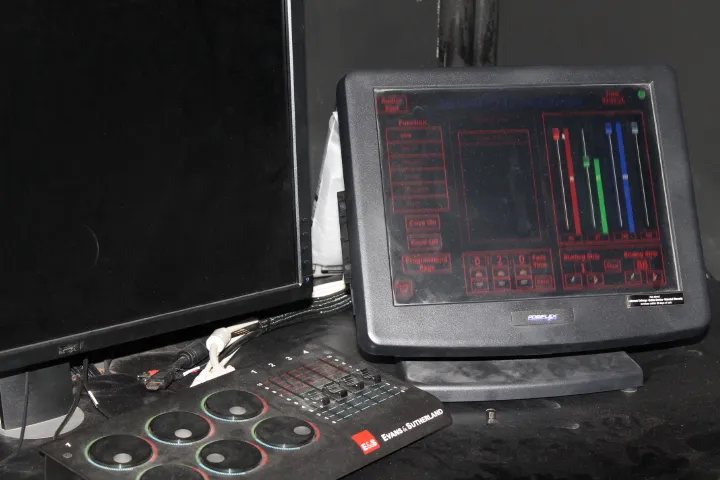
The audio system included in the equipment is from Bowen Technovation (Bowen AstroFx) 5.1 digital audio, AstroFXAurora with its LED lighting system.
Shows
Currently, for these winter holidays, the La Plata Planetarium offers its visitors the shows Maravillas del Universo and Estrellas de los faraones.
The first one, about 20 minutes long, is followed by a short film on light pollution titled Perdiendo la oscuridad produced by Loch Ness Productions in collaboration with International Dark-Sky Association.
The first one is dubbed into Mexican Spanish (with some translation deficiencies) and the short film is dubbed into Spanish from Spain.
The translation problems in the dubbing of the first show can be modified thanks to having the audio track separately.
The show about the pharaohs, highly recommended by its director, I did not attend.
But the first thing I saw, in last Thursday's show, was neither of those two things, but raw material created by the director himself: a series of sequences that allow you to visualize the power of the audiovisual tool in all its glory with an approach to the Moon that takes your breath away.
Astronomy outreach
Although planetariums are facilities for projecting audiovisual material, like a cinema, they differ from them not only in that the screen is in the "sky", but in their objective. In both cases the aim is to entertain, but planetariums have their own message: the dissemination of astronomy and related sciences.
The fact that in this case there is a direct, embryonic, link with the Faculty of Astronomy and Geophysics will result in multiple benefits such as the possibility of using the room for talks and conferences. The already famous Charla de los Viernes which until now has been held at the Faculty (and which has seen its audience grow) plans to be held at the Planetarium (which is still the FCAGLP). The system has the technical possibility of showing "slides" through different connectors (USB, HDMI, etc.), as well as its own remote control that allows triggering sequences.
Planetariums in the world
Despite how odious comparisons can be, it is enough to look at what happens in other parts of the world to get a (partial) idea of how we are doing at home.
There are about 3000 planetariums in the world, of which one third are small (less than 6m), and the medium ones (6-14m) represent almost half of the total, while those larger than 15m are 10%. 50% of the planetariums in the world are in the United States, 20% in Europe, 13% in Japan, 3% in China and 14% in the rest of the world, according to 2009 data.
The information comes from IPS (International Planetarium Society) and was taken by Jean-Michel Faidit (historian of astronomy) to point out that after a few large planetariums are built in a country, there is a wave of medium-sized equipment when socio-economic conditions are favorable, and a second wave of large installations appears a few years later. The conjecture arises from a comparative analysis of the evolution of planetariums in Europe, Japan, and the USA during the 20th century. (Note 1)
In Spain and Mexico there are more than 20 planetariums, in Brazil (mostly associated with Universities) about a dozen, and in the United States they are countless (more than a hundred), according to Wikipedia, which is probably counting the most important installations. According to the Interactive World Planetaria Database of APLF the number in each country is higher. For example, for Argentina it considers those already mentioned plus the ones in Trelew, La Punta, the one at the MACN, the EARG and the Carl Sagan in Córdoba which have at most 8m.
Of the 2460 fixed planetariums recorded by that entity (mobile ones are also there, not counted in that database) 783 are digital, 1722 are optomechanical and 278 are hybrid.
In the Americas there are several Digistar, but few that are Digistar 5 (like the one in La Plata) among which stand out the one in Manitoba, Canada (18m); the one at the Instituto Geográfico Militar of Ecuador (23m) and the Papalote Museo del Niño, Mexico (23m).
Among the planetariums in our country, for various reasons, there is no competition. It would be desirable that among the three digital ones some synergy could exist in the exchange of information, statistics, and material.
Projects
Dr. Carlos Feinstein, director of the brand-new planetarium, told me that he wants to take advantage of these winter holidays so that his staff can carry out their work adequately and that, once that inaugural task is completed, he can devote himself more fully to creating his own material. He is aware of very recent studies, mainly in the United States, on didactics and pedagogy in teaching with planetariums. He knows it is a difficult task to create content for different children/adolescent audiences.
Among his aspirations is also the collection of data for statistical purposes related to the attending public and their understanding of the topics.
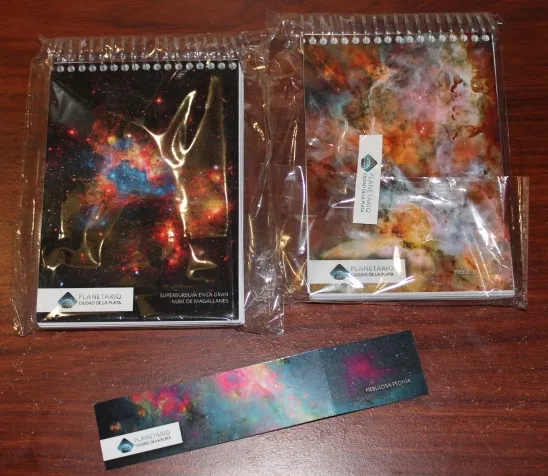
Although part of these tasks are not typical of an astronomer, the professional quality of its director, his academic training, and the commitment put into the project ensure that it is well on track. The support of the University is not minor. To give an example: a design student from the UNLP designed the signage for the place, as well as marketing articles (notepads, magnetic bookmarks, puzzles) that are sold in the hall of the building at Paseo del Bosque s/n.
It should be noted that Dr. Feinstein is a first-line Argentine professional astronomer who has dedicated himself - like his prestigious father - to the study of open clusters, research he has not abandoned, and is part (as well as other Argentines) of the ESO VISTA survey project.
Sources and related links
- Planetario.unlp.edu.ar
- Telam: The La Plata planetarium will offer images of the Big Bang...
- UNLP: Planetario Ciudad de La Plata, new heritage of the UNLP
- They would build a planetarium in La Plata
- FAU UNLP: Inauguration of the UNLP Planetarium
- Note 1: Jean-Michel Faidit (2009). Planetariums in the world. Proceedings of the International Astronomical Union, 5, E9,
DOI:http://dx.doi.org/10.1017/S1743921311003292
About the images
- Images taken by the author, except for the logo included in the opening image.