From science to astrology, certain "experts" announced the probable results of the World Cup.
The background of these discourses.
Both sciences and pseudosciences and religions are human discursive practices. Throughout history we have predicted the world from these fields.
The sciences, especially the so-called "natural and exact" ones in the modern conception, were embedded in predeterministic conceptions based on the triumph of the Newtonian model: we conceived the universe as a clockwork mechanism.
The social sciences began in 1776 with "The Wealth of Nations" by Adam Smith. The author will tell us about an "invisible hand":
Now, the first thing that the process of secularization of modern rationality teaches is not to pay much attention to Providence. In the case of our philosophers, this is not so. For as has been said, they were religious men. In their respective social philosophies, Providence is assumed as the famous metaphor of the "invisible hand" and as an unstoppable force that influences and affects human action. That is why it is considered inevitable and indispensable. But, in Smith's case, it is never clarified to us whether the impartial spectator responds more to human affairs than to those of Providence. If the individual's task is to be master and lord of himself—"hero" of himself as Baltasar Gracián points out—any entanglement or influence of Providence will be suspicious. Unless one believes that, indeed, the individual as an impartial spectator models a kind of sovereignty that allows him to be thought of as God's vicegerent.
by Adam Smith and Alexis de Tocqueville: two political imaginaries of civil society, by Jorge Velázquez Delgado. (#1)
Economics would be followed by sociology with exponents such as Saint-Simon, Simmel, Durkheim, Weber and Marx. For the latter, there is a "law of history" that repeats itself unfailingly: oppressors who oppress and oppressed who rebel through a class struggle destined to end when the proletariat imposes itself on the bourgeoisie.
However, for the German thinker, history is not written and there are no gods. Therefore, that "inevitable" result, in reality, depends on human will.
Let us consider that the capitalism of the mid-19th century was different from the one we know: there were no labor laws and human rights. Physical exploitation was explicit, unlike today where it is "softened" (but still exists).
Let's think of the following example: a couple, Juan and Carla. Juan hits Carla every day. We see Carla always with a bruised face. What would we believe the outcome of this couple would be? Of course there is not ONE ending, it is not written. It depends on Juan, Carla and third parties. But does it depend more on Juan or on Carla or on third parties? I think that for Marx, since there are more Carlas than Juans, it depends on the woman joining others like her to defeat the Juans.
I understand that for the author of The Capital and other works, that result is probable, not determined, but he makes use of an epic, apologetic rhetoric, especially in the Communist Manifesto. Apology means -etymologically- defense.
Soccer is often also epic and apologetic. A coach motivates his players even when the chances -in his opinion or in the opinion of others- are against them. You cannot fight if you think you are going to lose.
Religions are also deterministic. I do not know all religious discourses. I was raised in Catholicism. I usually say that I was taught to believe and I had to learn not to...
Catholic discourse is strongly predeterministic: God is perfect, immutable and has a divine plan that, by transition, is also perfect and therefore immutable, to the point of being written: the apocalypse. The will of the human being (the so-called free will) cannot really be such, since the end is written. It barely allows thinking of a restricted freedom for making inconsequential decisions. In the end, the good go to heaven and live a spiritually eternally happy life and the bad go to hell and will be punished ad infinitum.
I never really understood what it would be to be "spiritual". If spirits do not possess matter, they are immaterial, then they do not possess sensory organs (eyes, mouth, ears, hands), nor brains. Therefore they perceive nothing, feel nothing, remember nothing. That memories are in the brain is undeniable, no matter how many photos we take and store in the cloud or flash drives...
Pseudosciences (divinatory arts like astrology, numerology and other herbs) never went away.
WORLD CUP IRRATIONALITY
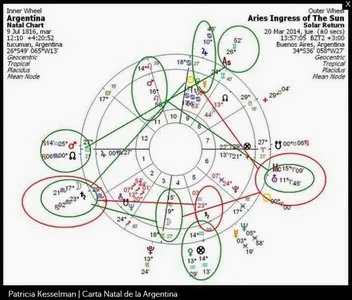
The site Entremujeres.com publishes articles on astrology periodically. A supposed expert in such "arts" predicted how Argentina would fare in the World Cup. According to her, due to the arrangement of the stars in the sky, the national team will reach the final. Today, with the team in the semifinals, it seems that the REAL result is approaching the predicted one. If Sabella's team loses to the Dutch (not a wish) it will still be said that the prediction was relatively accurate, in the same way that scientific predictions are approximate.
There will be those who, upon reading these articles, consider them "serious" because they include certain terminology and apparently "scientific" graphics.
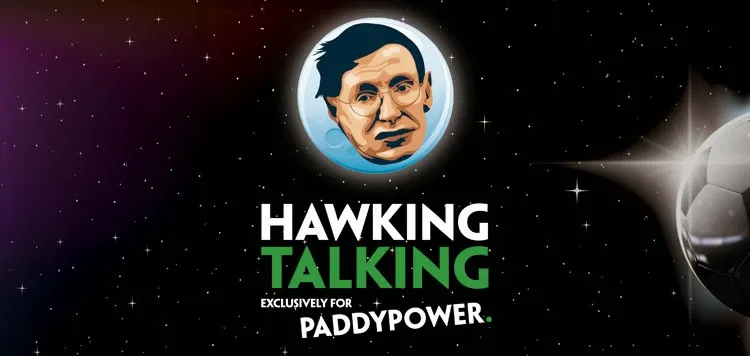
Stephen Hawking, English astrophysicist, turned postmodern cultural icon, agreed to make predictions about the World Cup.
The English newspaper The Guardian published a note about it. I quote a paragraph:
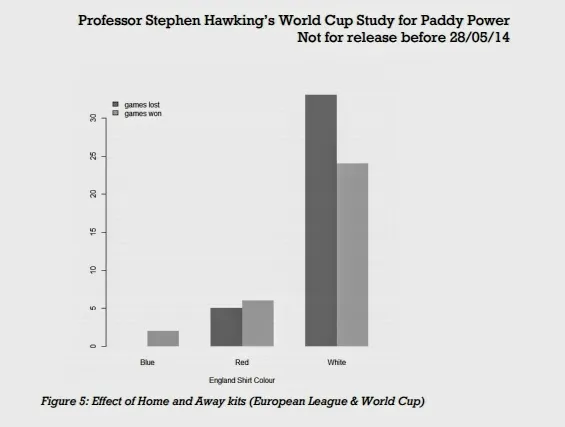
On the psychological front, England have a better record wearing red than white shirts, perhaps because red can make players feel more confident and appear more aggressive, Hawking added. England normally play a 4-4-2 formation, but 4-3-3 has been slightly more successful in the past, with 58% of matches won. Under 4-4-2 England won 48% of matches.
(#2)
I translate: On the psychological front, England has a better record wearing red shirts instead of white ones, perhaps because red can make players feel more confident and appear more aggressive, Hawking added. England normally plays with a 4-4-2 formation, but the 4-3-3 formation has been slightly more successful in the past, with 58% of matches won. Under the 4-4-2 formation England won 48% of the matches.
Let's analyze this reasoning. Let's say that any reasoning can be valid or invalid regardless of whether its conclusion is true or false. To understand this, let's give an example:
p1-All lawyers are men.
p2-Juan is a lawyer.
C1-Juan is a transvestite.
If Juan is a transvestite, then the conclusion is true. But that conclusion is invalid because it does not follow from the premises.
Let's look at reasoning similar to Hawking's, in another way.
Costa Rica's statistics in World Cups, according to the FIFA site.
They played in three Cups (not counting the current one) a total of 10 matches. They won 3, drew 1, and lost 6.
Does this mean that -a priori of this 2014 World Cup- Costa Rica had a higher probability of losing than of winning?
And yet, the results say something different.
Why?
Because reductive historical reasoning is invalid.
Another example:
The sun rose yesterday.
The sun rose the day before yesterday.
The sun has always risen, for 4,500 million years.
Conclusion: the sun will rise tomorrow.
This reasoning is true, but invalid. The reasoning, implicitly, assumes that the past determines the future. And therefore, there is no becoming, change, or transformation.
What underlies these reasonings is an idealism, typical of certain philosophies and of religions and pseudosciences.
Unfortunately, some scientists also fall into these invalid reasonings.
They are invalid because they fall into a synecdoche, the part for the whole. In contrast, dialectical thinking considers the whole as the multiple relationships between the parts (which does not mean that everything is related to everything).
The sun, at some point, will stop "rising". Note that in this expression there is also a rhetorical device because it is not literal. It is about the effect of the Earth's rotation.
If we go to Newton's First Law:
Every body perseveres in its state of rest, or of uniform motion in a right line, unless it is compelled to change that state by forces impressed thereon. (#3)
From this the concept of inertia:
In physics, inertia is the property that bodies have of remaining in their state of rest or motion, while the force is equal to zero, or the resistance that matter offers to modifying its state of rest or motion. As a consequence, a body preserves its state of rest or uniform rectilinear motion if there is no force acting on it. (#3)
We can apply this concept when there are no variables acting, or when out of stubbornness or ignorance we are unaware of them, as happens with Hawking in relation to soccer.
Social practices (carried out by subjects) are distinguished from natural relationships between objects. In part, English considers this by pointing out that perhaps the color red "intimidates". But it isolates that variable statistically: when their national team played with that jersey color, they won more. Therefore, they will win if they use that jersey. As if that variable had an intrinsic value.
Between this reasoning and the astrological "analysis" of Entremujeres.com there is little difference.
They assume that the variables that favor the results are the jersey colors or the apparent position of planets in the sky and not human action.
Incidentally, from a dialectical point of view, human action is always bidirectional, mutual, reciprocal.
Superstitions are part of soccer folklore. We can think of them in relation to myths and rites. Myths are stories that are commemorated in symbolic ceremonies.
Always sitting in the same armchair, watching matches with the same people, implies a rite that symbolizes a myth. The myth is based on ideas like the previous ones:
I watched a match in this armchair and the national team won.
I watched another match in this armchair and the national team won.
When I watch a match in this armchair, the national team will win.
As if sitting in an armchair had anything to do with a soccer match.
It is there where the concept "everything is related to everything" truly nests.
ANNOUNCEMENTS, RESULT AND CONCLUSIONS
Hawking's prediction did not come out of nowhere (everything arises from some cause). It was at the request of Paddy Power, an Irish publisher that owns telephone and online betting businesses. The site has a blog with abundant material on the astrophysicist's analysis. See for example Stephen Hawking infographic: Formula for England success at the World Cup.
And the scientist's study in pdf format (#4).
The site even recorded a video and uploaded it to YouTube.
The article on the Entremujeres.com site is signed by an astrologer. At the end it indicates Patricia Kesselman is an astrologer and teaches courses in Astrology and Tarot. And then a website of the aforementioned is indicated.
In both cases it is advertising.
In both cases, unintelligible or difficult-to-decode graphics are used for the majority.
Evaluation of results
England finally played with the white jersey and lost. Was Hawking right?
Argentina is very close to the final. Was Kesselman right?
If we reduced the analyses to their minimum expression (to the conclusions) it might seem that they were right. This is often done, to the detriment of certain data that did not agree with what actually happened. We take from these reasonings what suits us, forgetting what does not suit us.
For example, the astrologer bases part of her conclusion on the fact that "the day of the final (July 14) Mars will be transiting over the eclipse point, activating it". However, the final will be on July 13...
In any case, these are details. What matters is that regardless of the result these analyses are invalid. It's like forecasting that it will rain tomorrow because I dreamed it would be so. If it rains tomorrow, will I have had a premonition? And if it doesn't rain?
Weather forecasters take into account statistical, historical data. For example, if in previous years it rained on a day like today, July 6. But only as a reference. Making a forecast based solely on that historical basis is pseudoscience like that done by astrologers. Horangel boasts about that.
The past conditions the future, certainly. The present is a product of the past. That's why we must not forget. But reality is in constant transformation based on multiple variables. If only the past mattered, then acting in the present would make no sense. Argentina has lost more times than it has won against the Netherlands. What do we do, go home?
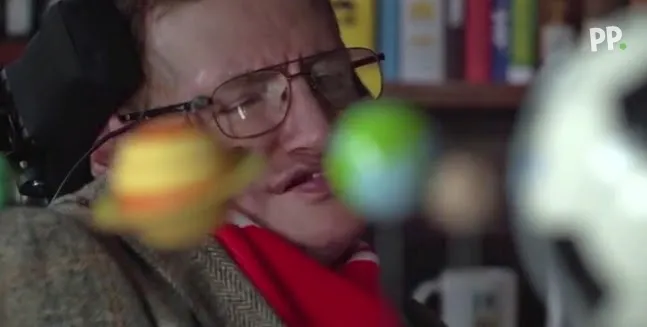
Incidentally, the center of the solar system is not a number five. Thinking like that is a good way not to think about other things, more important ones.
Let us not be seduced by these fallacious arguments whose only intention is to sell products or services, but which -incidentally- reinforce an idea that has been circulating among us for millennia: that our future depends on certain hidden, invisible, divine, immaterial forces; not on ourselves. We should free ourselves from these ideas, apropos of the upcoming day of our Independence.
Winning the World Cup does not bring happiness. Happiness is a myth.
Sources and related links
- (#1): VELAZQUEZ DELGADO, Jorge. Adam Smith y Alexis de Tocqueville: dos imaginarios políticos de la sociedad civil. En-clav. pen [online]. 2008, vol.2, n.3 [cited 2014-07-06], pp. 77-107 . Available at: http://www.scielo.org.mx/scielo.php?script=sci_arttext&pid=S1870-879X2008000100005&lng=es&nrm=iso. ISSN 1870-879X.
- (#2): The Guardian: Stephen Hawking unveils formulae for England World Cup success, by Ian Sample. [cited 2014-07-06]. Available at: http://www.theguardian.com/science/2014/may/28/stephen-hawking-formulae-england-world-cup-success.
- (#3): Newton's laws and Inertia on Wikipedia.
- Entremujeres.com: How will Argentina fare in the World Cup according to the Stars? [cited 2014-07-06]
- (#4)Professor Stephen Hawking’s World Cup Study for Paddy Power (PDF) [cited 2014-07-06]
About the images
- Initial image taken from the Paddy Power blog.