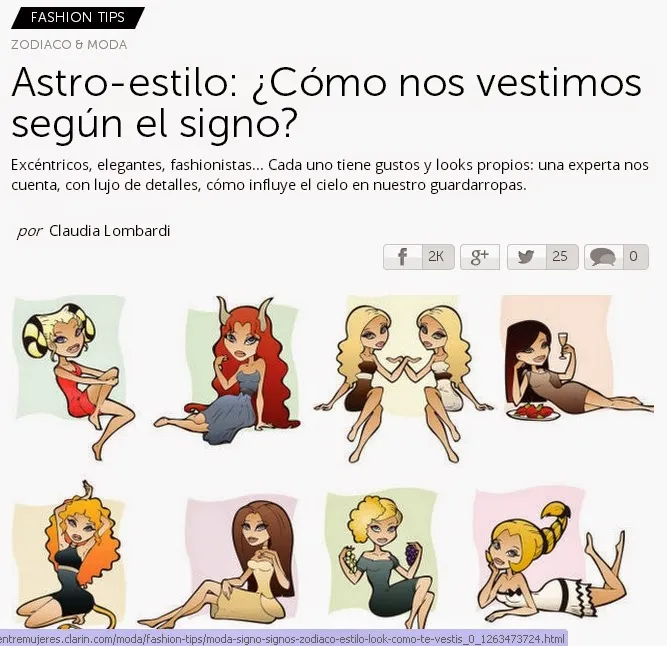
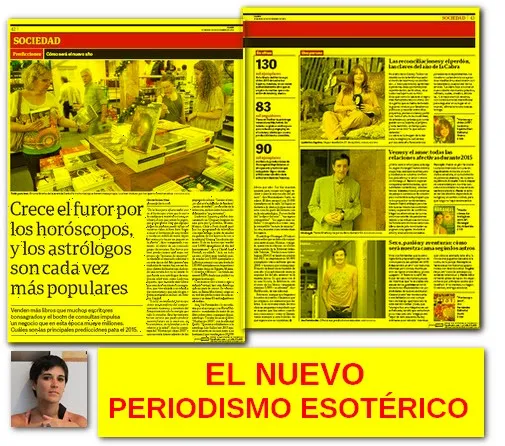
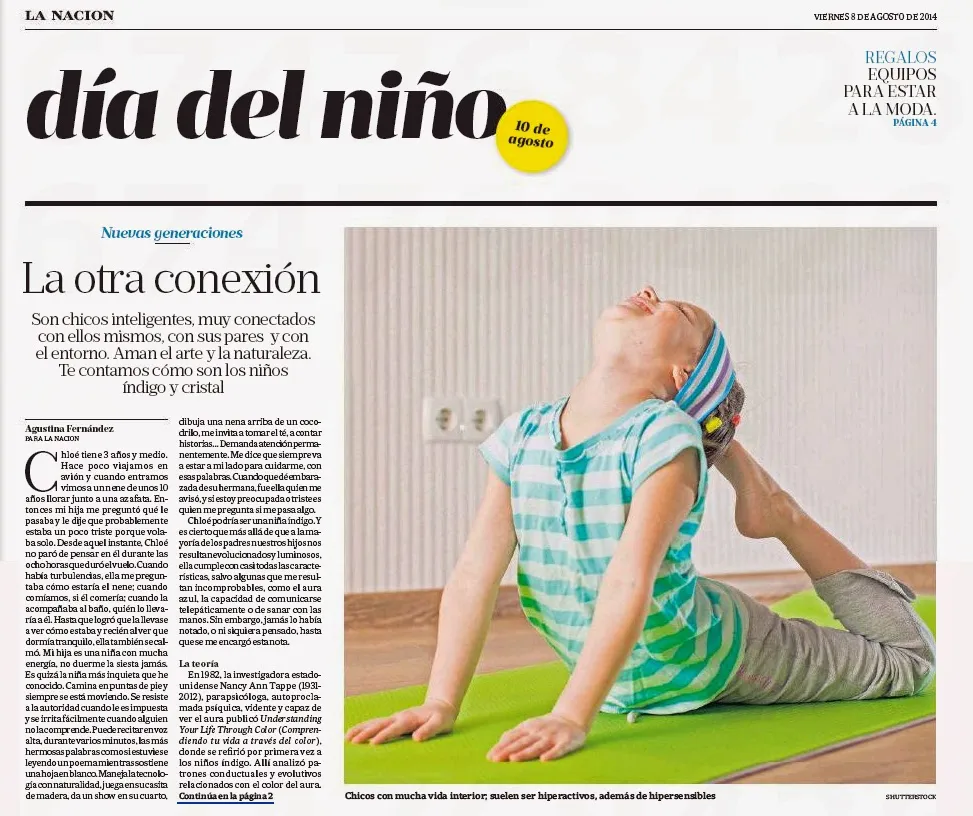
On the concepts of echolocation and self-criticism.
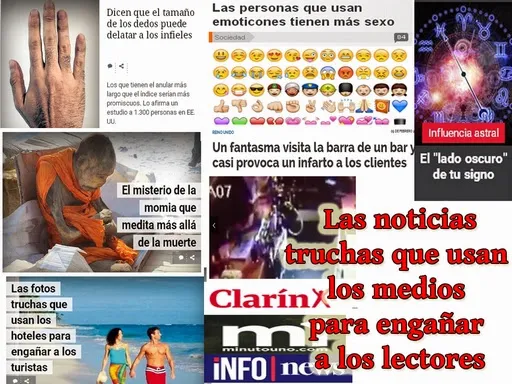
These days, articles like those shown in the opening image are read in the press. "Discoveries" are announced that are nothing more than mere correlations of variables. Likewise, articles are written about ghosts and Buddhist zombies. At the same time, fake photos are denounced.
We must then talk about science journalism.
First, I want to tell a brief introductory anecdote. Some years ago I took an online science journalism course. The professor asked us to write a letter (as an exercise) addressed to the director of a newspaper with the goal of convincing him to publish a science supplement.
The assignment was, so to speak, concrete. That is, he was not asking each student for a "justification" of science journalism in the abstract, but rather a set of arguments to convince someone who makes decisions based on certain criteria.
We can think of such criteria as related to commercial benefit, linked to the number of interested readers, the striking and impactful (spectacular) nature of the news, or matters of daily life. Perhaps that is why the few science supplements today are more dedicated to health and technology.
This implies, then, a number of really existing limitations, which does not mean things must be this way and not another. But it is a position we can call "realistic."
Here, then, I bring in the concept of "echolocation."
ECHOLOCATION
As we know, some animals have a sort of internal "sonar" that allows them to know the position, shape, size of surrounding objects by sending an ultrasound signal that "bounces" off those objects and returns to the emitter.
This concept, in communication terms, we can take in the following way: an emitter "locates" itself (assumes a position) in relation to the position of other pre-existing discourses.
It implies, if you will, a certain dependence on others. Like it or not, there is a world out there, a number of media outlets, journalists, scientists, who do things without asking us, it does not depend on us, at least not individually.
Therefore, doing journalism as if that did not exist, without considering it, is doing journalism inside a bubble.
CONCRETE SCIENCE JOURNALISM
Without evading concreteness, I understand the criteria as mentioned above, but I don't think they are the only "palatable" points of view.
Certainly, even if we don't like it, there will be "scientific studies" like those alluded to and media and journalists who will give them coverage. I don't believe in coercive measures in this regard. For example, I don't think banning astrology is a praiseworthy measure, although I consider it false from start to finish.
Laws do not prevent. To ban is only to punish (and potentially).
Therefore, it makes no sense to prohibit what we disagree with. But we must do something: generate counter-discourses.
In this case, it would be writing articles that explain what such variable correlation studies "mean." What differences exist between a correlation and a causal relationship; what to say about the number of people who are part of those studies; how to understand "standard deviations" and other statistical criteria.
For some, that is not journalism but education. There is a huge gap between the discourses that account for reality and those that try to understand and explain it, that is, academia.
The public, mass, popular, is relegated to the "simplistic."
This is so for a number of reasons. Among them, because those who write such articles lack the elements that would allow them to identify that what they narrate is incomplete, partial, and that by telling it that way, it generates false ideas.
Those who do have those elements, because they have specific training in communication and science, on the contrary, consider dedicating space to such topics a waste of time. As these specialists do not seek spectacularity, but something more "profound," their discourse goes another way. And in doing so, they ignore a part of reality that is told one way and not another. Such "ignorance" is not harmless.
Why do astronomers in general not publish articles and books against astrology?
Why don't science journalists do the same?
For several reasons surely, among them: they consider those discourses harmless; that they are just entertainment; because their "duty" is another.
It is, clearly, an anti-echolocation stance and, moreover, naive, to say the least.
SELF-CRITICISM
On the other hand, no discourse we could call "intellectual" could fail to be critical and self-critical. Journalism is supposed to "should" have a critical view of reality, and in some cases it seems so. But then, taken as a whole, it gives the opposite impression.
At least in the case of science journalism, it is rare to find articles critical of science as a social practice.
Sometimes a sort of functionalism comes into play: if I criticize the big laboratories, one might think I am in favor of the quacks (or vice versa).
It is, if you will, a form of echolocation, since others are taken into account, but which has as a consequence self-censorship, silence, and not counter-discourse. The real and effective, concrete consequence of such a stance is that the dominant discourses will continue to be so as long as there are no counter-discourses.
Certainly, one cannot be critical of journalism or science without a comprehensive view of social practices. And that demands something more than what is taught in "science journalism."
Scientific thought is supposed to be critical, trying to distinguish between the apparent and the real.
Indeed, an astronomer will know how to distinguish the apparent brightness from the real brightness of a star. But will that astronomer know how to distinguish the apparent from the real beyond the merely astronomical?
The same is valid for the journalist and for the science communication specialist. In fact, it is valid for every form of communication, for every social discourse, for every social practice.
I conclude by recommending an article by José Natanson published on 02/01/2015 in Página/12 titled "Chocolate laxante". There the journalist takes an idea from Slavoj Zizek: he identifies as one of the most characteristic features of postmodernity the illusion that it is possible to get what you want without suffering.
Doing journalism (of any kind, and especially scientific) without a critical view, without questioning the given, without moving the reader from their comfort zone, is an oxymoron.
Science journalism, popularization or dissemination of the sciences (natural and social) should not be mere sales of laxative chocolates.