Biological predeterminism is getting more and more uncritical press. Causes and consequences.
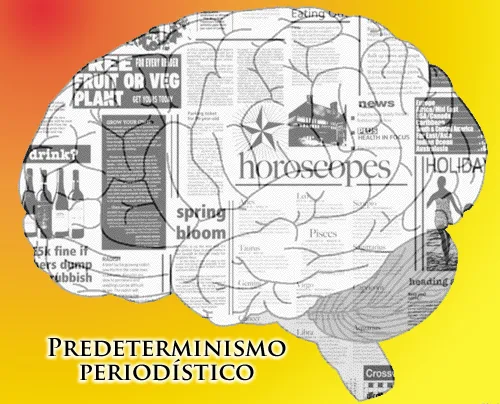
Two recent articles published on the Clarin.com website report on scientific studies related to the nature vs. nurture dilemma.
1-Genetic Politics
In a note published on 08-05 titled "Our genes could define if we are left or right", a study by Richard P. Ebstein of the University of Singapore on the genome of 1,771 students from that institution who belong to Han, the main Chinese ethnic group, is reported.
I note three objective facts:
1-The note on Clarin.com is unsigned. Its source is an AFP wire.
2-The study in question was published in Proceedings B of the Royal Society and access is paid.
3-There is a press release from NUS (National University of Singapore)
The press release states:
"While we all possess the Dopamine D4 receptor, the study revealed that less than 50% of the Singapore population possess the variants or genotypes associated with risk attitude and risky behavior, and the percentage is the same in men and women. Women with a D4 variant are predisposed to low risk attitude and political conservatism".
"The results revealed that the D4 receptor better predicts political leanings in women than in men, in a Singapore population. In particular, women in that group who possess the 4R/4R variant of the D4 receptor are more likely to demonstrate risk aversion and are more politically conservative. This correlation is greater in women, compared to men who possess the same genetic variant".
The title of the NUS press release is "The 'adventurous' gene predicts political attitudes in Chinese women, according to NUS study"
As we see, a relationship is established between a Dopamine transmitter gene, which influences neurological functions such as memory, learning and creativity, in this case, associated with risk attitudes.
At the same time, risk attitudes are associated with non-conservative political attitudes (which could be called liberal in opposition, although if so, where would we leave the radicals?).
Now, suppose you are a "conservative" woman, that is, one who does not like to take many risks. And your children are in danger: your house is on fire and the little ones are inside, crying. Would you run to try to save them or would the "conservative genetic predisposition" prevent it?
It is logical to assume that, IN THAT CIRCUMSTANCE, the woman conservative in several aspects of her life, will stop being "conservative" in pursuit of a "higher good", in this case, the lives of her children.
People do not want to change the world "just because", due to an innate genetic tendency that leads them to be "revolutionary". On the other hand, there are several ways to think about "being revolutionary".
A few years ago Marshall Berman became known for the publication of a book titled "All That Is Solid Melts Into Air". According to the author himself indicates in that work, the title is a reformulation of a phrase from the Communist Manifesto.
If we take the Spanish translation on Marxists.org, the original phrase would be "All that was believed permanent and perennial vanishes".
I invite you to search for the text and read the complete paragraph where such a phrase is found and then pay attention to previous paragraphs. What Marx says there is: "The bourgeoisie has played, in the course of history, a truly revolutionary role."
However, if today -150 years after that work- the entire globe is dominated by the bourgeoisie, then is that phrase still true? In a sense, yes. Everything, for the bourgeoisie, has become profane: sport, religion, science, art. Marx says: "The bourgeoisie stripped of its halo of sanctity everything that was previously considered venerable and worthy of pious respect. It turned the doctor, the lawyer, the poet, the priest, the man of science into its salaried servants."
And then he adds: "The bourgeoisie cannot exist without constantly revolutionizing the instruments of production, which is tantamount to saying the entire system of production, and with it the entire social order".
That is, in several senses, the bourgeoisie is revolutionary. However, there is something the ruling class does not want to change: the prevailing order. In that sense, it is not revolutionary and instead the "left" is revolutionary (the non-democratizing left, the left that wants to leave capitalism).
As we see, the concept of being revolutionary or not becomes slippery.
We have recently witnessed two remarkable events in the working world: the strike of the oil workers and that of the bus drivers of line 60. Workers do not go on strike and block roads because they like it or because they have an "adventurous" gene, but based on their needs (political, economic, historical-social). The same workers who carried out these two struggles, however, in several aspects of their lives are surely "conservative".
Considering the conservative-liberal attitude as perennial, absolute, linked to variations of a gene, in a natural-innate way, assumes ignoring that, in reality, our attitudes depend on the historical circumstances we have to live in, individually and collectively.
On one hand we should ask ourselves how it is possible that the "scientists" who do these studies do not have that clear. And on the other, ask ourselves how it is possible that journalists and editors publish these press releases -after translating them- without the slightest critical comment on the matter.
Regarding the first, as we have pointed out on other occasions, scientists do not live in a bubble. They also live in a capitalist world, a global society through which "small revolutions" are rewarded, but being "truly revolutionary" is punished.
Furthermore, communicating isolated "studies" with grandiose conclusions must also be thought of as part of the search for prestige and funding by universities and (paid) scientific publications.
Regarding the second, these communications meet certain criteria of journalistic "newsworthiness": they are striking, controversial, and, as if that were not enough, they are already written and cite "reliable" sources. The news is a product that is sold, as everything is sold.
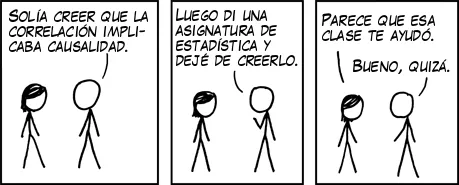
2-Genetic Musical Talent
Another note published on the same Clarin.com site is titled "Musician is born, not made", with the same date.
Three objective facts:
1-The note on the site is signed by Sandra Vicente-La Vanguardia. It is a republication of an article from that Barcelona newspaper.
2-It is a study published in a journal, Cerebral Cortex, with paid access.
3- There is a press release from McGill University in Canada.
According to the article on the Argentine site, "the researchers conducted an experiment with 15 young adults with varying degrees of prior musical knowledge, whom they subjected to a six-week training during which they had to learn new simple piano pieces".
And it adds: They performed an MRI scan on them before and after and discovered that "the learning period involved changes in brain function, but the skills of all of them differed profoundly depending on their learning abilities, which were already predetermined previously," as the scientists explain.
Let's do an analysis that is no less significant for being simple. Suppose all human beings had identical predispositions for musical learning.
All newborn children would have the same predispositions for learning. Exactly the same. It's an assumption.
Let's say that after these children are born, at age fifteen, we subject them to simple musical training and do the MRIs before and after. Will we find any difference or will they all have learned exactly the same?
It turns out it is impossible to answer this question, in the abstract. We could say the following:
1-If our assumption were true and
2-We could teach music to children at birth, or
2b-Until age 15 the children lived isolated from the rest of society and under exactly the same conditions,
then and only then, could we establish a comparison and reach a "clean" conclusion free of other variables.
But since we CANNOT DO THAT, then the question is abstract, idealistic, impossible to answer in those terms.
On the contrary, a CONCRETE answer would assume, in addition to our original assumption, that:
2-Until age 15, those children went through a DIFFERENT socialization process.
In which case, drawing conclusions that the differences are exclusively genetic is invalid.
Therefore we can conclude that, although there may be innate differences in predisposition to learning:
1-Such predispositions can be considered socially
2-There are other variables to consider together with such predisposition: interest in learning something (interest or motivation); the teaching method (if we are all different but education is aimed at an "average" student the result will be biased); family situations, individual situations of each person, etc.
What has been said so far is not aimed at prohibiting or not doing neuroscientific research. It is necessary to know ourselves, to know why we do what we do, think as we think and say what we say. It is valuable knowledge.
But it cannot be abstract knowledge, communicated in an abstract way.
On the other hand, it is not communicated "for the love of transmitting knowledge" but it is impossible to avoid the political, economic, academic interests of such publications.
I have addressed in some way the causes of these investigations and journalistic publications. Their consequences are no less important.
A direct consequence of biological predeterminism is that if evil, anguish, lack of talent were "genetic," then the specter of eugenics, genetic manipulation appears, which, of course, is also a political and economic manipulation.
It is also a philosophical manipulation. It supposes indoctrinating us that human behavior does not depend on the historical-social course, but on something immutable and inaccessible like the innate-genetic. Nothing more akin to an ideology of non-change.
If, as Clarin.com and La Vanguardia headline, you are born a musician, not made. Are you born a journalist?
Perhaps the innate journalists are the conservatives, perhaps (according to the previous study) mainly women with an aversion to change (which would explain the female bias towards astrology) and with a gene for "news spectacle." Surely it's genetic. Either it is, or all these people are mistaken, to put it mildly.
Sources and related links 1
- Clarin.com: Our genes could define if we are left or right
http://www.clarin.com/sociedad/genes-genetica-gen-iquierda-derecha-politica-liberal-conservador-estudio_0_1406859564.html - NUS: The "adventure" gene predicts political attitudes in Chinese females, according to NUS study
http://news.nus.edu.sg/press-releases/9281-the-adventure-gene-predicts-political-attitudes-in-chinese-females-according-to-nus-study - Richard P. Ebstein et al (2015); Association between the dopamine D4 receptor gene exon III variable number of tandem repeats and political attitudes in female Han Chinese; Proc. R. Soc. B 2015 282 20151360; DOI: 10.1098/rspb.2015.1360. Published 5 August 2015
http://rspb.royalsocietypublishing.org/content/282/1813/20151360.article-info - Marxists.org: Manifiesto del Partido Comunista
https://www.marxists.org/espanol/m-e/1840s/48-manif.htm
Sources and related links 2
- Clarin.com: You are born a musician, not made
http://www.clarin.com/buena-vida/psico/cerebro-claves-genio-musical_0_1406259601.html - La Vanguardia: The musician is born, not made
http://www.lavanguardia.com/ciencia/20150730/54434243866/practica-ensayo-perfeccion-cerebro.html - McGill University: Practice doesn’t always make perfect
http://www.mcgill.ca/newsroom/channels/news/practice-doesnt-always-make-perfect-254263 - Sibylle C. Herholz et al (2015); Dissociation of Neural Networks for Predisposition and for Training-Related Plasticity in Auditory-Motor Learning; Cereb. Cortex first published online July 1, 2015 DOI:10.1093/cercor/bhv138
About the images
- Initial combined image of brain diagram (http://www.pintarcolorear.org/cerebro-para-colorear/dibujo-del-cerebro-para-colorear/#main) and newspaper background (http://afreewallpapershd.blogspot.com.ar/2015/07/newspaper-wallpaper.html)