Reflections on the fascination with Pluto and the funding of science.
The arrival of New Horizons at the Pluto system triggered the fascination of the public and journalists. Some web commentators, however, reacted differently: they question that a lot of money is used for something apparently useless like knowing a very, very distant world, instead of alleviating hunger on this Earth.
Faced with this type of questioning, one usually responds poorly: either by disparaging the commentator, or by giving false, incorrect, or idealistic answers.
The first thing I will do is clarify the questions. Let's look at some comments, as a sample [1]:
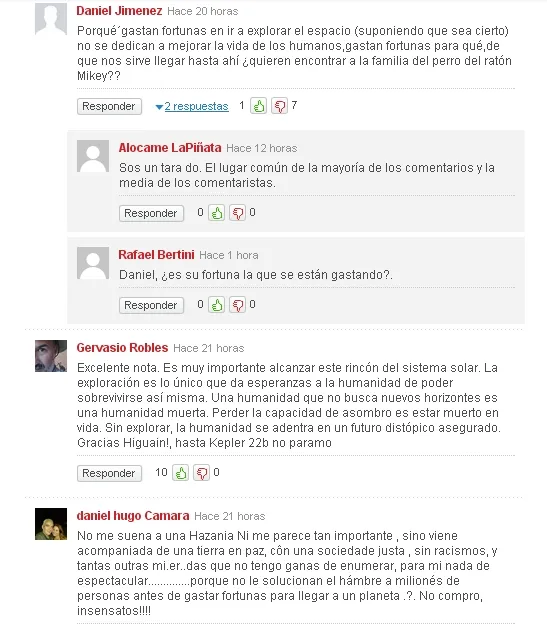
We will see that the first comment, like the last one shown here, are challenges to this "feat" that would not solve important problems like hunger for millions of people. Instead, fortunes are spent to reach a planet. The first commentator also asks, what good is it for us.
That is, a lot of money is used, which is needed for primary issues, for other things that would be useless, like going to the confines of the solar system.
Such a question includes the notion that going to Pluto (or other things) is "useless." That issue I will not address here. It also includes the notion that such actions are "unnecessary." I will not address that here either.
Instead, I will address this other one: Why, instead of doing that (useless or unnecessary sciences -apparently- like going to Pluto), isn't all that capital used for things that are indeed useful and necessary, like food?
That is the question I will address here. I will leave aside other aspects of the issue, such as whether doing science is necessary and useful, always or sometimes, or about what senses astronomy and space exploration have.
I will answer that question in parts.
1-Is it necessary to stop doing sciences or some sciences, or space exploration, to end the world's problems, like poverty?
It is not necessary to stop doing "useless" sciences to alleviate world hunger. Let's say right now that the lack of food is not the only problem, therefore, to be broader and more concrete: it is not necessary to stop doing supposedly "unnecessary" sciences to combat humanity's most serious problems: hunger, lack of work, housing, clothing, health, education, etc.
It is not necessary because the workers of the world create enormous amounts of wealth. Enormous. And the only ones who create wealth are the workers. By definition, entrepreneurs do not work, for that they hire workers.
However, let's look at some numbers:
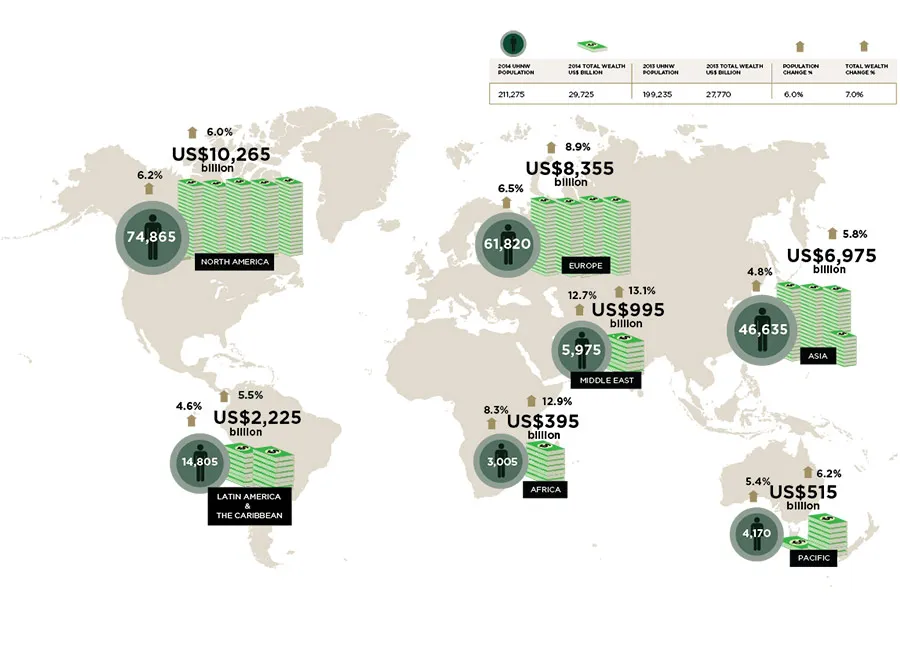
According to the UBS WORLD ULTRA WEALTH REPORT 2014 (The report financed by the Union of Swiss Banks on World Ultra Wealth to 2014) there were (at the time of the preparation of such report) 211,275 (two hundred thousand people) ultra-rich, who according to such report, are those who own more than USD 30 million. [2]
On page 10 of that report there is a summary:

As we see, the number of ultra-rich people are those indicated before, which correspond to 0.004% of the total. That set of individuals owns, in total, almost 30 trillion dollars, that is, 12.8% of global wealth.
The second tier are those people who have between 10 million and 30 million, always in dollars. They are more than 680 thousand, 0.01% of the world population who own 6.4% of the globe's wealth.
If we take the first five tiers, we will have less than 8% of the world's people who together own almost 80% of the total wealth.
If we take the last two tiers, we will have that 92% of the world's individuals own, in total, a little more than 20% of the wealth.
That is why, because of this division of wealth, it is not possible to do everything that is NECESSARY. It is not necessary to stop doing science. What is needed to end the fundamental problems is to end that astronomical accumulation of wealth in few hands.
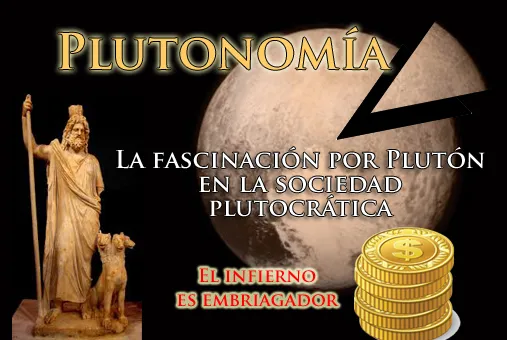
This fascination with Pluto occurs in a plutonomy, an English word meaning that an economy is "significantly influenced by the very rich" [3]
The modern economy is capitalism. Since most political parties in the world are capitalist, I can say, without fear of being mistaken, that even those who make these challenges to the use of money for "useless" issues do not challenge capitalism. They do not challenge it in the basic, in the fundamental. There are many people who make criticisms of capitalism, criticisms that try to "reform" capitalism. That is NOT possible. There is no good capitalism and another bad one. It is false that neoliberalism is a "savage" capitalism and that there are other forms of capitalism (let's say "Keynesian") that is not savage, but "healthy." It is false. There is no "good" capitalism for workers.
The data I indicated before show that a small part of people are ultra-rich. They are not workers. And that will happen in any form of capitalism.
2-Why does this happen?
Faced with the question about the origin of wealth and poverty, common people respond in different ways, generally, incorrectly. I invite the reader to give an answer to this new question. It is possible that the reader thinks that poverty has always existed. And therefore, wealth has always existed. It is also possible that one says that, as it has always happened, in all parts of the world, through the centuries and civilizations, then this phenomenon is "natural" and therefore inevitable.
It is false. It is false first of all that it is natural, but undoubtedly it is invalid to conclude that it is inevitable. That it is inevitable would imply that it cannot be otherwise.
It is easy to show that this is not a valid conclusion: for millennia we had not reached Pluto and yesterday, we did. That for millennia something has not been achieved does not mean it will never be achieved.
That for millennia there has been wealth and poverty does not mean it cannot be ended.
To know if it is possible for this to change, one must understand why it happens.
Throughout the millennia, human beings have organized ourselves into societies. Each society throughout history had its own characteristics, both politically and economically. But all have had something in common: a minority directs a majority.
It has been this way among the Greeks, Romans, Egyptians, Chinese, and pre-Columbian civilizations in America.
3- How was it possible for a minority to lead a majority?
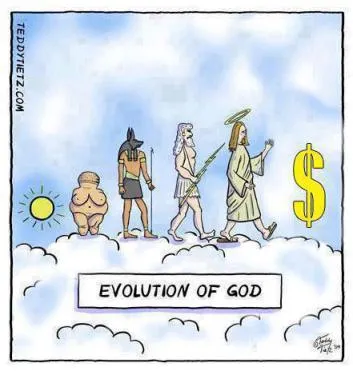
Answer: through ideologies. I call ideology a set of ideas used to justify the class division of a society.
Although ideologies have changed throughout history, they have something in common until the 17th century: they were based on a divine, spiritual, or religious relationship to justify that a few had power over many. Kings, monarchs, emperors, or pharaohs claimed to be related to the divinity or divinities or to be the divinity themselves. Thus, they justified their power over others. They led, the others worked.
In the 17th century, something changes. From Copernicus, Galileo, Kepler, and Newton, we began to realize that ideology was false. Hobbes, despite being in favor of the monarchy and a believer, points out in his Leviathan that all men (people) are equal. Monarchs are nothing but flesh-and-blood beings.
But then another concept arises: the Modern State. States are today considered as depositories of something superhuman: they are considered a set of institutions that stand outside the contradictions of societies. It is the States that, supposedly, should watch over the interests of all in pursuit of a "common good." It is false. That is nothing but an ideology, a set of ideas to justify the oppression of a few over many.
The high concentration of wealth in the hands of a few occurs because States allow it. Because that is the Capitalist State. A state in favor of the ruling class. In feudalism, the ruling class was the nobility. In capitalism, the bourgeoisie.
And the system functions based on the exploitation of workers, who are the only ones who produce wealth, but are poor. Business owners keep the wealth produced by the workers (what should normally be called "expropriation"). And that is completely "legal" because the laws are made by the State, which represents the ruling class.
And if it seems natural to us, it is because that ideology has been instilled in us, because the laws tell us that this way things are fine. The laws tell us what is right and what is wrong. Buying a nut for $10 and selling it for $1000 is completely legal.
Capitalism will never end basic needs because it is a system that requires a class difference. This inequality is systemic, so it is idealistic, false, naive, to suppose that a necessarily unequal system will achieve equality.
New Horizons
We have naturalized this plutocratic, plutonic system. Let us know that plutonium is radioactive. It is unstable, meaning it is in permanent crisis and is harmful to human life. It is also what propels the New Horizons spacecraft.
It will be said that this point of view is false because it is minority. Heliocentrism was also a minority concept, but it was true. Galileo went blind from looking so much at sunspots to prove that the Earth moved. And he was right.
Then Newton showed us that "Every body perseveres in its state of rest, or of uniform motion in a right line, unless it is compelled to change that state by forces impressed upon it." [4]
Things will not change by themselves, they must be made to change and it depends only on human beings, not on gods, churches, the pope, those who want to leave things as they are, those who do not want to do anything (the indifferent), or the planets.
And then came Einstein and said [5]:
It may seem that there are no essential methodological differences between astronomy and economics (...) The discovery of general laws in the field of economics is difficult because the observation of economic phenomena is often affected by many factors that are difficult to evaluate separately. (...) The economic anarchy of capitalist society as it exists today is, in my opinion, the real source of the evil. We see before us a huge community of producers who are incessantly striving while depriving themselves of the fruits of their collective labor—not by force, but generally in faithful compliance with legally established rules. In this respect, it is important to note that the means of production—that is, the entire productive capacity necessary to produce consumer goods as well as additional capital—can legally be, and for the most part is, the private property of individuals.
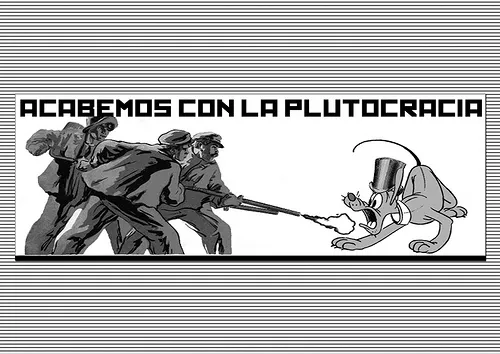
Pluto, in Roman mythology, was the god of the underworld (Hades, in Greek mythology). Ploutos was the Greek god of wealth. Unlike the Greek comedy of that name, by Aristophanes [6], in reality, wealth is not distributed randomly.
Venetia Phair, the woman who in 1930—when she was an 11-year-old girl—named the dwarf planet, read the story about Clyde Tombaugh's discovery on March 14 (the day Einstein was born, in 1879). The girl's suggestion was finally accepted on May 1 of that year. [7]
That date is International Workers' Day, established by the Workers' Congress of the Second International in 1889 in homage to the Haymarket Martyrs, commemorated almost worldwide, but not in the United States.
Science is necessary. Not only space exploration or mathematics, but also the sciences that allow us to understand historical-social changes. Otherwise, we will be easy prey for ideologies. The problem is not in space probes, in corruption (the illegal), in instincts, in genes, but in social relations. When we understand this, then we will have New Horizons.
Sources and related links
- [1] Clarín: Why the arrival at Pluto is so important for science
- [2] WEALTH-X AND UBS WORLD ULTRA WEALTH REPORT 2014
- [3] Plutonomy on Wikipedia
- [4] Newton's first law on Wikipedia.
- [5] A. Einstein, Why Socialism?, In Monthly Review, New York, May 1949, in Spanish at Marxists.org
- [6]Pluto (comedy) on Wikipedia
- [7]Venetia Phair on Wikipedia
About the images
- The Plutocracy In America, blog of Eng. Ernesto Ibáñez
- Evolution of god. From the blog A new world, based on the cartoon by Teddy Tietz