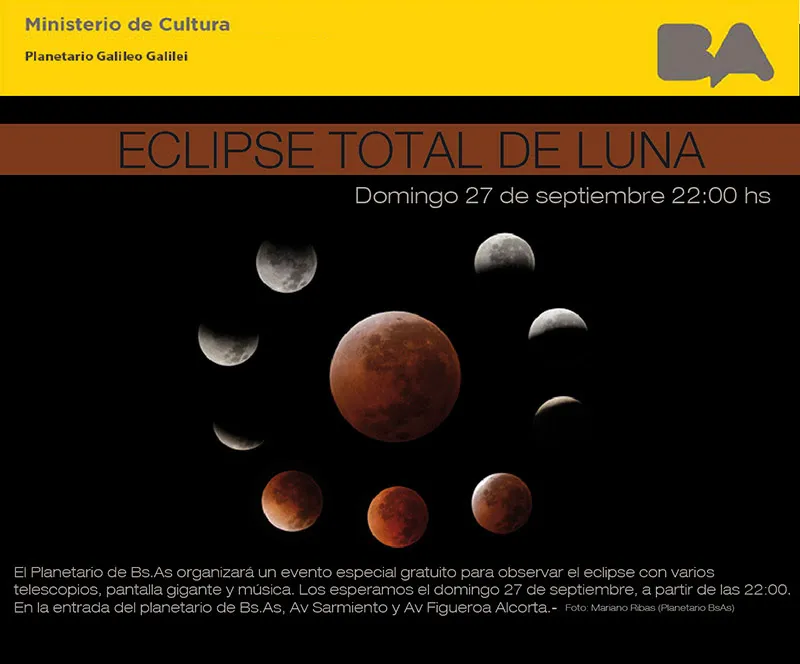
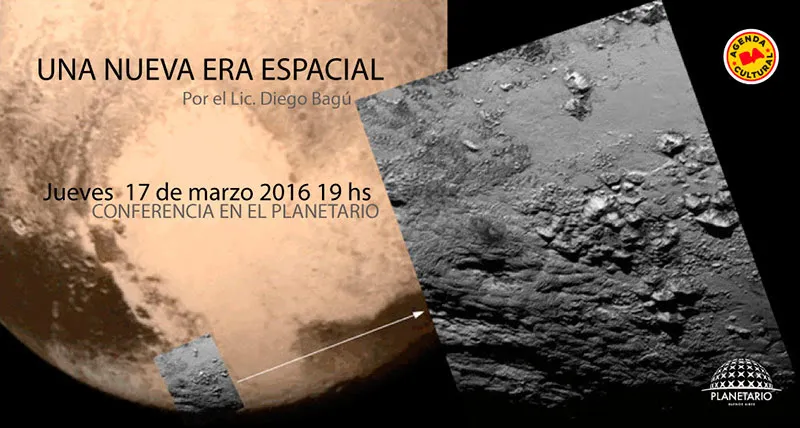
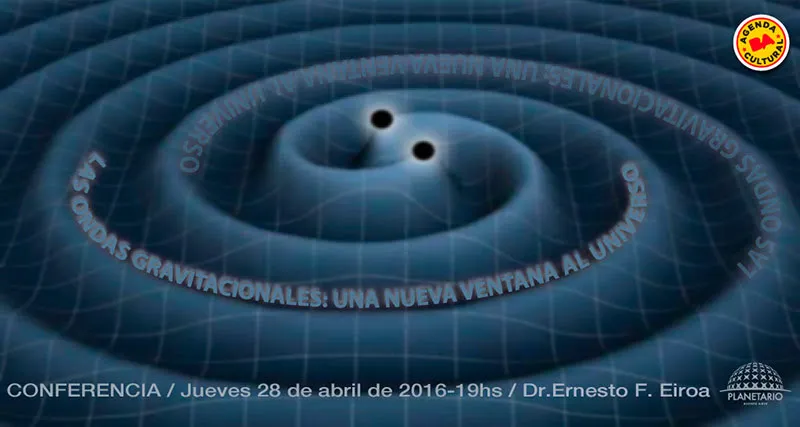
As part of the International Year of Light 2015, on Thursday the 10th, at the Buenos Aires Planetarium, the conference "The Traces of Light" will be given, and on Saturday the 26th, at Amigos de la Astronomía, the talk will be about "Violent Phenomena in the Universe Detected in X-Rays".
Conference at the Buenos Aires Planetarium Galileo Galilei
Thursday, September 10 at 19 h in the Auditorium
The Traces of Light
Dr. Fausto Osvaldo Bredice*
In our daily lives we constantly see light interacting with all kinds of objects (solid, liquid, or gaseous) through the processes of absorption or emission of radiation.
Light is selectively absorbed when it passes through a translucent body, the colors we perceive are also due to the selective absorption of light that falls on objects, and the increase in temperature these bodies experience is proof of this.
Likewise, when the energy of an element, solid, liquid, or gaseous, is increased, it emits a characteristic radiation. The light generated by any light source carries the "seal" of the emitter; thus we can recognize, for example, the sodium or mercury lamps used in street lighting through their characteristic light. It is a true "fingerprint" of the element.
The characteristic spectrum is the set of "colors" that is absorbed or emitted by a body, and from its analysis we can know what it is made of.
In this talk we will see that, through the analysis of spectra, it is not only possible to determine the absorbing or emitting material, but also to study a series of processes that can occur both inside an atom and inside a star.
Thursday, September 10 at 19 h in the Auditorium of the Planetarium Free activity – Admission in order of arrival - Auditorium capacity 250 seats
*Dr. Fausto Osvaldo Bredice
Doctor in Physics, Faculty of Exact Sciences, National University of La Plata.
Independent Researcher of the Commission for Scientific Research of the province of Buenos Aires (CIC), at the Optical Research Center (CIC-CONICET).
He conducts research in the areas of Atomic Spectroscopy of ionized noble gases and Laser-Induced Plasma Spectroscopy (LIBS)
He has undertaken research stays at Universities in Brazil, Mexico, Colombia and at the Istituto di Fisica Atomica e Molecolare (Pisa, Italy)
He is the author of numerous communications at national and international congresses in his specialty and publications in peer-reviewed international journals.
Conference at Asaramas
The Asociación Argentina Amigos de la Astronomía invites, in the International Year of Light, to the next conference, titled "VIOLENT PHENOMENA IN THE UNIVERSE DETECTED IN X-RAYS" by Dr. JORGE ARIEL COMBI, (IAR-FCAGLP-CONICET).
It will take place on Saturday, September 26, 2015, at 19:00 hours, at the social headquarters at Av. Patricias Argentinas 550 – CABA –
Admission is free and open to the public.
VIOLENT PHENOMENA IN THE UNIVERSE, DETECTED IN X-RAYS
In the last 20 years, X-ray Astrophysics has reached an important degree of maturity, due to the consolidation of observational techniques and technologies that have made it possible to detect and measure a large number of cosmic sources of X-radiation with unprecedented spectral sensitivity and spatial resolution.
In this sense, the advent of the new generation of orbital satellites like XMM-Newton, from the European Space Agency, and Chandra from NASA has changed our view of the Universe in this energy range. In this talk, the advances obtained in this branch of high-energy astrophysics are presented, which includes objects such as neutron stars, supernova remnants, and X-ray binary systems that harbor stellar-mass black holes. The study of this type of X-ray radiation sources is very important from the point of view of fundamental physics, since their high densities and powerful magnetic fields allow the study of physics under extreme conditions, and furthermore, their strong gravitational fields provide an ideal scenario to explore the consequences of general relativity.
Dr. Jorge A. Combi (IAR-FCAGLP-CONICET)
See Jorge Combi's page in the GARRA Group.
Conferences and other events were recorded in our Agenda.
Sources and related links
- Asociación Argentina Amigos de la Astronomía
- Planetario Galileo Galilei
- International Year of Light 2015 site (English)
- International Year of Light site (Argentina)
About the images
- Logo of the International Year of Light - Argentina