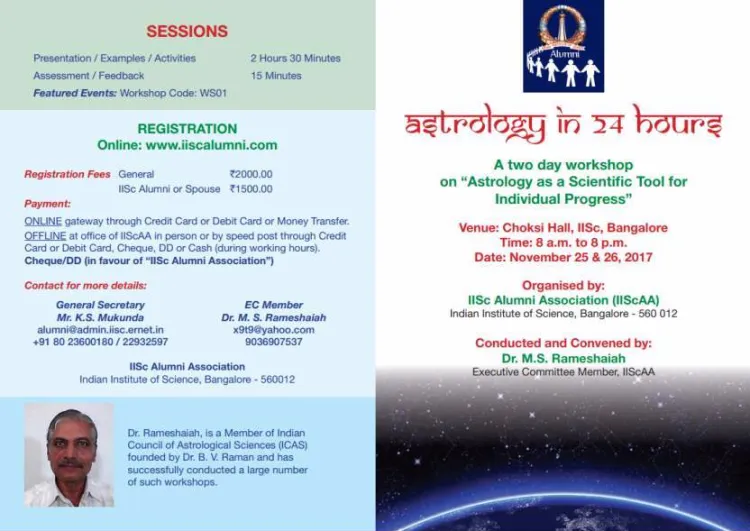
For those who have uncertainty about whether astrology is or can be valid, valuable, true, or useful, a sum of arguments against it, a manifesto.
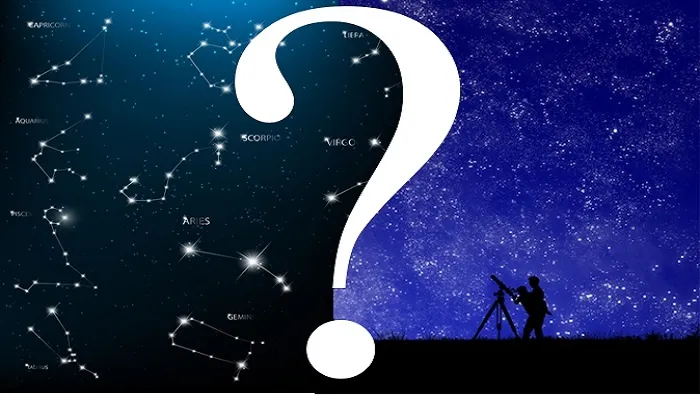
The following note is a consequence of the previous note, from which the following can be posed:
A-Astrology is denied due to lack of evidence.
B-Dark matter is not denied, even though it has not been detected until now.
If it is possible that astrology is true and a mechanism has not been detected until now, therefore, shouldn't the question be left open, instead of denying it?
The answer requires a historical review:
In the mid-1970s, a group of almost 200 scientists published a manifesto against astrology in a well-known magazine. The letter, however, was not signed by the astronomer and popularizer Carl Sagan. Why?
The scientists said, among other things, that no mechanism was known that could explain the postulates of astrology. What does this mean? Astrology generally proposes that the apparent position in the sky of the sun, moon, and planets affects or influences our personality. The sun is a ball of plasma (hot gas), the largest planets are also gaseous, and the rest are rocky. How could a giant rock or a ball of gas influence our personality? Ultimately, clouds are water vapor and furniture are groups of inert particles (without life, without cells) that no one thinks influence people's personality and "destiny." Could the influence be gravitational or magnetic? For different reasons, those mechanisms can be ruled out. For example, if the influence were gravitational, then for astrology Jupiter's moons should be more important than Neptune, since the "force" of gravity is greater at a shorter distance. However, astrology does not take into account the more than sixty satellites of Jupiter and the many other moons of other planets. Phobos and Deimos, satellites of Mars, are closer to Earth than Saturn, but astrology ignores them. Therefore, it cannot be a gravitational mechanism. Through similar reasoning, magnetism can be ruled out.
In summary, the scientists (then and now) said no mechanism is known that explains astrological postulates.
Here, the manifesto, in English published in The Humanist (Sept-Oct 1975) and signed by 186 scientists:
https://issuu.com/gebla/docs/objections_to_astrology_0002
But Carl Sagan, who thought the same, also knew that for a certain time the mechanism by which continents move, continental drift, was not known, and that the person who postulated at the time that this occurred was not taken into account, but that later such a mechanism was discovered. That is, that something has not been discovered until now does not mean it does not exist or occur in reality. One thing is reality, what happens, and another is what we know.
Sagan objected to the objection and explained it in his book The Demon-Haunted World (Planeta, Bs.As., 1997, pp 329-330) like this:
https://issuu.com/gebla/docs/objeci__n_astrolog__a_rta_carl_saga
Logically, I agree with Carl Sagan. But also with the scientists who signed that letter. What Sagan said has two consequences to consider:
1-If it is possible that some astrological mechanism exists that has not yet been discovered, then what seems logical is to leave the question open, maintain doubt, instead of affirming or denying astrology. But astrologers affirm (without evidence) that the postulates are true, even though they have no way to prove it and cannot explain it by any mechanism. Therefore, Sagan's same objection to the scientists must be used against astrologers.
2-On the other hand, if in the face of the unknown we should always leave the question open, maintain doubt, as long as explanatory mechanisms are not known because such mechanisms not known until now could exist, then we would have to leave open the doubt about the existence of vampires, werewolves, giant cyclops in high heels, unicorns, centaurs, pegasus, kraken, smurfs, fairies, zombies, etc.
So, where does that leave us?
First, that dark matter has not been detected does not mean there is no evidence regarding it. In any case, there are many indications in its favor, even if it is insufficient. And second, the possible existence of dark matter would solve a problem, a discrepancy between Newton's theory and observations. Neither of these two things happens with astrology.
The problem with astrology is not the lack of an explanatory mechanism "in itself," but that this absence is a product of the lack of research, because astrology is not a science, and as long as it is so, such a mechanism (if it exists) will never be discovered because no one investigates it. But, furthermore, and this is key, astrology presents itself as if it were a science.
We do not take ancient myths as documentary genres, but as fiction, which can be very useful in a metaphorical sense. Thus, we still use Plato's allegory of the cave or the myth of Saturn devouring his children. Similarly, we go to the movies to see Superman or The Matrix and we know it is fiction, not documentary.
Astrology is a genre of fiction presented as documentary. A fraud. If something is presented as "scientific" then it has to explain things. But sciences do not always know the mechanisms, although they are investigated and thanks to such investigations, those mechanisms are finally known. Astrology is millennia old, but no mechanism is known, not because it is difficult to find, but because it was never attempted to be investigated. It is impossible to scientifically investigate "spiritual" influences. Hence, astrology is more similar to a religion (although not strictly that) or to a set of ancient myths that people may or may not believe, but which are not explained, it is only blind faith. Blind faith in pagan gods because the words Mars, Jupiter, Saturn refer to Roman gods.
ARGUMENTS AGAINST ASTROLOGY
Due to the above, and because in social discourse astrology continues to circulate, it is necessary that those of us who are against this practice develop the best arguments (and come out of silence). The following are my arguments, but I invite those who think similarly to correct and enrich the foundations.
1-Astrology is not a science. This implies that its postulates did not arise as a consequence of an investigation, nor were scientific investigations carried out to try to corroborate such postulates. The few attempts there were in this regard were unfinished and with negative results. Despite not being a science, it presents itself as if it were, that is, a fraud.
2-Both as description and prediction, astrology does not work. What is said has no correlation with reality, even if it seems so.
If astrology were true, it would have to be used because it would be useful. If it were used, seriously, then every journalist whose natal chart does not indicate a clear tendency towards communication would have to be fired, so those not born in June would be left without a job. It would have to be used to determine who should be entrepreneurs, who should be public officials, when and how to make an economic investment, etc. If it were used in this way, coherently with what astrologers say, amateurs would easily see the harmfulness of this practice based on prejudice. If, on the other hand, it is considered that every person can practice journalism, regardless of the moment of their birth, but by virtue of their process of socialization and formal education, that is, theory and practice, then astrology is not needed.
3-Astrology is unnecessary. It postulates that a person has certain tendencies without excluding the opposite ones, for example, it is said that Virgos are structured, but it is not ruled out that they are also unstructured, therefore, what is affirmed is a truism that describes and predicts nothing. But since people often only hear what we want to hear, we validate an ambiguous statement as a description. Saying that a comedian is introverted, but also extroverted, is an obviousness that adds no novelty, that does not describe, does not predict.
4-Astrology is not needed because to investigate why some people have harmful personalities (pathologies) there are well-founded sciences (that do investigate) such as psychology and other social-medical sciences (psychiatry, sociology). If astrology were really useful it would have to be used to predict, based on the natal chart (that is, based on a person's birth) a future social pathology: rapists, murderers, etc., under the assumption that people are born a certain way and that the socialization process is very unimportant, since the priority would be the position of the planets in the sky. Thus, a person should be considered potentially harmful by virtue of their natal chart, regardless of what their socialization process is like. If most rapists at birth had Saturn in Cancer, then a person born with those positions will be a rapist? If astrology were true, one would have to act accordingly. This demonstrates the unnecessary, but also the harmful and incoherent nature of this practice.
5-Astrology is based on the position of certain objects in the "sky" related to actions on Earth, namely: Sun (a star), Moon (a natural satellite) and the planets of the solar system, plus Pluto. But it ignores the remaining stars, the remaining natural satellites, asteroids and comets. For every Earthly event we can look at the sky and mark a place where there is an astronomical object, even galaxies, many of which are not observed with the naked eye, but are there (something known through astronomy) and which astrology does not take into account. If the astrological influence were gravitational, large mountains would have to be considered more influential than the planets; and if it were electromagnetic, antennas and electronic devices would have to be considered with greater influence than Pluto.
6-Astrology causes harm. It causes as much harm as any discourse based on prejudice, like the xenophobic discourse that considers that people are better or worse or basically different because of the country we were born in; the racist discourse that considers that skin color influences people's abilities (as if melanin had anything to do with it); the sexist discourse that considers that the possession of certain sexual organs conditions the cognitive abilities of women (although they have already sufficiently demonstrated the falsity of the idea). Some astrologers say that "signs" are neither good nor bad, nor better nor worse, but they differentiate one from another, as corroborated in public discourses: which sign is compatible (and is NOT) with others; what drink each sign takes; which professions are compatible with each one (and which are NOT). Social pigeonholing, stereotypes. These discourses create ideas and ideas create other enunciative and factual discourses (sayings and deeds). If one acts in relation to a true idea, scientifically corroborated, there is no problem. But if one acts under an unnecessary and false assumption, that is a social prejudice. Astrology comes from some coincidences noted in antiquity and recorded on tablets, plus oral tradition and polytheistic mythologies, along with ancient astronomical knowledge. Nothing more. Astrology is a set of prejudices.
7-Astrology does not suppose that the planets revolve around us, but that we revolve around the planets, that is, that our behavior is a product of the position of the planets, even though our behavior does not modify them in any way. The planets would be independent and we, dependent. Planets and stars are inert objects, without life, because they have no cells or central nervous systems. That is, without life and without consciousness and intelligence. Just as planets influence each other by gravity, people influence or condition each other socially but in a much more complex way. Our behavior and personality is a product of the social process: the material conditions of existence, education, life experiences. If a person is very trusting and then is deceived several times, they will surely be less trusting in the future. Because trust is not an innate and fixed characteristic for life, but changes and not because of the position of the planets, but because of our life circumstances.
8-Today astrology is valued because it is considered "popular," although paradoxically this is done by people who say they are against "populism" or in favor of populism and scientific sovereignty. But astrology is not popular, it is "mass." In human history astrology has always been elitist, made for kings or monarchs. It became massive through modern media, particularly thanks to newspaper horoscopes. Astrology is an ideology, a false set of ideas to justify reality. Astrology is an ancient ideology that some may consider an "antidote" to the ills of modernity, but whose horoscopes are produced industrially, with software. Astrology is post-truth.
9-Astrology is based on the supposed principle of correspondence "as above, so below" under another principle of "everything is connected," as if there were some relationship between a murder and a bird singing at the same moment. Not everything is connected to everything. Some things are related to others, in a complex way. That's why science is needed. On the contrary, if everything were connected to everything, we would have all the answers to all questions. Coincidences would not exist, everything would be determined by a "reason."
10-Astrology may or may not be a "business," that is, a practice by which someone makes money. This also happens with the sciences and any other economic activity. But just as there are those who make money selling insurance from real companies that pay out in the event of a loss, others sell insurance and make money from fake companies, that is, a fraud. Therefore, if one is going to question the "business," it would have to be done in another way because it cuts across all social practices. But if, in addition to the business, we add fraud, the matter is different.
Astrology is a fraud because it "sells" false ideas and, in some cases, someone makes money by doing that. It is an ideological and economic fraud.
THE SAME AND THE DIFFERENT
Since Plato, through his dialogues, the question of the "greater kinds" (being, motion, rest) has been addressed, with the aim of discerning between what is the same and what is different.
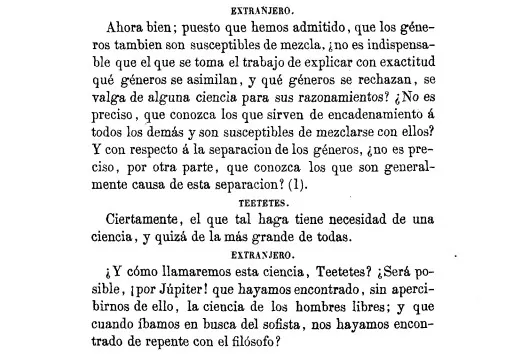
According to the character "The Stranger" in "The Sophist or On Being," not everything can be at rest nor can everything be in motion; not everything can be related to everything else, nor can everything be isolated.
From the point of view of physics, today it can be said that everything seems to be in motion, but the idea of motion arises from the idea of rest that we arrive at because there are differences between reference frames: in relation to the planet I can be still, not moving, with minimal energy, but in relation to other objects I am moving because the Earth moves. In one sense I am at rest, in another sense I am in motion.
Much water has flowed under the bridge and the historical tendency was: in antiquity things were united, in modernity they are separated. Astronomy, astrology, religion, philosophy formed a whole in the past and then, in modern times, they split off.
If it is necessary to do both things, then we must overcome modernity, not return to the past. And to do so, like climbing a ladder, we use the steps we manage to reach. Since the times of Plato and Aristotle and from then until today we have learned that one thing is to describe and explain reality and another is to modify it. To do the second, it is necessary to do the first.
And we also know that until now it has been very common that when trying to explain reality we seek what we desire, based on dogmas, ideals, prejudices. And we succeed because our brains can find what we want, even when it is not there.
Therefore, it is not about denying astrology because we don't like it, nor about endorsing it because we wish it were so. It is about explaining how reality is. Those of us who deny astrology do so because it doesn't work and is harmful and, as a consequence of that, we don't like it.
Those who endorse astrology proceed in reverse.
Sources and related links
- Entremujeres: Why do we believe in horoscopes?, an advertising article written by an astrologer
https://www.clarin.com/entremujeres/astrologia/creemos-horoscopos_0_ByOGD7gs-.html - Magonia: 'Objections to Astrology': 40 years of a manifesto
http://magonia.com/2015/10/13/objeciones-a-la-astrologia/ - El País: 250 Spanish astronomers consider astrology a fraud
https://elpais.com/diario/1990/05/23/sociedad/643413607_850215.html - Por la boca muere el pez: Flashback: 25 Years Of "Objections To Astrology"
http://javarm.blogalia.com/historias/75591
About the images
Initial image from http://globalwoman-magazine.com/index.php/2017/06/14/astronomy-or-astrology/