It also announces the discovery of eleven stellar streams, evidence that the Milky Way devoured dwarf galaxies.
During a special session at the meeting of the American Astronomical Society currently being held in Washington, scientists from the Dark Energy Survey (DES) have announced the publication of data from its first three years of operation. This first public data release from the survey contains information about some 400 million astronomical objects, which include both distant galaxies, at distances of billions of light-years, and stars in our own galaxy.
DES scientists are using this data to study dark energy, the mysterious force responsible for the accelerating expansion of the universe, and have presented some of their results at the special session of the astronomers' meeting. As part of that session, they also announced the discovery of eleven new stellar streams, remnants of smaller galaxies, torn apart and devoured by the Milky Way.
By making public the data from the first three years of operation, DES fulfills a commitment that the project's scientists had made to share their findings with the astronomical community and the public. The data covers the entire area explored by DES (around 5,000 square degrees, or in other words, one-eighth of the sky) and includes more than 100,000 exposures taken with the Dark Energy Camera (DECam). The images correspond to hundreds of terabytes of data and are made public along with catalogs of hundreds of millions of galaxies and stars.
“This immense repository of information about our universe is the result of a many-year effort by the DES consortium and can be seen in the quality of the data made available to the public for the first time. We are eager to see what the community does with these images and catalogs and to be surprised by the new discoveries that undoubtedly await us,” says Ignacio Sevilla Noarbe, a researcher at CIEMAT and one of the scientists responsible for preparing the data now being made public.
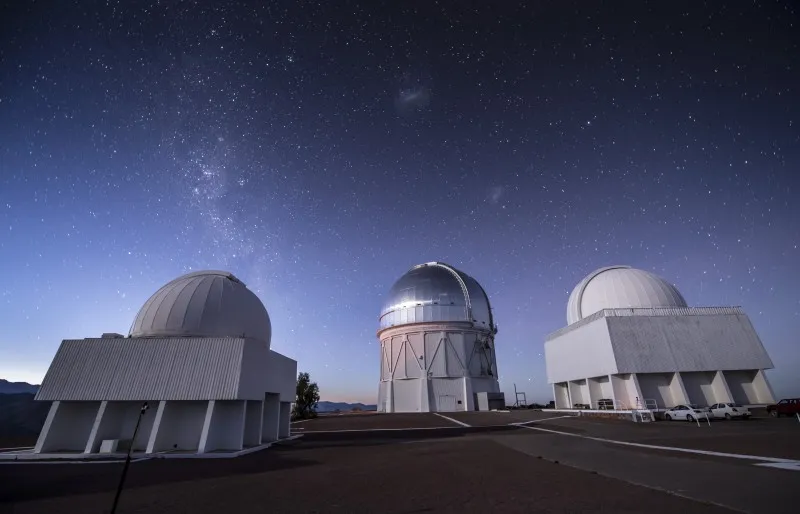
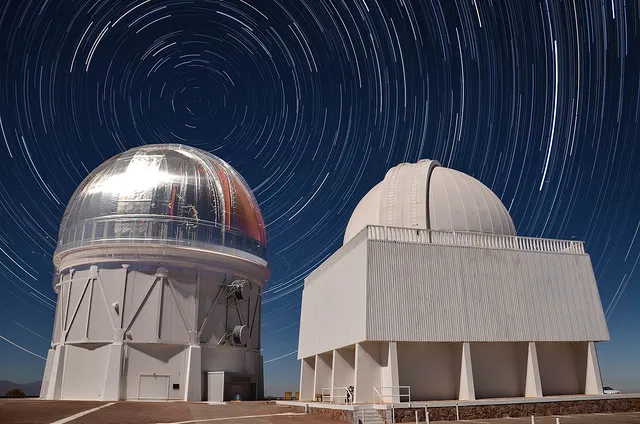
The DECam camera, the main tool of the Dark Energy Survey, is one of the most powerful digital imaging devices in existence. It was assembled and tested at Fermilab, the laboratory that leads DES, and is mounted on the 4m Víctor M. Blanco telescope at the Cerro Tololo Observatory in Chile. The DES-Spain group, formed by CIEMAT, IEEC/CSIC, IFAE and UAM/IFT, contributed significantly to the construction of DECam. In particular, it designed, built and validated the electronics, and has commissioned the guiding system, among other contributions. It is one of the founding partners of the DES collaboration, and receives funding from MINECO, IEEC, CSIC and the Generalitat de Cataluña. DES images are processed at the National Center for Supercomputing Applications (NCSA) at the University of Illinois.
“We are excited that this high-quality data is being made available to researchers around the globe” comments Chilean Matías Carrasco-Kind, lead scientist in this release from the NCSA data management team. “Although DES was designed with the goal of understanding dark energy and dark matter, the huge amount of data from these images will provide new scientific applications, challenges and discovery opportunities for astronomers and data scientists. In collaboration with NOAO and the LineA team in Brazil, we are going to provide tools and resources to access and analyze this rich and robust dataset.”
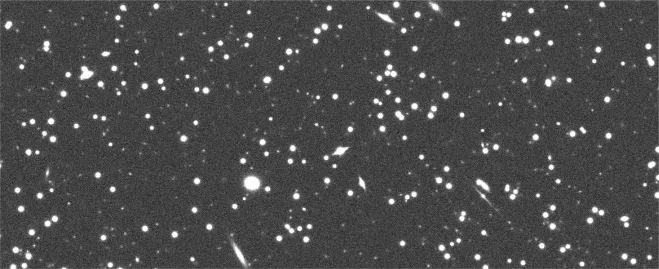
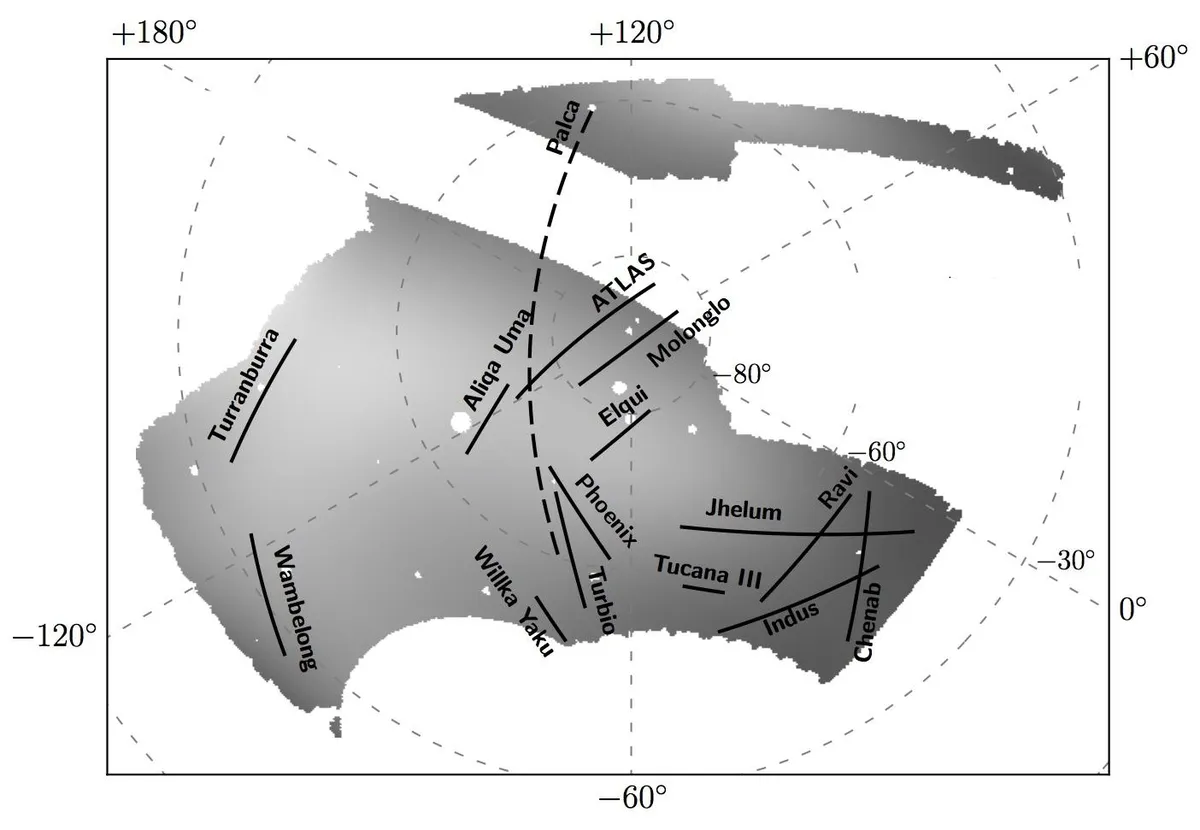
One discovery that has been made possible thanks to this dataset is the detection of eleven new stellar streams around our galaxy, the Milky Way, some of which can be seen in fig 1. Our cosmic home is surrounded by a massive halo of dark matter, which exerts a powerful gravitational pull on small, nearby galaxies. The Milky Way grows by attracting, tearing apart and absorbing these smaller galactic systems. As their stars are stripped away, they form streams across the sky that can be detected with DECam. But even with such a powerful instrument, these stellar streams are extremely difficult to find, as they are composed of a relatively small number of stars spread over a large area of the sky.
Before the new DES findings, around two dozen stellar streams had already been discovered. Many of them were found by the Sloan Digital Sky Survey, a precursor to DES. The detailed study of these stellar streams will be used to measure the amount, distribution and clustering of dark matter in the Milky Way, thus helping to understand its fundamental properties.
Since there is no accepted convention for naming stellar streams, DES turned to schools in Chile and Australia, asking students for names. Both students and their teachers worked together to name the streams using words related to water in the languages of the native peoples of northern Chile and Australian Aboriginals. More information about these names in Symmetry magazine.
DES plans another public release with more data in the future, once the survey is complete, which will include approximately twice as many images as the current one.
The Dark Energy Survey is a collaboration of more than 400 scientists from 26 institutions in seven countries, including Brazil and Spain.
I thank the CIEMAT communications department for the information provided.
Sources and related links
- Simmetry Magazine: Rivers in the sky
https://www.symmetrymagazine.org/article/rivers-in-the-sky - The scientific articles that have been published using the first-year DES data can be seen at https://www.darkenergysurvey.org/dr1-data-release-papers
- DES data is publicly accessible at this link: https://des.ncsa.illinois.edu/releases/dr1
About the images
Star trail on the Blanco Telescope. Credit: Photo credit: Andreas Papadopoulos
Fig. 1 - Image credit: Dark Energy Survey Collaboration