Reflections prompted by Mariano Ribas's new book.
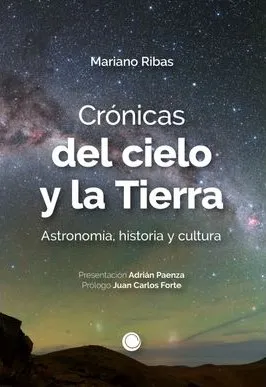
On the program La Liga de la Ciencia they invited Mariano Ribas, not as the usual astronomy columnist, but on the occasion of the presentation of his new book "Crónicas del cielo y la Tierra".
Regarding this, I will say that, from what was discussed there, the book seems very interesting and given Mariano's background, it must undoubtedly be an entertaining book produced at the same time with the professional rigor that characterizes him. Therefore, even without having read it yet, I recommend the work.
In that context, the program's hosts interviewed Mariano and asked him a question that, since I didn't record it then, I must recall with my fragile memory. The question aimed at why someone should be interested in astronomy. Surely the question was somewhat different and I apologize for not quoting it verbatim.
I want to give my version of the answer here: there is not and will not be any "reason" to love astronomy. There is not and cannot be a list, catalog, or enumeration of "benefits" of astronomy, none of that will be worth anything... if a person does not like it, is not genuinely attracted to astronomy.
On the other hand, if a person has a genuine interest, then the potential "benefits" of astronomy (which can be many and varied) they will discover without much assistance. Such "benefits" exist, but only if a person is honestly interested in the subject.
There is something that is not known: why two people look through the same telescope, at the same moment, at the same astronomical object and one falls in love with astronomy forever at that moment, while the other does not. It is similar to the taste for chocolate or perhaps dulce de leche. While some love dulce de leche and can eat tons of it, others like it a little and then find it too sweet.
Among those of us who fell in love with astronomy, we can trace back the moments of our childhood or adolescence when we began to have contact with that activity, but it is more difficult, not to say impossible, to know why we began to be fascinated by astronomy while other people did not.
MY PERSONAL STORY
To be clearer, I will tell my particular case. My contact with astronomy happened when I was 11 years old. There was a married couple who were friends of my parents and had a book distribution business, so when they came to visit us, they would bring me books, usually novels from the red Billiken collection. From such books I remember "Five Weeks in a Balloon" by J. Verne and "The Adventures of Buffalo Bill". Once, as I was about to finish primary school, they brought me a history book for secondary school, whose title I don't remember. And I started reading it to be amazed by Egyptian civilization, particularly hieroglyphics and even more by the story of Champollion and the Rosetta Stone.
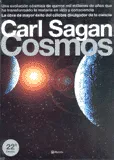
Then, perhaps the following year, the series Cosmos by Carl Sagan began airing on television and I saw just an episode about that story. Later the book fair was held and my parents took me. There I saw the book Cosmos, which was big and expensive, and I asked my father to buy it for me. With some doubt, my father agreed. My interest then was not astronomical, but historical. The matter of the Rosetta Stone and hieroglyphics was almost a detective story and about deciphering a secret code.
But in Sagan's book, I also found the planets and what caught my attention the most were the photos of galaxies and globular clusters that seemed like "stickers" to collect in an album. That was my first contact with astronomy: for me, being an astronomer was like collecting galaxy stickers...
Faced with such growing interest, because when we are kids and we like something, we say so and get excited, my father took me to the Asociación Amigos de la Astronomía and I was able to put an eye to an eyepiece for the first time: as is logical, I saw the Moon, but with so much detail that it seemed incredible to me. I couldn't see galaxies, but, they told me, with larger telescopes and cameras, you could.
I want to nuance this story with another one, from much later. In the mid-1990s, when I was 20 years old, I started working as an office boy in a company. In the office there was a...Fax. For me that machine was magical, wonderful: while a sheet of paper passed through it, it printed on another fax anywhere in the world. That fascination led me to wonder how it worked.
The same thing happened to me with astronomy. How is it possible to see galaxies? How to understand that all the lights in a cluster are stars and they all fit in a photo? What drove me was astonishment, curiosity, the need to understand. No other "benefit". I did not embrace astronomy because it could help me think differently, like the use of logic, or because it allowed me to have a sense of reference. No, I embraced astronomy because it fascinated me.
I can trace the origin of that liking, but I cannot explain why it happened to me and not to many other people. There are thousands of people who look through a telescope for the first time and do not have the same experience as others. I don't know why, but it is clear that although we are all curious, we put our curiosity into different things. Some catch our attention, others do not. Family influence must be taken into account, but in my case, there was no special incentive from mother or father, at most my father realized that something was moving me and acted accordingly. But before that, no relative, teacher, or other close person had talked to me about astronomy. This also marks the power of a book...and the photos.
On the other hand, if you allow me the comparison, a fax is an electronic device that has a certain level of complication, at least next to a telescope, since this instrument is basically a tube with a concave mirror and another small flat mirror. Certainly it is not only that, as you need to have at least an eyepiece, and a mount-tripod. But next to an electronic device it is a very simple apparatus, despite which it allows "collecting" light from very faint objects, which are actually very luminous but are far away.
Why do very bright things appear dim with distance? I confess, this question tormented me for a long time; I couldn't understand it, even though they tried to explain it to me. Perhaps because they weren't explaining it to me; the adults just kept repeating that's how it was, that objects appear less bright with distance, but they didn't explain why. I wondered, already at 13 years old, if a luminous object appears with less light as we move away from it, then where does the light go? Is it lost? And since I didn't understand it, but was ashamed to keep saying I didn't get it, I said nothing, but the curiosity persisted. That explains why, years later, I threw myself into reading.
What genuinely moves us can arise from the influence of others, be they family or reading books. But what should move us is not an interest in achieving some 'benefit,' because that is false, it doesn't work that way. The benefits of astronomy we will find, because they exist, later, with the theoretical-practical exercise of astronomy.
In any case, what can be done and is valuable to do, is to stimulate curiosities, through questions. Some will get hooked, others won't. Those who do, will later discover that astronomy is useful for many things. If until that moment we hadn't paid much attention to mathematics, we will realize it is a very important tool for astronomy. If the first elements of Physics seem boring to us, like levers and pulleys, we will realize that physics is essential for astronomy, which is why it is also called astrophysics.
If truth tables in logic seemed useless to us, we will realize that logical thinking is indispensable for astronomy and science in general.
If knowledge of history seemed unnecessary to us, later we will see that many such events were intertwined with astronomical facts or interpretations (as Mariano tells in his book).
And if it is important to know how to locate oneself in a city and learn to establish references so as not to get lost in a large metropolis, something similar happens when we look at the sky and must find an object. There is a pleasure in searching and finding.
Here is my synthesis: astronomy should be a pleasure, not an obligation. No one should feel obligated to like astronomy for this or that reason. If it is not a genuine liking, it's no good. And if it is, the meaning each one gives to astronomy is always individual, even though some meanings are shared with others. Each one lives and experiences it in their own way. Sharing astronomy with others also brings its benefits, like meeting wonderful people, who experience things differently, but in a valid and enriching way.
Astronomy, though it may not seem like it, is part of our daily life. There is always a sky. It's just that sometimes we don't look up. And it is also present in stories like those Mariano Ribas rescues in his book. A great initiative that I will read, not out of obligation, but out of desire.
Life often puts us face to face with horrible situations. As I said here recently, my mom is having a very hard time and, logically, so am I. I'm not one to cry, but for over a month now I've been living with anguish, with a lump in my throat. That's why we must hold on to what is worthwhile and is also part of life. I hold on to my cat Rey, whose companionship makes my life different. And I also hold on to astronomy, which is something I like, that entertains me, that relieves my stress, and motivates me. Perhaps Mariano's book will help me get through these moments as much as looking at the night sky these nights and noticing that invisible curve called the Ecliptic along which Venus, Mars, Jupiter, and Saturn parade, now accompanied by the almost full Moon, and finding there Fomalhaut and Achernar, Vega and Altair.