The influence of precise measurement of the brightness of the natural satellite in relation to artificial satellites.
If science is born from human wonder at nature, there is another form of admiration born from scientific work: we are capable of knowing with precision what the cosmic microwave background radiation is like, but many more basic things we do not know well. For example, how brightly does the moon shine?
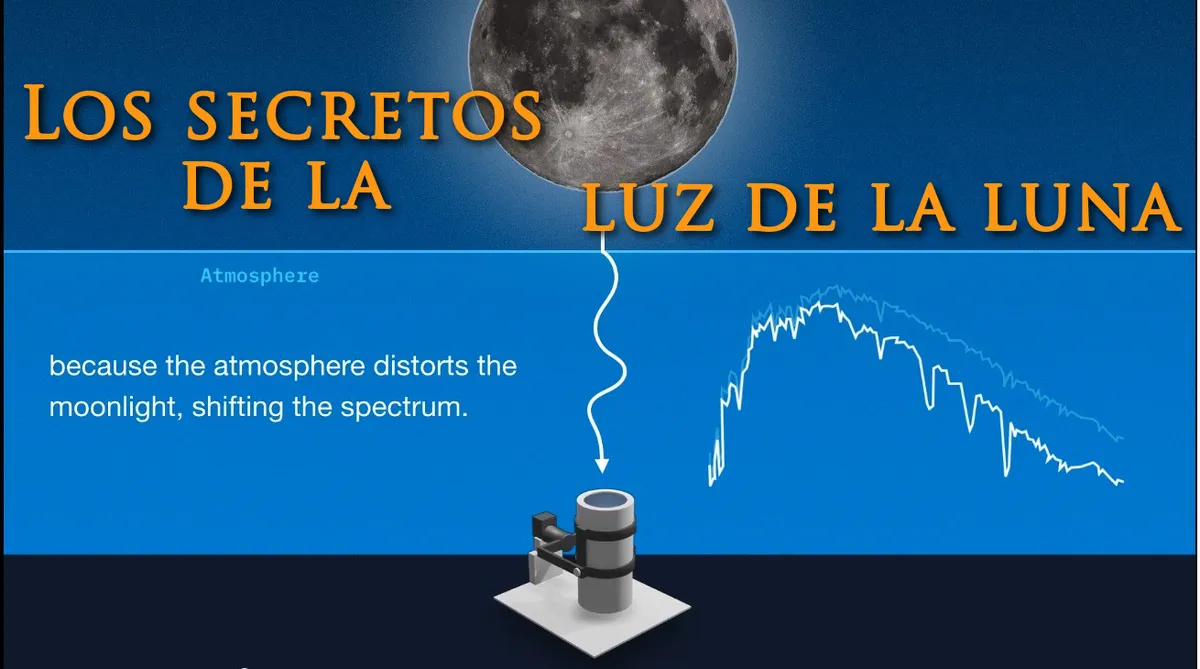
Current measurements of lunar brightness at any given time have an uncertainty level of 5%. This is because they are based on data obtained from the surface, through the Earth's atmosphere.
Now, the U.S. Institute of Technology and Standards (NIST), NASA, and other organizations have joined forces to send a telescope into the sky, above 95% of the Earth's atmosphere, to measure moonlight with a lower error level.
Knowing how much sunlight the lunar surface reflects is important because that data is used by artificial satellites to cross-check their sensors.
The mission is called air-LUSI, an acronym for "Airborne Lunar Spectral Irradiance Mission" and has already conducted a series of demonstration flights in mid-November, according to NASA. During each flight, a telescope was bathed in moonlight for half an hour while lying in an aircraft wing at 21 km altitude, almost double the cruising altitude of a commercial airline.
"When we're up there, the atmosphere is not a problem", said air-LUSI team leader Kevin Turpie of the University of Maryland.
Researchers cannot simply launch a satellite into space to get a better view of the moon because "they would face the same problems as Earth observation satellites" that use moonlight to cross-check their functions, Turpie indicated. Basically, instruments degrade in space. But by sending the instruments on short flights above 90-95% of the atmosphere, those problems are avoided.
To reduce the uncertainty about the reflective brightness of the lunar surface to 1%, it will be necessary to take data at different phases and combine it with data collected on the Earth's surface over three years.
Calibrating the "colors" of light
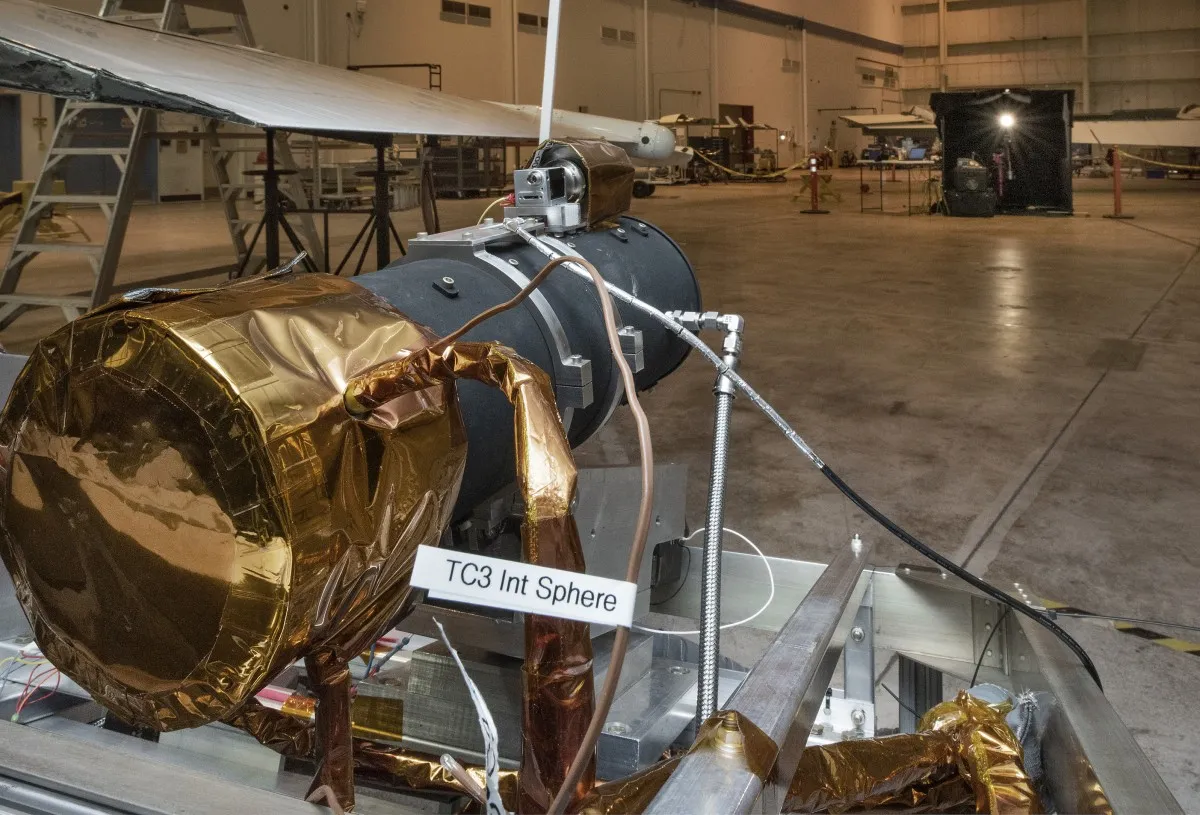
To collect different types of data from Earth using artificial satellites, whether to better understand ocean levels, clouds, cultivated areas, etc., equipment that collects light at different wavelengths is used, that which in the visible range we call colors.
To be sure that a satellite camera's "green" is not what another camera observes as "yellow", each instrument must be calibrated against a common reference while in space. The Moon is the target used because, having no atmosphere, its surface changes little.
In theory, if scientists know the relative alignment of the Sun, the Moon, and the satellite, they should know the amount of light coming from the Moon. In particular, scientists are interested in measuring the "spectral irradiance" of the light reflected from the Moon, that is, the amount of energy per area in discrete wavelength bands.
Short flights allow for a clearer view of the Moon with minimal atmospheric interference and physical access to the detectors for frequent calibrations, which is what cannot be done from a satellite in orbit.
Fly, fly
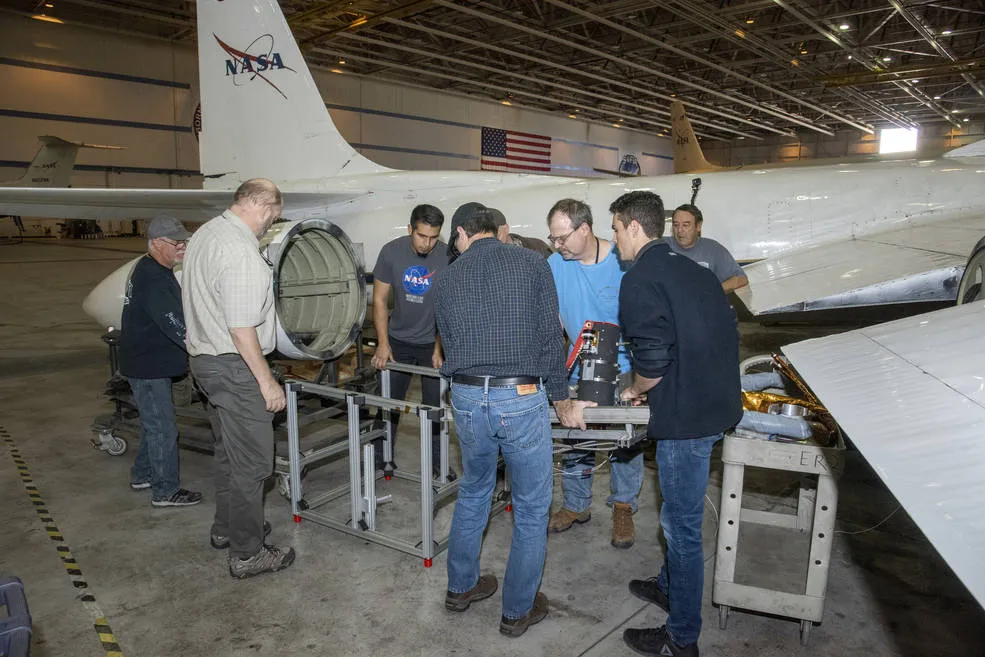
The NIST equipment flew aboard an ER-2 aircraft and measured lunar light across the entire visible and near-infrared spectrum, from 380 nanometers (the bluest light the eye can see) to 1000 nanometers (the reddest).
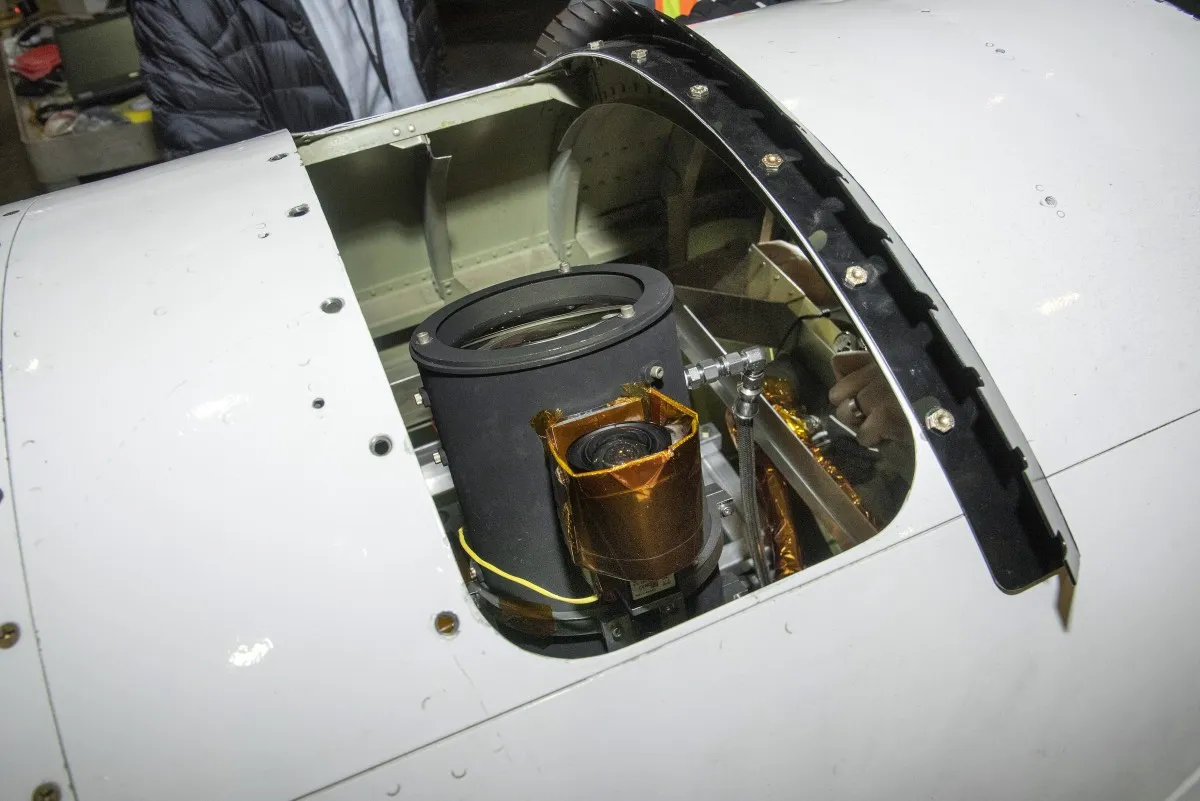
The ER-2 aircraft was designed to carry scientific equipment above the atmosphere. The cockpit has space for a single pilot in a spacesuit. The equipment is stored in a container under one of the wings. An opening allows the telescope and camera to observe moonlight.
This design has difficult technical requirements, as the environment at that altitude has low atmospheric pressure and low temperatures. Additionally, there are weight and size requirements for the instruments.
Weighing 225 kg, the NIST equipment includes a telescope, a camera, and an LED light to verify that the system is calibrated.
The group of scientists is planning to use this method at the Mauna Loa Observatory in Hawaii, at 3400 meters altitude, which allows for longer observations and easier access to the equipment, although even at that altitude, there is atmospheric interference.
THE EQUIPMENT
According to NASA, the scientific equipment included:
IRIS, Irradiance Instrument Subsystem, designed by NIST. It includes an instrument to take precise measurements under the required conditions.
A robotic telescope mount called ARTEMIS (Autonomous, Robotic Telescope Mount Instrument Subsystem), designed and built by the University of Guelph. The equipment has a camera that scans the sky until it finds the moon and directs the telescope and keeps it in position.
HERA, is the connective tissue, like cables and mounts, as well as thermal stabilization components.
CONCLUSION
To know that the Moon exists you don't need to be a scientist. Knowing it's the second brightest object in the sky, after the Sun, either. We've known that for millennia. But knowing with greater accuracy is a whole job. Almost an art. The art of precision.
Know that the Moon absorbs most of the light it receives from the Sun. Its albedo is 0.136, meaning only 13.6% of the sunlight incident on the Moon is reflected. To reflect, listening to Beethoven or perhaps Debussy, inspired by Paul Verlaine, in that poem that says:
Your soul is a chosen landscape
Where charming masked figures and dancers stroll,
Playing the lute and dancing, and almost
Sad beneath their fantastic disguises.While they sing in a minor key
Of victorious love and pleasant life
They seem not to believe in their own happiness
And their song melts into the moonlight,With the sad and beautiful moonlight,
That sets the birds in the trees dreaming,
And makes the fountains weep with ecstasy, the tall, slender streams of water among the marble statues.
Sources and related links
- How brightly the moon glows is a mystery, but maybe not for long, By Maria Temming
https://www.sciencenews.org/article/how-brightly-moon-glows-is-mystery-but-maybe-not-long - Fly Me (Partway) to the Moon
https://www.nist.gov/news-events/news/2019/11/fly-me-partway-moon - New Moon-Seeking Sensor Aims to Improve Earth Observations
https://www.nasa.gov/feature/goddard/2019/new-moon-seeking-sensor-aims-to-improve-earth-observations - Clair de lune in French and in English
https://en.wikipedia.org/wiki/Clair_de_lune_(poem)
About the images
Initial image from NIST/Sean Kelley video.
Photos: NASA photo/Ken Ulbrich.