An innovative cryogenic and underground telescope will join the other three LIGO and VIRGO detectors.
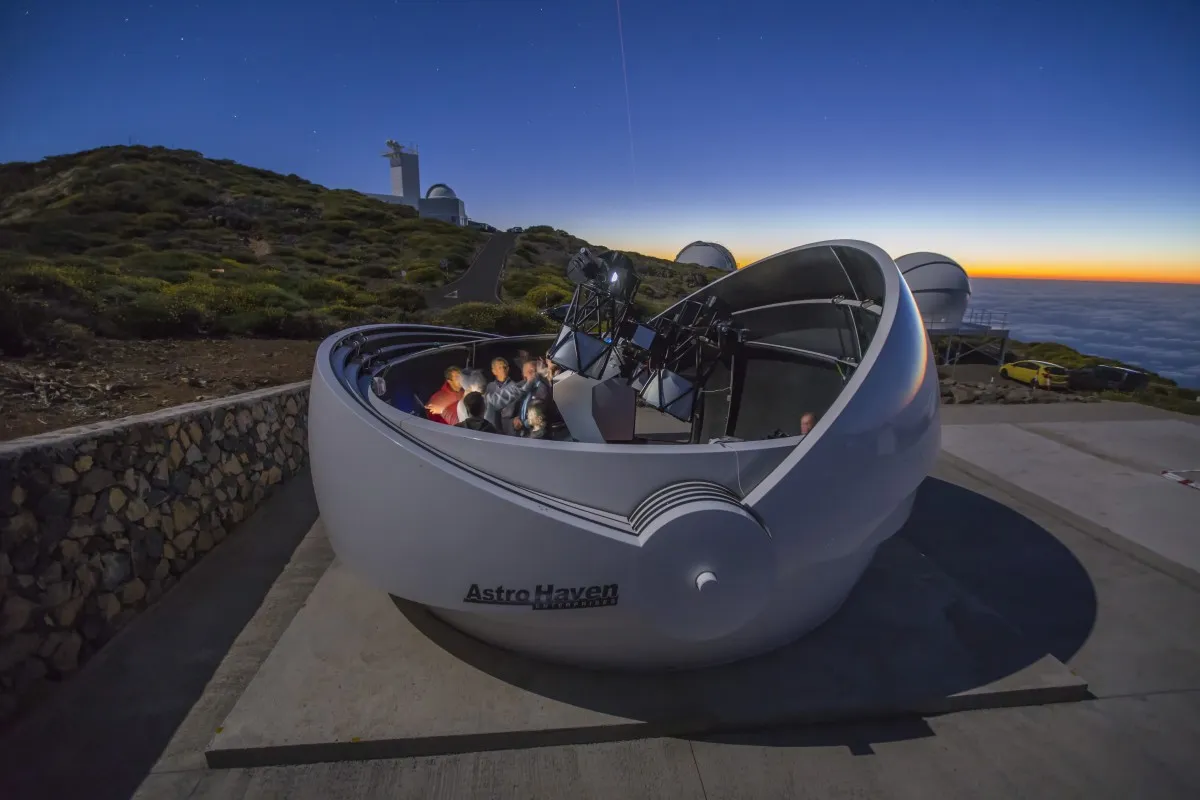
Current telescopes have mirrors about 8 meters in diameter, while others of 30 and 39 meters are being built. Gravitational wave observatories also have mirrors, contained in tunnels several kilometers long.
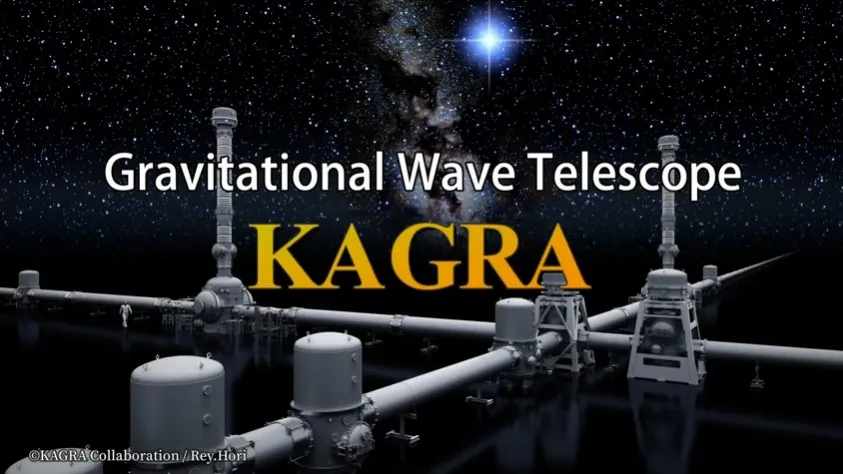
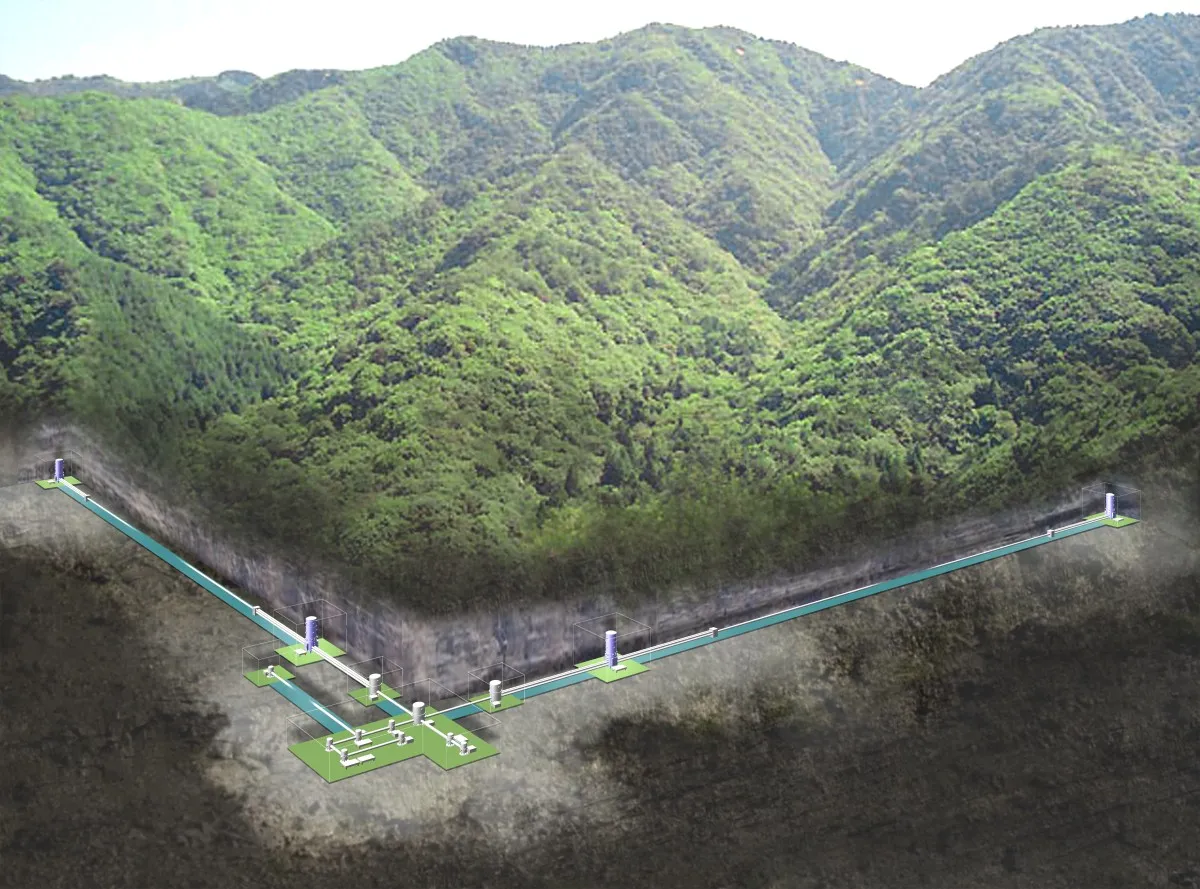
KAGRA is an acronym for KAmioka GRAvitational wave detector. Kamioka is the municipality on Japan's main island, in the Hida town of Gifu district. There, in 2012, construction began on this telescope which consists of two 3 km long tunnels, in an "L" shape. At the vertex of the L there is a beam splitter. A laser light beam is sent there, the beam is split in two and sent into each tunnel. At the end of the path there are sapphire mirrors that reflect the light. If this is done in sync and there is no other variable that alters the system, the two light beams should cancel each other out upon returning. Instead, if something alters the distance of the mirrors, the beams upon returning will not cancel completely and something will reach the detectors.
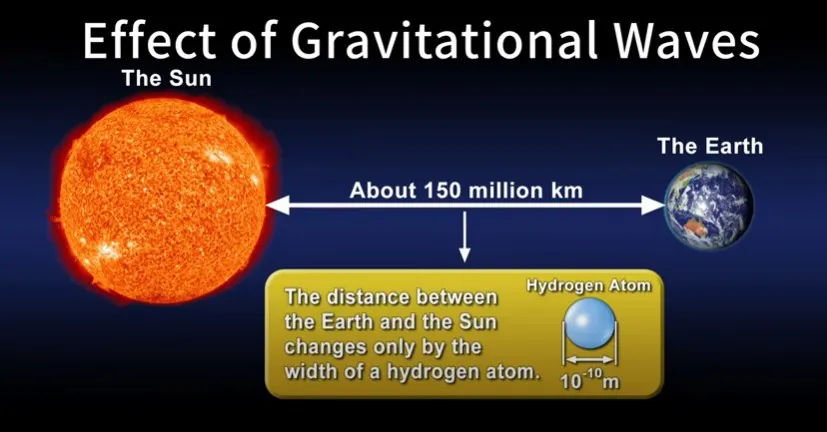
Gravitational waves alter space. It's not something easy to notice, which is why the first detection of gravitational waves was in 2015, even though they had been predicted by Einstein a century earlier. To get an idea of how little a gravitational wave alters space, one example is enough:
The distance between Earth and the Sun (an astronomical unit) which on average is 150 million km, would change due to a wave of this type by only the diameter of a hydrogen atom: 10^-10 m (0.0000000001 m), a ten-billionth of a meter, an Angstrom.
However, not only gravitational waves can change the distance between mirrors (which weigh 23 kg each). Earthquakes, trucks passing on nearby paths, even falling trees, can make the mirrors vibrate and generate a false positive. To avoid that, the Japanese took extreme measures: the observatory was built 200 meters underground, which minimizes "seismic noise" by a factor of 100. Furthermore, the mirrors are mounted on a sophisticated suspension system and cooled to 20º K (-250º C), which also reduces thermal noise. The laser travels through vacuum tubes to avoid atmospheric interference.
A NETWORK TO DOMINATE GRAVITATIONAL WAVES
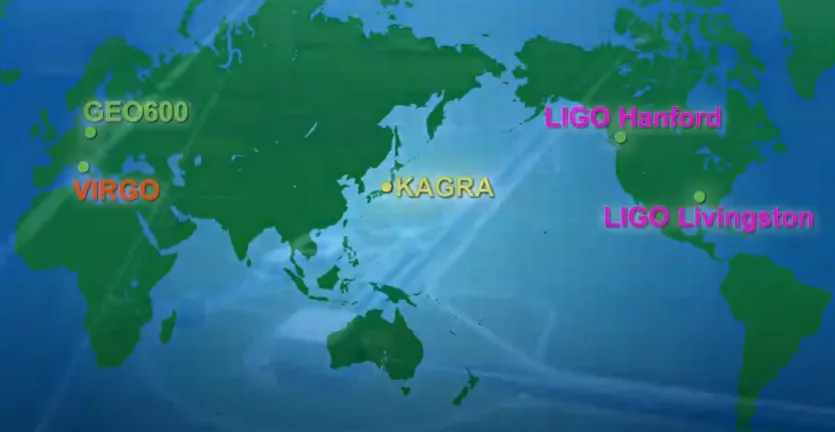
There are other wave observatories in the world. In the USA the LIGO project has two detectors (in Hanford and Livingston). Another important one is the Italian VIRGO. And there is a smaller observatory in Germany: GEO600. KAGRA -whose cost was USD 148 million- will join this fleet, which will allow for more precise triangulation of the origin of the waves detected.
Construction of the tunnels finished in 2014 and a year ago the entire observatory was completely finished. It began observing in February 2020, but shortly after, due to the pandemic, it had to close as a precaution.
Before operating, KAGRA was already giving lessons on how to build a better gravitational observatory. Other projects plan to make improvements, such as incorporating mirror cryogenics and new initiatives already adopt the Japanese design, even underground.
The USA and Europe don't want to be left behind. The COSMIC EXPLORER initiative is already underway, a 40 km detector that will incorporate cryogenics, although it will not be underground. Other projects are LISA and Einstein Telescope.
In 2015, after the news, people started talking about the beginning of a "new era" of gravitational wave astronomy. It makes sense: It expands the spectrum of detectable phenomena and opens new horizons in cosmology. Five years after that, dozens of detections are already being collected. With new technologies and larger observatories, the new wave of astronomy is making itself noticed. Although I wouldn't have called the new telescope KAGRA, but Yūgen☉
Sources and related links
- KAGRA Large-scale Cryogenic Gravitational-wave Telescope
https://youtu.be/x7LHXTtGei0 - https://gwcenter.icrr.u-tokyo.ac.jp/en/category/latestnews
- Japan’s pioneering detector set to join hunt for gravitational waves
https://www.nature.com/articles/d41586-018-07867-z - Japan’s KAGRA searches the sky for gravitational waves
https://www.symmetrymagazine.org/article/japans-kagra-searches-the-sky-for-gravitational-waves - New catalog with dozens of new gravitational waves detected by Virgo and LIGO
https://www.agenciasinc.es/Noticias/Nuevo-catalogo-con-decenas-de-nuevas-ondas-gravitacionales-detectadas-por-Virgo-y-LIGO - COSMIC EXPLORER
https://cosmicexplorer.org/ - Gravitational Waves: A New Era of Astronomy Begins
https://www.youtube.com/watch?v=xj6vV3T4ok8
About the images
Credit: https://gwcenter.icrr.u-tokyo.ac.jp/en/kagra-gallery
Youtube