The Gravitational-wave Optical Transient Observer (GOTO) was inaugurated at the Roque de los Muchachos Observatory of the Instituto de Astrofísica de Canarias in La Palma, Canary Islands, on July 3.
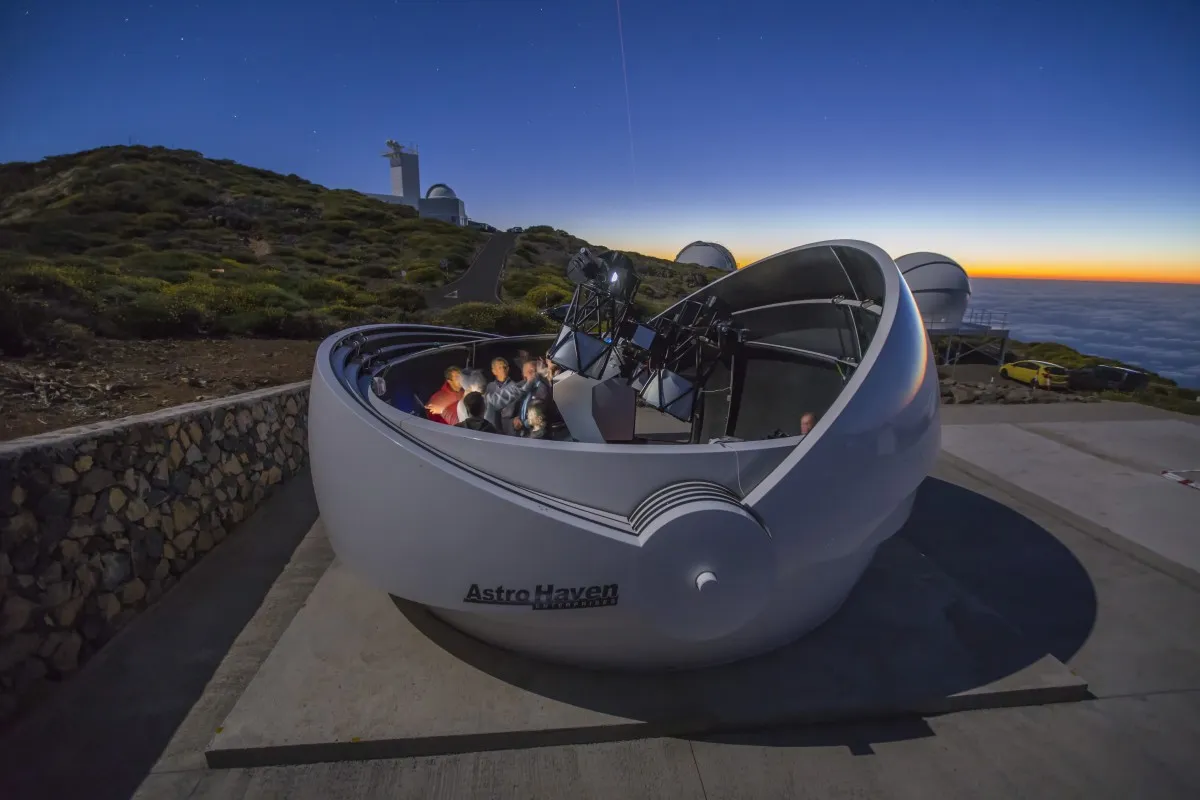
GOTO is an autonomous, "intelligent" telescope that will search for unusual activity in the sky related to alerts from gravitational wave detectors.
These ripples in space-time are created when massive objects, particularly black holes and neutron stars, orbiting each other finally merge. The waves propagate through space at the speed of light and their analysis opens a new form of astronomical analysis.
The goal of the GOTO team is to locate optical signals associated with gravitational waves as quickly as possible so that astronomers can study those sources with a variety of instruments before they fade.
The project is the product of an alliance between the University of Warwick and Monash University. But GOTO will also be operated by other members of an international consortium.
The chosen location is one of the best sites for professional astronomical observation.
WHAT GOTO IS LIKE
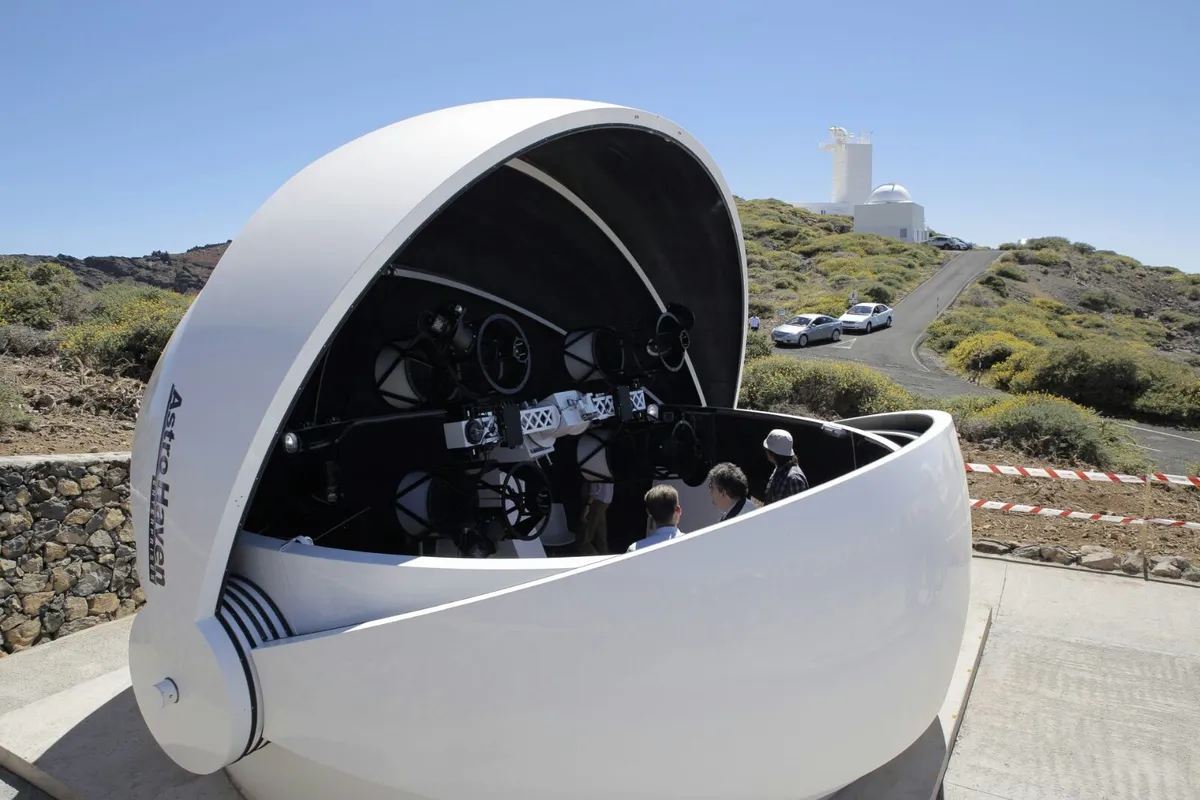
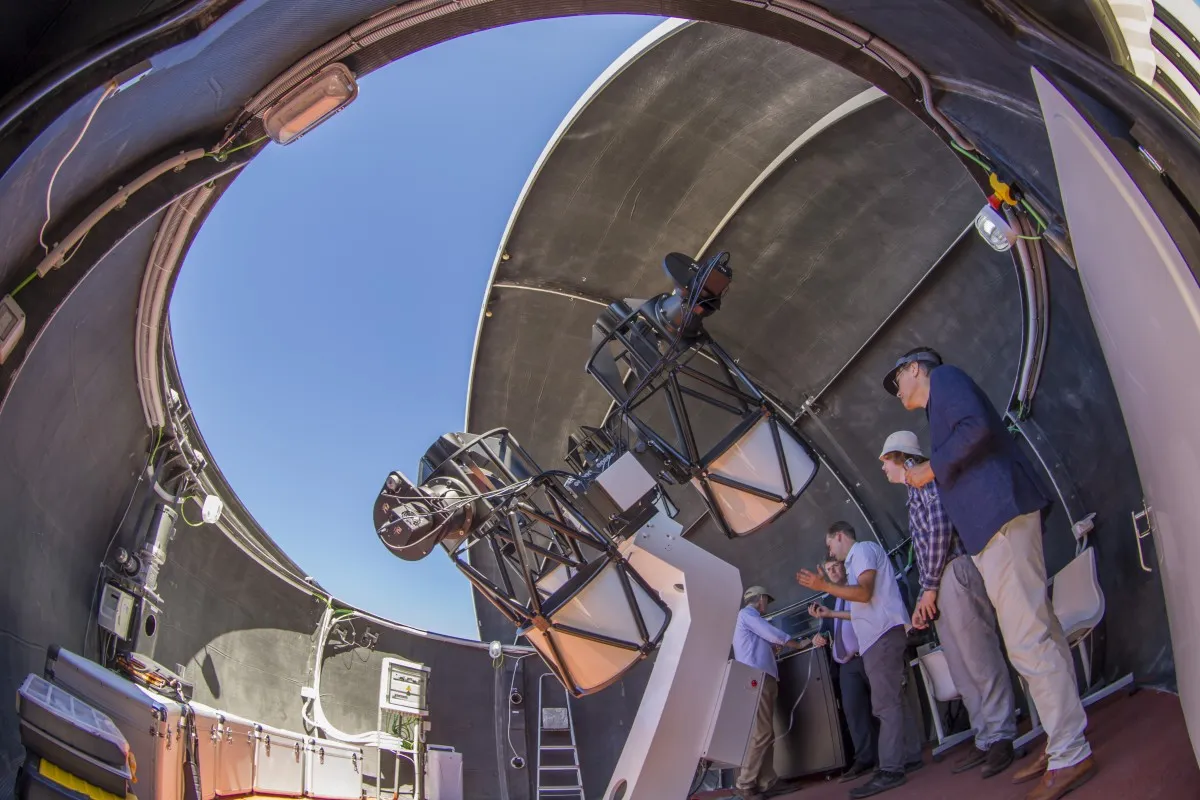
The GOTO project consists of an array of telescopes that, mounted together on a robotic structure, are capable of mapping large regions of the sky in search of transient phenomena. They are specially designed to provide a rapid and automated response with the purpose of observing optical counterparts associated with gravitational wave detections by the LIGO and VIRGO experiments.
The initial instrument, installed at the Roque de los Muchachos Observatory, has four astrographs (though with capacity for 8), 40 cm in diameter and equipped with highly sensitive CCD cameras. These instruments will allow covering a field of about 5 square degrees each, being able to detect objects down to magnitude 21.
The philosophy of the project is for each instrument to be composed of 8 telescopes in the same automated structure and protected by a full-sky dome, its design being scalable, adaptable, and upgradable, using commercial components to minimize costs. A second unit is also planned at the Roque de los Muchachos Observatory and another in Australia, according to the IAC.
Sources and related links
- GOTO, a new robotic telescope for the Roque de los Muchachos Observatory
http://www.iac.es/divulgacion.php?op1=16&id=1227 - Telescope for detecting optical signals from gravitational waves launched
http://www2.warwick.ac.uk/newsandevents/pressreleases/telescope_for_detecting
About the images
Initial image and image 3: Credit: Antonio González / IAC
Image 2: Credit: Elena Mora (IAC).