A review of the situation of the NASA-ESA flagship instrument.
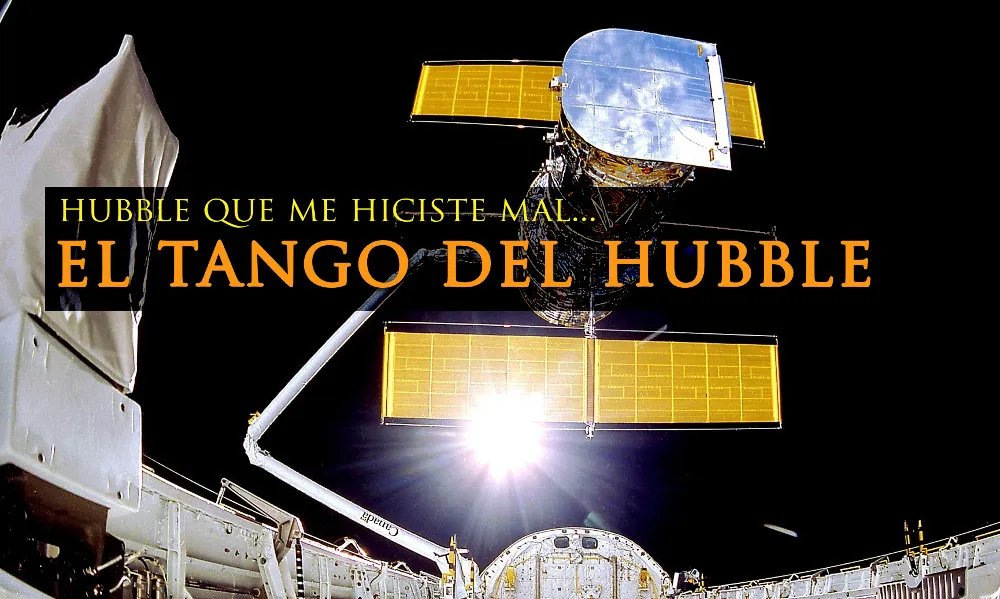
I am on vacation from work. In advance, I bought a book that only arrived on Thursday: "The Hubble Wars", by Eric Chaisson. One could object to the title as exaggerated, but it is obviously metaphorical. The "wars" it refers to can be thought of as all the obstacles or challenges that the people managing the most famous space telescope had to overcome. In plain language, we could say that sometimes, they had to "dance with the ugliest one".
It is well known that from its first light, back in 1990, there was a crisis when it was discovered that the 2-billion-dollar instrument was nearsighted, due to a slight flatness at the edges of the primary mirror, which generated a spherical aberration.
But Hubble's story begins much earlier. In Isaac Asimov's "History of the Telescope", from 1975, NASA's LST (Large Space Telescope) was already announced, with illustrations included.
One of the first publications about a possible space telescope dates from 1923, when German physicist Hermann Oberth proposed launching a telescope into space via a rocket. In 1946, Lyman Spitzer wrote about the benefits of a space telescope. And in 1969 the U.S. National Academy of Sciences approved the LST. (1)
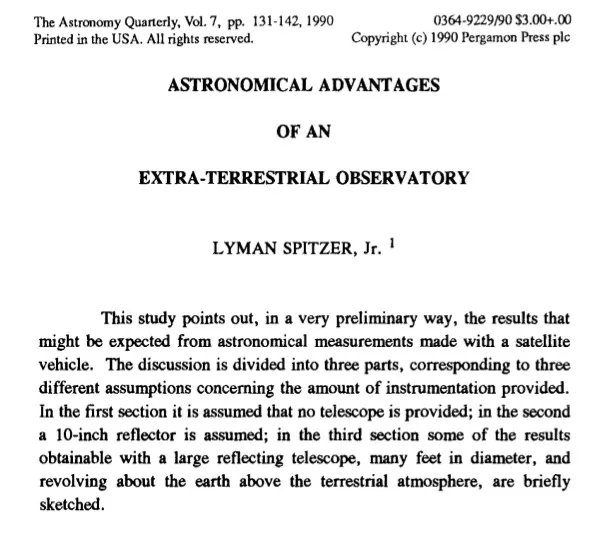
There were other space telescopes before (the Orbiting Astronomical Observatory, OAO) and after Hubble's launch, and others are planned for the near future: the James Webb, often postponed, which would be launched at the end of this year, and the formerly called WFirst, now nicknamed the Roman Space Telescope, in honor of Nancy Grace Roman who in the 1960s pushed for the construction of the LST. However, Hubble has been the most famous space telescope, partly due to the value of the discoveries achieved with the instrument, and partly also due to the management of communication to the general public.
One of Hubble's "wars" has been, almost since its launch, the emergence of new telescope technologies: first active optics and then adaptive optics. Before Hubble, ESO's NTT already used active optics. However, that did not correct atmospheric disturbances, which is achieved with adaptive optics, through an artificial guide star created with a laser and a "deformable" primary mirror that can be adjusted electronically via actuators. ESO has been developing this technology since the 1990s and it is used in one of the VLT telescopes (UT4) and soon in the 40m diameter E-ELT.
This casts doubt on the benefits of space telescopes, given that -beyond Hubble- orbital telescopes cannot be repaired or, if possible, it is much more difficult and expensive, added to the fact that launching telescopes that are too large is impractical. In contrast, ground-based observatories are easier to access and repair.
However, adaptive optics and the installation of observatories at high altitude, although they can improve the quality of observations, cannot solve some intrinsic atmospheric problems: part of the spectrum is absorbed by the atmosphere, as happens with the most energetic part (gamma rays and X-rays), a large part of the infrared and a part of radio waves, as noted in this illustration:
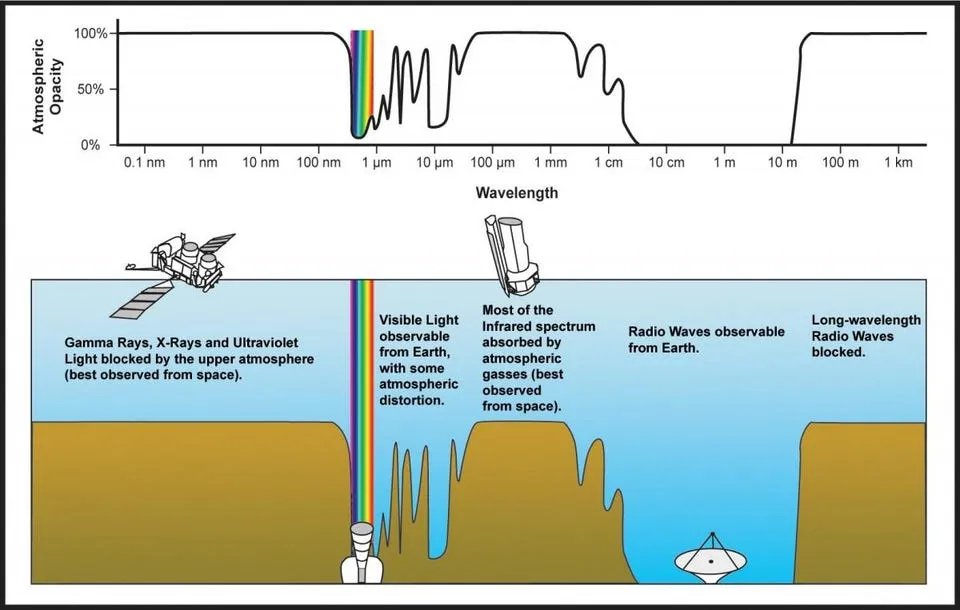
This is why in the near future, astronomy will continue to combine orbital instruments with ground-based observatories. In this context, Hubble managed to overcome many of the obstacles since its launch, largely due to the five Space Shuttle servicing missions. Planned to last 15 years, it has lasted twice as long, but a new question now arises about its possible continuity.
HUBBLE, WHAT DID YOU DO TO ME: THE PROBLEM WITH THE PAYLOAD COMPUTER
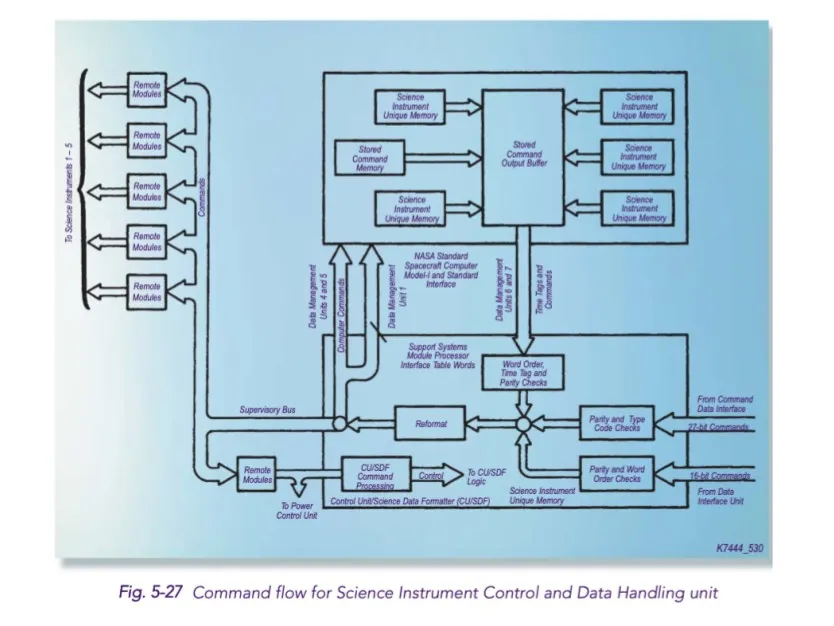
NASA is working to resolve a problem with Hubble's onboard computer that stopped on June 13. After analyzing the data, the operations team investigated the possible degradation of a memory module and attempted to switch to one of the backup modules, without success. The purpose of the payload computer is to control and coordinate the science instruments. This equipment is a standardized NASA system called NASA Standard Spacecraft Computer-1 (NSSC-1).
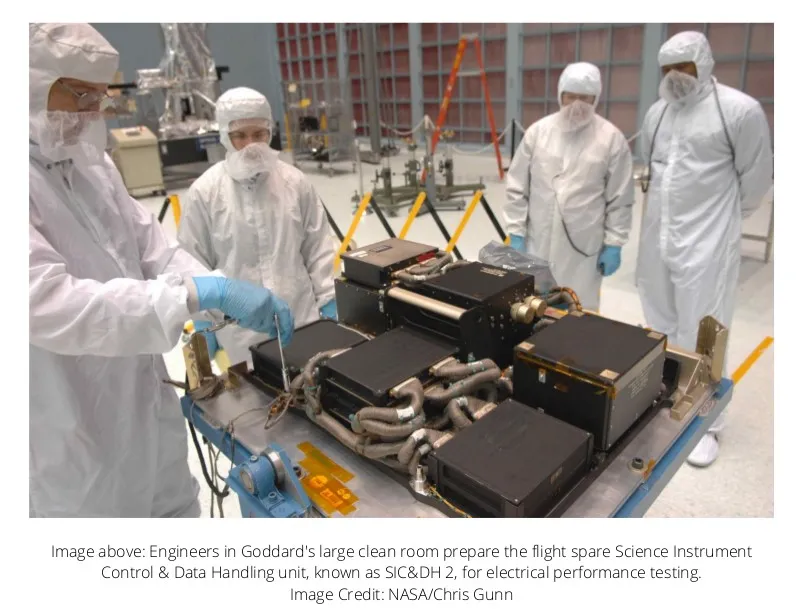
After some failed attempts to switch to backup memory modules, NASA reported on June 22 that the memory module errors would only be a symptom of a different problem. They investigated whether the hardware interface (STINT), which links communications between the central processing module and other components, could be the problem. One possibility is to use another backup computer, unused since its installation in 2009. The NSSC-1 is located in the data handling unit known as the Science Instrument Command and Data Handling (SIC&DH). After 18 years in orbit, the SIC&DH had a failure in 2008 that delayed the final servicing mission. In May 2009, STS-125 was launched and the astronauts installed the existing unit.
On June 25 NASA reported two failed attempts to turn on the backup computer for the first time in space. Tests showed that various combinations of the primary computer's parts and the backup's experience the same error: commands to write or read from memory are not successful. The command and formatting unit is under investigation. The Power Control Unit is also suspected, designed to ensure a stable voltage.
On July 12 the agency communicated that the analysis to evaluate all factors and minimize the risks with the possible switch to backup hardware was completed, which would be done at the end of the week.
It is assumed that devices and machines are means, not ends in themselves, and also inert objects, so we should not fall in love with instruments. Although there are nerds who can have feelings about their computers, even to the point of writing poems to them. Without reaching objectophilia, I think that when Hubble stops working definitively, a little tear will escape us.
After so many "wars", I think Hubble well deserves a tango.
Chan-Chán.☉
Sources and related links
- (1) Celebrating the Hubble Space Telescope from its Beginnings to its Thirtieth Anniversary
https://blogs.loc.gov/inside_adams/2020/08/hubble-turns-30/ - Adaptive Optics
https://www.eso.org/public/chile/teles-instr/technology/adaptive_optics/?lang - Space versus Ground Telescopes
https://research.arizona.edu/stories/space-versus-ground-telescopes - 5 Reasons Why Astronomy Is Better From The Ground Than In Space
https://www.forbes.com/sites/startswithabang/2018/03/22/5-reasons-why-astronomy-is-better-from-the-ground-than-in-space/?sh=45ecbae548f8 - Operations Underway to Restore Payload Computer on NASA's Hubble Space Telescope
https://www.nasa.gov/feature/goddard/2021/operations-underway-to-restore-payload-computer-on-nasas-hubble-space-telescope - A Poem For My Computer Nerd
https://www.memecenter.com/fun/1129845/a-poem-for-my-computer-nerd - Chan chan
https://jantango.wordpress.com/2010/03/24/chan-chan/ - Dance with the ugliest one
https://www.nationalgeographic.com.es/fotografia/foto-del-dia/bailar-mas-fea_15436
About the images
Credits: NASA/Smithsonian Institution/Lockheed Corporation