After launch, it will take a month to deploy the telescope.
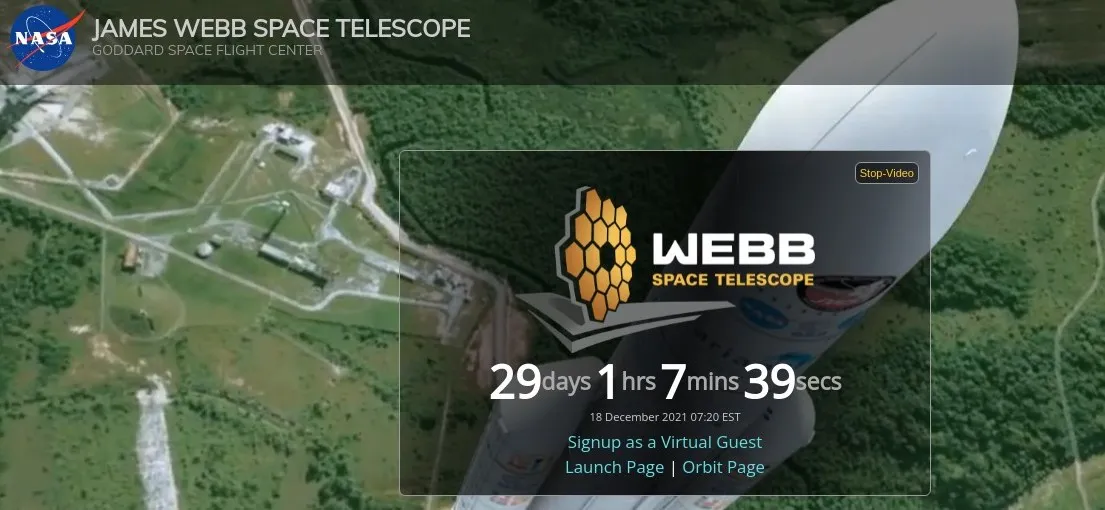
After several years of postponing the launch, the fabulous NASA apparatus is already in French Guiana. The telescope lies in the clean Arianspace facilities where engineers performed a series of functional tests to ensure everything is fine.
The launch is scheduled for December 18. But that will only be the beginning:
The primary mirror measures 6.5 meters in diameter and the sunshield, 21x14 meters, although the cargo space aboard the Ariane 5 in the rocket's nose is 5 meters. That's why they designed James Webb to be folded, which implies several deployment operations that will last a month.
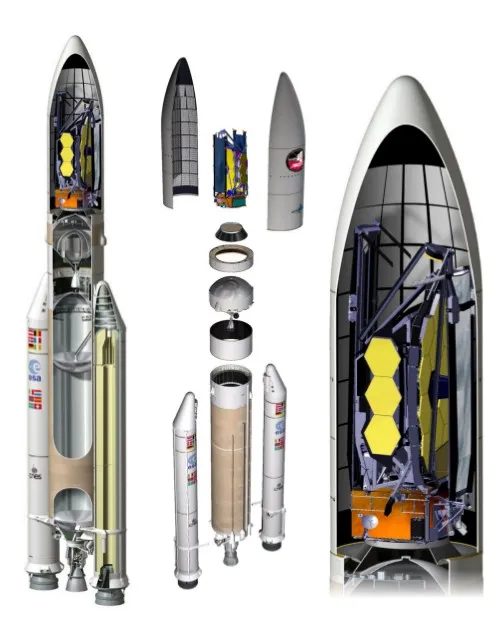
After 206 seconds of flight, at an altitude of 120 km, the two halves of the fairing that protects the observatory during ascent will be separated by a pyrotechnic system. Webb will separate from the vehicle 28 minutes after launch. Then the solar panels and antennas to communicate with NASA will be extended. 12 hours after launch, they will turn on the thrusters for one of the several course corrections. The Observatory will pass the Moon two days after being launched. On the third day, they will open the extension of the solar panels known as UPS. The next day the deployable tower will be extended to separate the mirrors and instruments from the spacecraft.
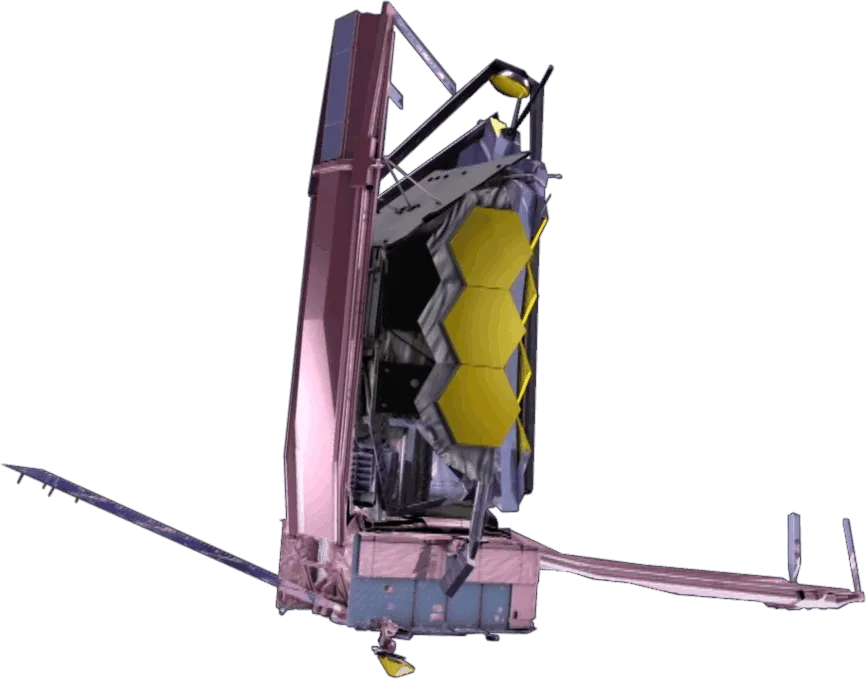
On the fifth day the sunshield membrane will be deployed and the 107 sunshield release mechanisms will be released. Immediately, the two wings (mid-booms) will be released to push the sunshield layers into their diamond shape and the layers will be tensioned. Then a special radiator will be deployed to cool the instruments.
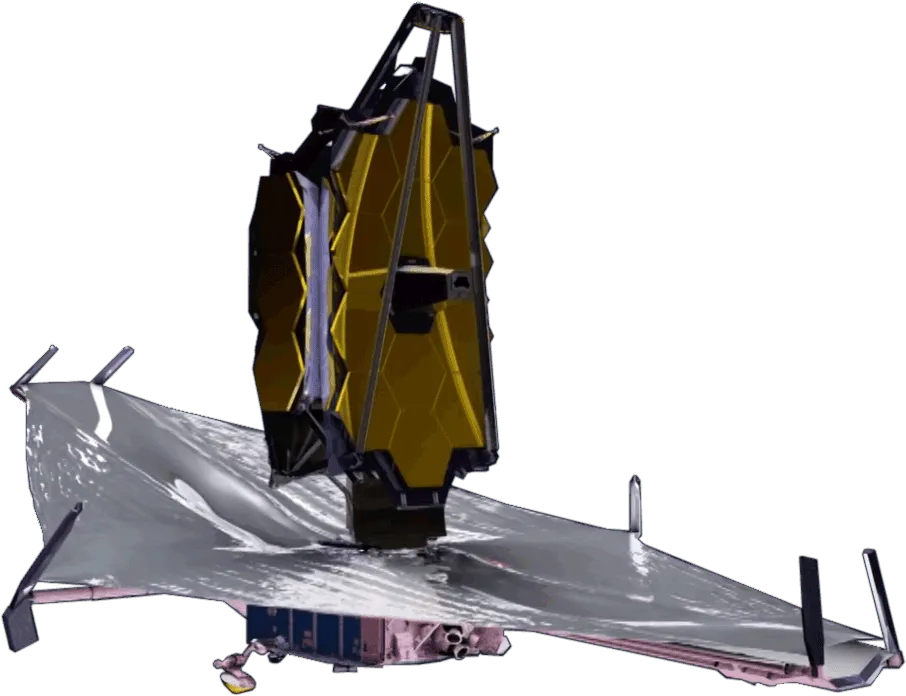
Only on the tenth day will the deployment of the secondary mirror begin. On day 12 the deployment of the primary mirror, composed of 18 hexagonal segments, will begin. This will last 10 days. Each segment has to be perfectly aligned, for which 126 actuators on the back of the mirrors will be used.
On day 29 they will turn on the thrusters again to insert the telescope into its planned orbit at the second Lagrange point L2, one and a half million kilometers from Earth.
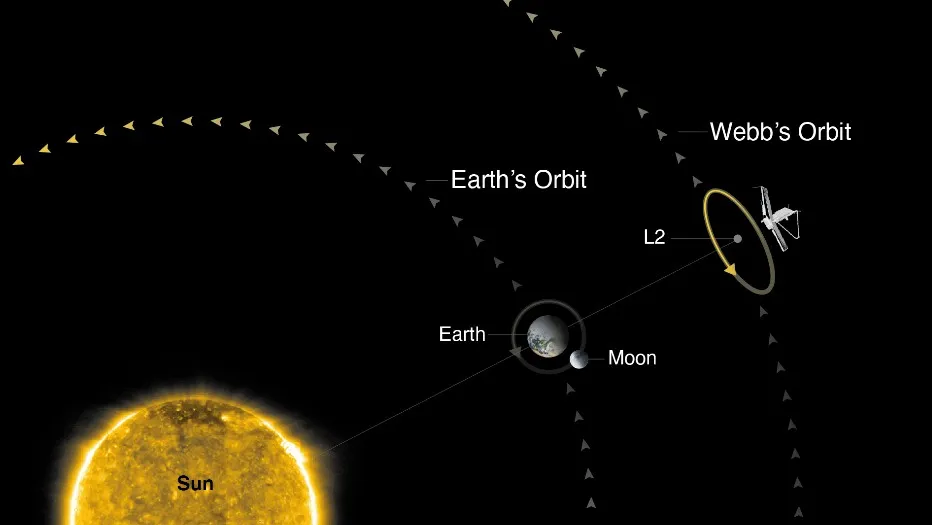
If all goes well, in two months, the most advanced Space Telescope will be deployed in all its glory to begin its scientific operations.
The telescope is a program led by NASA together with ESA and the Canadian Space Agency.
Numbers
The observatory has infrared coverage between 0.6 and 28.5 microns. An optical resolution of 0.1 arc seconds. The primary mirror is 18 segments with a total diameter of 6.5 meters. The secondary is 0.74m. The sunshield is 21m x 14m. It was built in 40 million hours of work. Construction began in 2004.
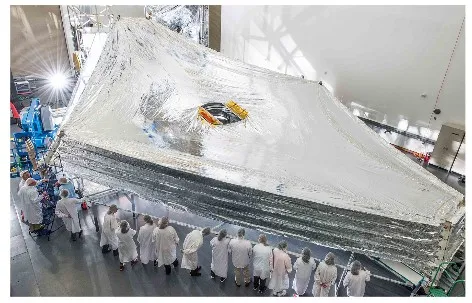
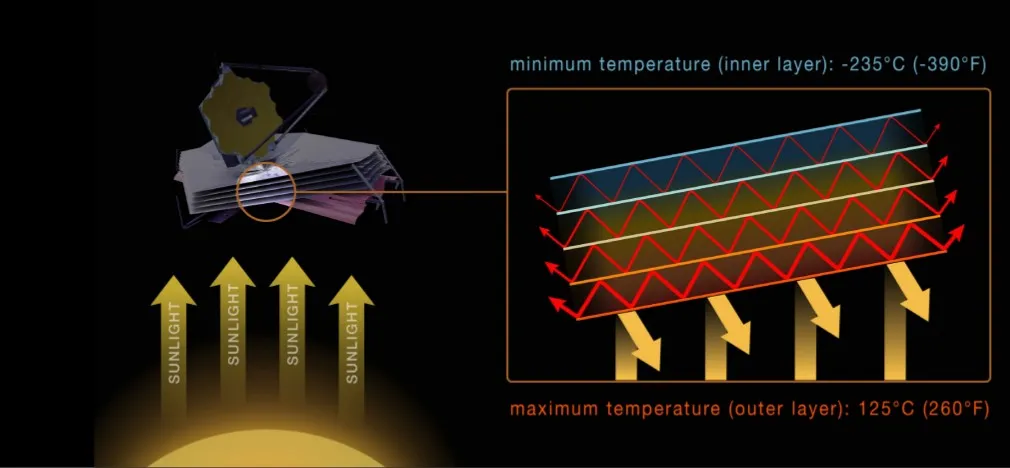
The telescope is prepared to operate at very low temperatures (60 K). The sunshield fulfills the task of blocking and redirecting heat. It has 5 very thin layers (between 0.05 and 0.025mm). Its function is vital, as heat in the instruments would generate false signals.
Instruments
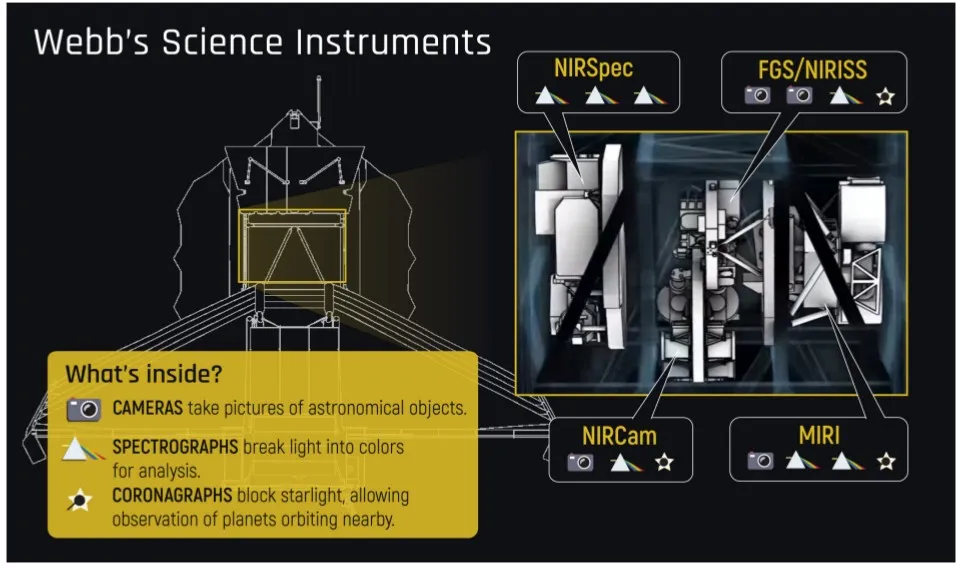
NIRCam: it is a near-infrared camera that operates between 0.6 and 5 microns, equipped with coronagraphs which are instruments that block a very bright object to detect fainter objects.
NIRSpec: in addition to spectroscopy capabilities, the instrument is designed to observe 100 objects simultaneously.
NIRISS/FGS: It is a spectrograph. In the same place is the FGS which is a fine guidance sensor so the telescope is stable and pointing at the indicated location.
MIRI: Mid-infrared camera, coronagraph and spectrograph, between 5 and 28 microns. It will be used for galaxy redshifts, new stars and Kuiper Belt objects.
In summary: first they will have to perform a series of difficult maneuvers to deploy the apparatus. Prepared to operate in the cold, the JWST will sweat bullets during its deployment, before receiving a warm applause for its success.
In its three decades of operations, the Hubble Space Telescope was an essential instrument for making great discoveries. James Webb is expected to last between 5 and 10 years, but with a telescope three times larger than Hubble's, with no possibility of repairs like the servicing missions the HST had. What wonders will astronomers discover with this new apparatus?☉
Sources and related links
- The Road to Launch and Beyond for NASA’s James Webb Space Telescope
https://www.nasa.gov/feature/goddard/2021/the-road-to-launch-and-beyond-for-nasa-s-james-webb-space-telescope - JWST
https://jwst.nasa.gov/content/webbLaunch/index.html
About the images
Credit: NASA