It's not so strange that the universe is so strange.
Some readers might wonder why I don't cover the latest astronomy news here. I did initially, when I started the blog back in 2006, but currently I don't have enough time to dedicate to it. Besides, many important news stories are covered by other media that are more massive.
However, although there is a lot of good information on blogs, portals, TV channels and Youtube, sometimes it is exaggerated a bit. Here I will review certain extreme astronomical phenomena, some of which were in the news recently, to finish this brief racconto with a "strange" case and I will derive some conclusions from there.
1-The cosmic bullet
In 2017 it was announced that by analyzing the motion of the gas from a high-speed cosmic cloud in a corner of the galaxy, astronomers found clues of a wandering black hole hidden in the cloud.
A team of Japanese astronomers led by Masaya Yamada used the ASTE telescope in Chile and the Nobeyama radio telescope to observe molecular clouds around the supernova remnant W44, located 10 thousand light-years from Earth. During the survey, the team found a molecular cloud with an enigmatic motion. This cloud, nicknamed "the bullet," has a speed of over 100 km/s. Additionally, this cloud with a size of two light-years moves against the rotation of the galaxy.
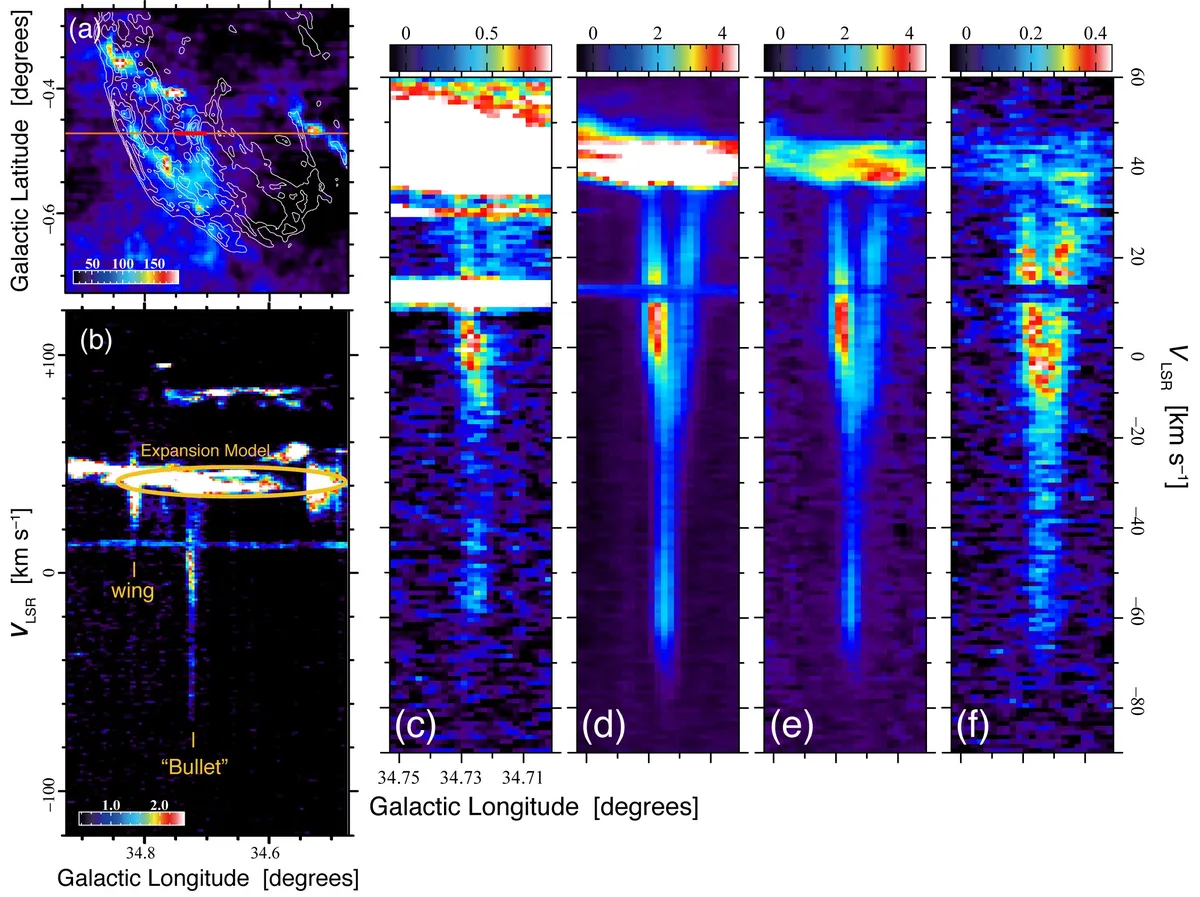
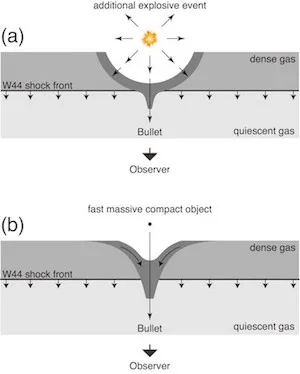
The team proposed two possible scenarios: in the first, the explosive model, a gas bubble from the supernova remnant passed near a static black hole, which attracted the gas and generated an explosion. In that case, astronomers estimated that the mass of the black hole would be 3.5 times the solar mass or greater.
The other scenario proposes that a high-speed black hole plows through dense gas, dragging the gas to form a wake. In that case, the mass of the black hole would be 36 times the mass of the sun or greater.
Theorists have predicted that in the Milky Way there would be between 100 million and 1000 million black holes, although only less than 100 have been identified.
2-S stars
Astronomers have been studying the central black hole of the Milky Way, called Sagittarius A* (Sgr A*), for decades. They do so by identifying some stars, known as "S stars," each of which receives a number. Two of the best known are stars S1 and S2. The latter has an orbit of 16 years and a semi-major axis of 970 AU (astronomical units). It would be about 14 times more massive than our Sun and reaches a speed of 5000 km/s.
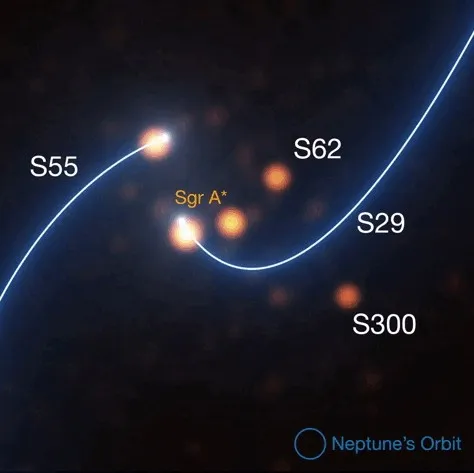
But other stars closer to the black hole have been identified, including S55 and S62. The first has an orbital period of almost 13 years, while the other of 10 years. S62 reaches a speed of 10% of the speed of light.
3-Strangelets: stars of strange matter
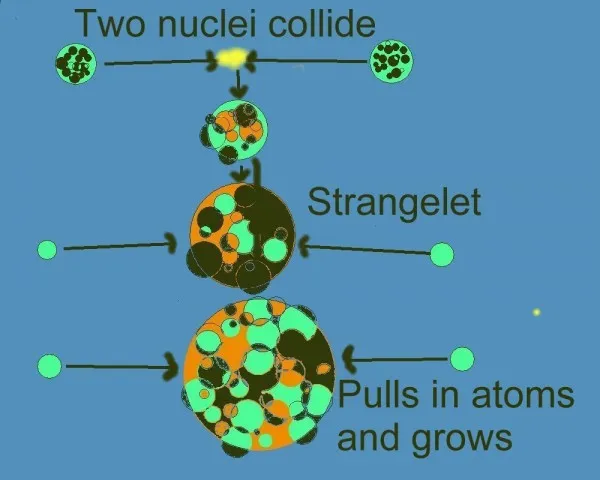
The idea of "strange matter" is associated with the enormous pressures that can exist for example in neutron stars. The hypothesis is that given a certain level of pressure, neutrons would dissociate into pairs or triplets of s-type (strange) quarks. As far as is known, s quarks due to the weak nuclear interaction decay into u and d (up and down) quarks.
However, it was postulated that under certain conditions, the opposite would occur and there would be concentrations of s quarks, that is, stars of strange matter. It was also speculated that the interaction of this matter with "normal matter" would produce more strange matter in a chain reaction.
On one hand, atoms become more stable by joining with others, for example, going from hydrogen to helium. But it's not linear: upon reaching Iron there is a critical point and atoms with a greater number of protons are less stable.
So "strangelets" are a speculation. It doesn't mean they don't exist, but they are theoretical postulates that, so far, have no evidence in their favor.
CONCLUSIONS
The universe is quite strange without needing to invent unicorns. Neutron stars, black holes and white dwarfs, all compact objects, are extreme in density, temperature, magnetism and gravity. Strangelets are a valid scientific speculation, without empirical evidence, although excellent for generating clickbait.
However, is the universe really strange or is it just an opinion? Perhaps the idea of black swans can help us think about it. It was thought that black swans did not exist. Those who thought so lived in the Northern Hemisphere where there are no such swans. They were amazed later when they discovered them in the Southern Hemisphere. This has been used as a metaphor by Nassim Taleb.
In that sense, anything that is unexpected and difficult to predict or find can be classified as a black swan. The universe is huge. Much larger than we might think, since it is difficult to think about very large numbers. Within those astronomical distances there are very large objects, but also others that are very small and massive, that is, very dense, which take known physics into unknown territory in our environment.
Thus, it is logical that the universe is full of black swans. We shouldn't be so surprised. After all, we know little. On the other hand, should we be surprised that surprise sells? We can be surprised by things that really exist or that justify our astonishment; but we could also be surprised by some colored glass beads.
The problem with the metaphor of colored glass beads is that gemstones do exist. The value we give them will be in relation to what we can or cannot obtain. If I have an excess of gold and no ruby, I will give more value to the red stone.
But in communication, colored glass beads can be things that do not exist (in our knowledge), like strangelets. It's like a check with no funds that people buy anyway because it is narrated as if there were funds, or because we want to believe in something.
While some may be afraid of a "strange matter apocalypse," there are those who say they are skeptical of coronavirus vaccines (or in general), despite the fact that for the former there is not a drop of empirical evidence and for the latter, there is an abundance.

There are also those who distrust large laboratories because of the substantial economic profits they make from selling vaccines. If that were a reason not to get vaccinated, then we shouldn't buy smartphones or sneakers either. One thing is to object to corporate profit, another is to deny the usefulness of things.
Vaccine skeptics are in many cases believers in Adam and Eve, the flat Earth, the frequent visit of extraterrestrials, elves, and trickle-down theory. Post-Columbian shiny beads to which we will have to add strangelets or parallel universes. Astonishment is like gold and ruby: if we are astonished by anything, by everything, then it has no value. That is the strange thing about strangeness.☉
Sources and related links
- Strange matter
Edward Farhi and R. L. Jaffe
Phys. Rev. D 30, 2379 – Published 1 December 1984
https://journals.aps.org/prd/abstract/10.1103/PhysRevD.30.2379 - Very Small Strangelets
E. P. Gilson, R. L. Jaffe
https://arxiv.org/abs/hep-ph/9302270 - Some Matter is Strange, but that's okay
https://scienceblogs.com/startswithabang/2010/10/29/some-matter-is-strange-but-tha - Kinematics of Ultra-High-Velocity Gas in the Expanding Molecular Shell adjacent to the W44 Supernova Remnant
https://arxiv.org/abs/1612.04503 - Quiet black hole may be lurking in cosmic ‘bullet’
https://cosmosmagazine.com/space/quiet-black-hole-may-be-lurking-in-cosmic-bullet/ - Tail of Stray Black Hole hiding in the Milky Way
https://www.nro.nao.ac.jp/en/news/2017/0116-yamada-e.html - S62 (star)
https://en.wikipedia.org/wiki/S62_(star)
About the images
Zooming into the black hole at the centre of our galaxy https://youtu.be/dXAU0gzsPOw
Significance https://es.xkcd.com/strips/significancia/
https://xkcd.com/882/