About a TV program and the new definition of planet.
Last year, 2020, marked 90 years since the discovery of Pluto in 1930. For this reason, a documentary program titled "TeamPluto" was made, which literally means "Team Pluto." This year the program is being shown on cable TV channels with the translated title "Love for Pluto." It is obvious that the program takes sides "in favor of Pluto," as if the inanimate object were a soccer team or a person.
Among professional astronomers there will always be differences on various topics, including the redefinition of planet made at the IAU General Assembly in 2006. However, such debates usually revolve around criteria of logical consistency with observational data. In contrast, when the general public opines, they usually do so based on emotional criteria that are not only out of place but are also mistaken.
I will elaborate here on two reasons why the general public often has a position "in favor" of Pluto. And I will try to explain why that is misplaced: simply, because no one is "against" the object.
1-FIND THE INTRUDER
There is a game that can be very simple or a bit complicated, which consists of finding an intruder element among a set. The idea is that there is some common denominator among the elements, except for one of them that does not possess such a denominator.
Let's try a couple of simple examples:
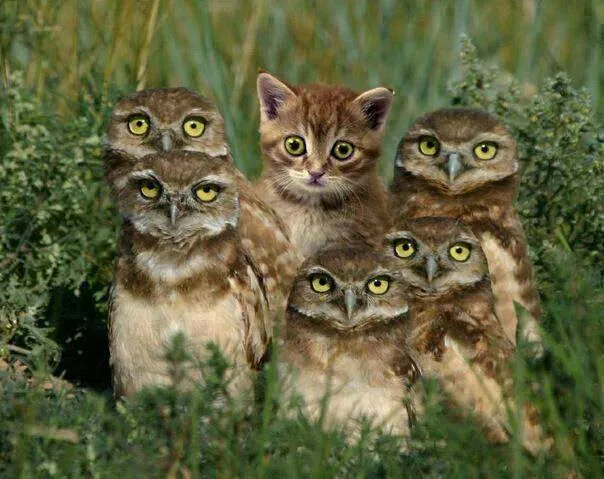
Here it is easy to see that the intruder is the adorable kitten.
I found examples of children's literature on the web, like these:
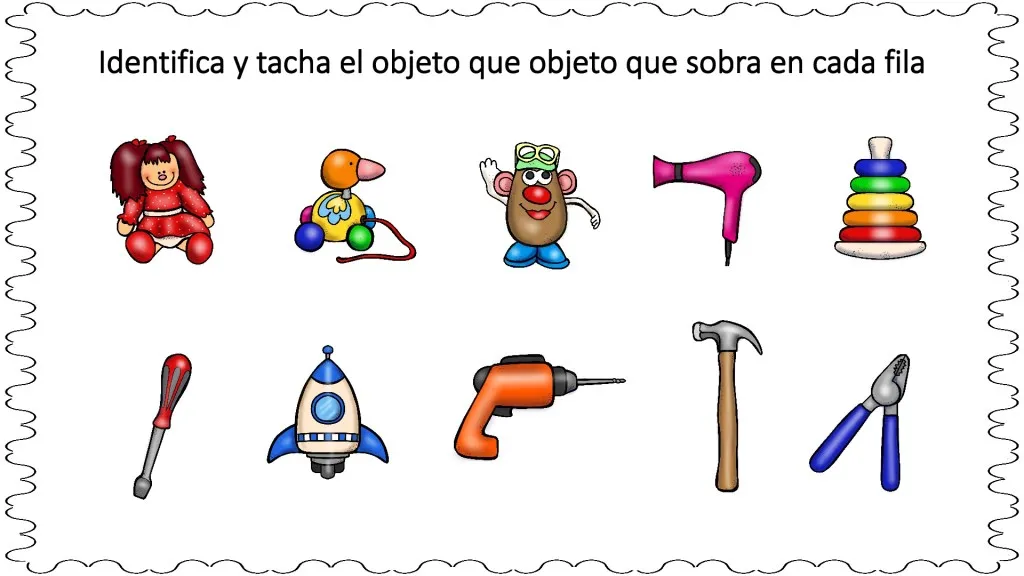
There is no need to point out the intruders, as they are obvious. There are other examples, more complex. Let's look at this case:
2,3,5,7,9,12,14,16,18.
In this series of numbers there is not ONE common denominator, but two. The first ones are primes, the last ones are even, but 9 is neither of the two things.
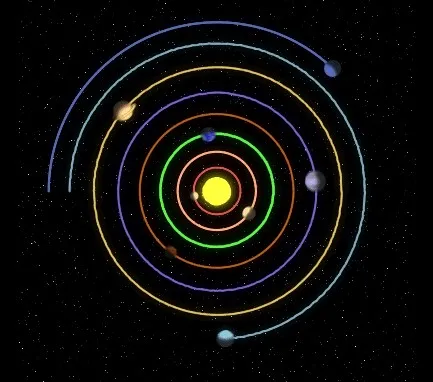
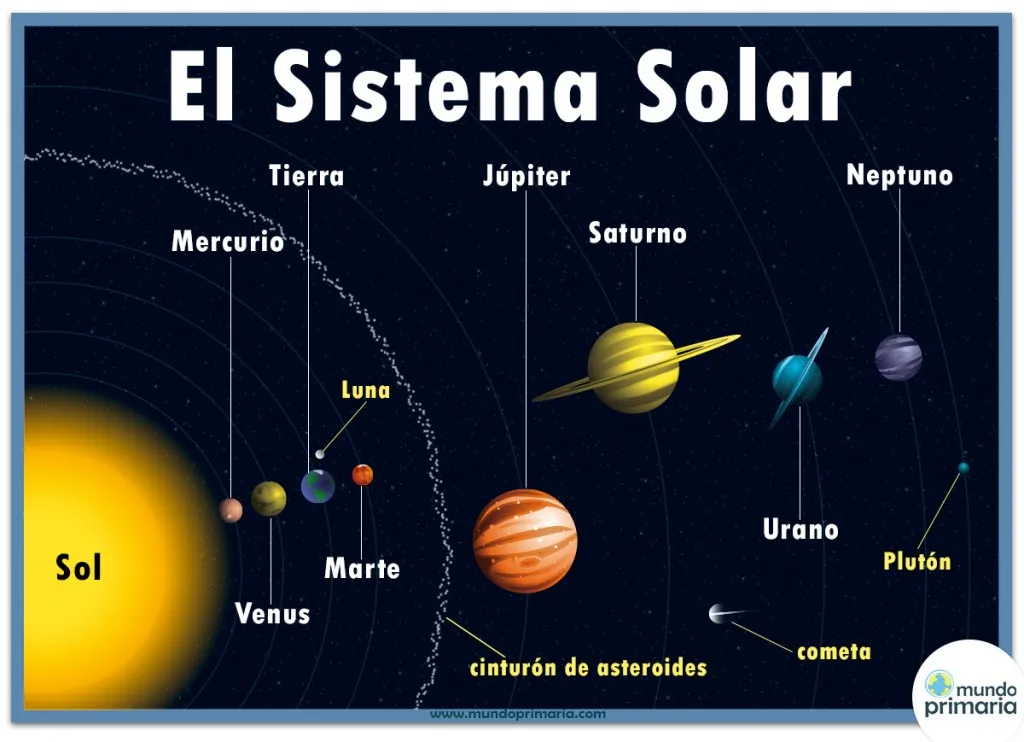
Let's do the same with the Solar System. For that, visual representations are not enough; we need to add data:
The relevant information could be the orbital period, the direction of rotation, the inclination, etc. Depending on the criterion we use, Venus or Uranus could be candidates for "Ugly Duckling."
Something that is not usually taught in school is that Pluto was always different. It was always seen by astronomers as an "intruder." But scientific knowledge takes time to be produced and even longer to reach high school. For example, in the book Cosmografía, by Charola, Kapelusz, 1941, it is stated that Pluto would have the size of Earth, but 1/9 of its mass.
If high school students knew that Pluto was always seen as "weird," its reclassification would not have been surprising. On the Facebook page of the TeamPluto program, I found this message (translated, as it was in English):
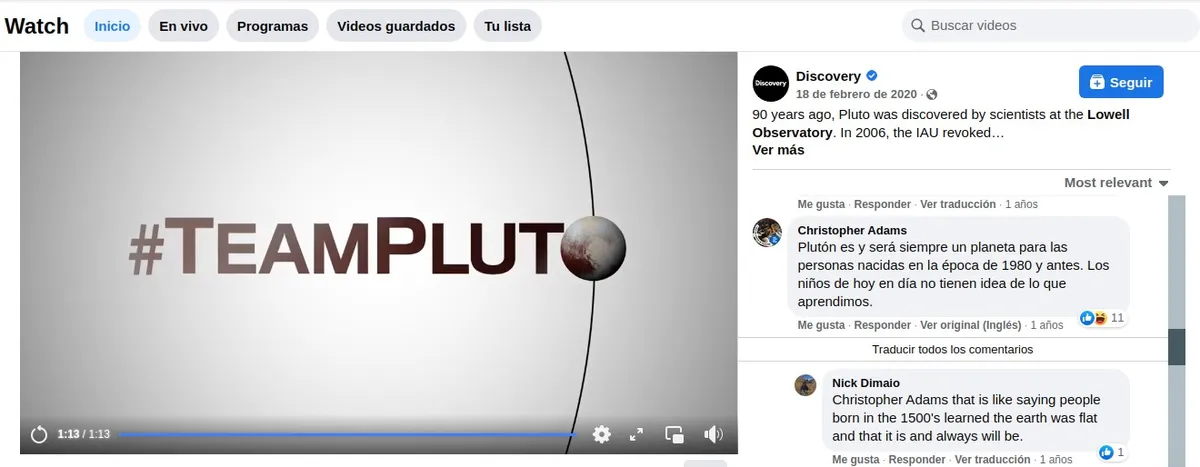
That is to say, a possible reason why people reacted negatively to the change was that they were never taught that Pluto was different.
The Solar System can be divided in this way:
The Inner Solar System, composed of Mercury, Venus, Earth, and Mars, which are small, rocky bodies.
The Outer Solar System, composed of gas giants with rings, Jupiter, Saturn, Uranus, Neptune.
The Asteroid Belt, which delimits the previous two sectors, as it is located between Mars and Jupiter.
Pluto is a rocky object, like the inner ones, but smaller than all of them, as it has half the diameter of Mercury. But it is not with the inner ones; instead, it is at the end of the gaseous ones. In the Intruder Game, Pluto stands out because it is poorly placed. It is like the number 9 in the previous example: Pluto is not inner, but outer, yet it is rocky, not gaseous.
A sample button
In my library I found an astronomy book from 1999: El Espacio asombroso, by Ann-Jeanette Campbell, Emecé, Buenos Aires. On page 165 it says:
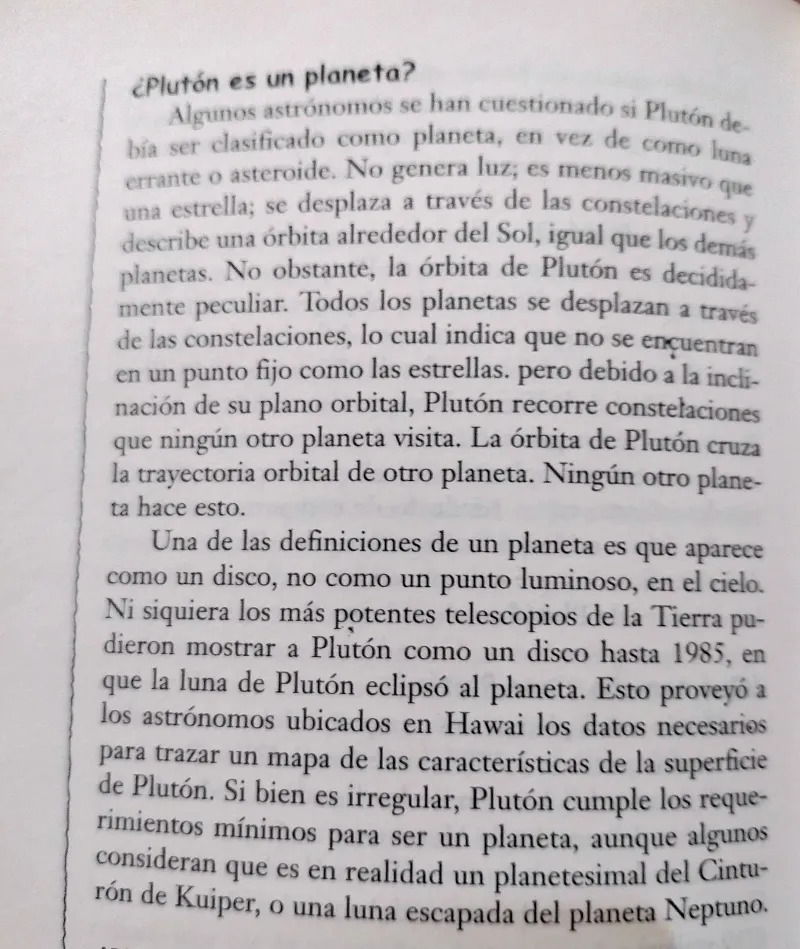
It should be added that astronomy, like the rest of the sciences, is not a closed system with absolute truths. Pluto was and is difficult to observe, given its small size and great distance. To the extent that, with better instruments, new data is acquired, astronomers can better understand the objects and reach new conclusions. That is why sciences change, because they are the fruit of research.
After Pluto, there are other objects, also rocky, of smaller size. That is to say, Pluto is the King of the Trans-Neptunians. This leads us to the second issue.
2-ASTRONOMICAL NOMENCLATURE
Modern astronomy has remnants of our ancient culture. That is why a large number of objects have been named after gods and mythological creatures. There are giants and also dwarfs. People often use the word "dwarf" in a derogatory way, as when we say: "Mental dwarf."
However, in astronomy it does not have a negative connotation, but only refers to the relative size of objects: there are dwarf galaxies, dwarf stars, dwarf planets. Most of the stars in our galaxy are dwarfs. Our Sun is a white-yellow dwarf and will end its cycle as a white dwarf.
But the general public probably does not know this and therefore interprets the label "dwarf" as derogatory.
Pluto went from being the lion's tail to being the mouse's head. Until 2006 it was the ugly duckling of the planets, at the end of the line, the smallest and most distant of the planets. Now, it is the leader of the dwarf planets. Moreover, there is a category called "Plutinos," since they share a characteristic with Pluto: they have a 3:2 resonance with Neptune, meaning they intersect the orbit.
LOVE FOR THINGS
Human beings are capable of having feelings for inanimate things, from computers to sewing machines, cars, telescopes, etc. It is understandable, to the extent that we use those things frequently and know them in a sensory way: we touch them, we see them. Having "Love for Pluto," on the other hand, is hard to understand. It cannot be observed with the naked eye nor with medium-large amateur telescopes. Even with Hubble a pixelated image was obtained, despite its 100-inch primary mirror.
This "love" for Pluto, it seems to me, is rather a product of our tendency to defend "the weak," which is commendable when it comes to people, but in astronomy it is out of place. No one is against Pluto. The dwarf planet category is not derogatory. Dwarf planets, dwarf stars, and dwarf galaxies play important roles in the cosmos. Size in astronomy is important since, in general, size is related to gravity and therefore to internal astrophysical processes, as well as the motions of objects.
However, small size does not always imply low gravity, as is the case with compact objects (white dwarfs or neutron stars), which have high density. NASA sent the New Horizons spacecraft specifically to study the Pluto system. Asteroids, which are not only smaller but also lack a spherical shape, are also important to know and study, as are natural satellites.
CLASSIFICATIONS AND DISCRIMINATION
Establishing a relationship between classification and discrimination, in astronomy, is nonsense. Classifications have nothing to do with "rights," since they are inert objects. It is, therefore, a whim. There have been other reclassifications that did not generate any media "uproar."
One case is that of the number 1. For a time, it was considered that such a number should be considered prime, since it is only divisible by itself. Then that definition was changed and today primes must be greater than 1, which excludes not only 1, but also 0. The Fundamental Theorem of Arithmetic establishes that there are two classes of numbers: primes and composites. The former have only two factors (1 and themselves). Composites have more than two factors, but they must be a finite number of factors. If 0 or 1 were included, those rules would not hold. This generates another special class of numbers that are neither prime nor composite.
Were zero and one discriminated against? No, it's a definition, a convention. They are numbers, not people.
Pluto is not a weak being that must be protected. It is an inert object whose study and research is just as important as before 2006. Before, it was just one of the bunch. Now, it is the largest of a new class.
There are cherry tomatoes, which are dwarf tomatoes. Perhaps astronomers should be smarter and rename the category as "cherry planets" or "bonbon planets," which are nicer words, although they mean the same thing, very much in the style of gourmet astronomy.☉
Sources and related links
- Discovery Special Examines Pluto’s 2006 Demotion From Planet Status (Exclusive)
https://www.thewrap.com/discovery-team-pluto-new-special-former-planet-2006-demotion-dwarf-exclusive/ - #TeamPluto
https://www.discoveryuk.com/series/teampluto/ - FB: #TeamPluto
https://www.facebook.com/watch/?v=200107801047611
About the images
Attention and Cognitive Stimulation Activity: Find the intruder https://www.orientacionandujar.es/2018/08/11/actividad-de-atencion-y-estimulacion-cognitiva-encuentra-el-intruso/
Find the intruder https://encircletheworld.wordpress.com/find-the-intruder/
Solar System infographic for children https://www.mundoprimaria.com/infografias-imagenes-educativas/sistema-solar-ninos
Plutinos
By Tomruen - Own work, CC BY-SA 4.0, https://commons.wikimedia.org/w/index.php?curid=75809925