The instrument's tuning has boosted discoveries that have come fast and in quantity.
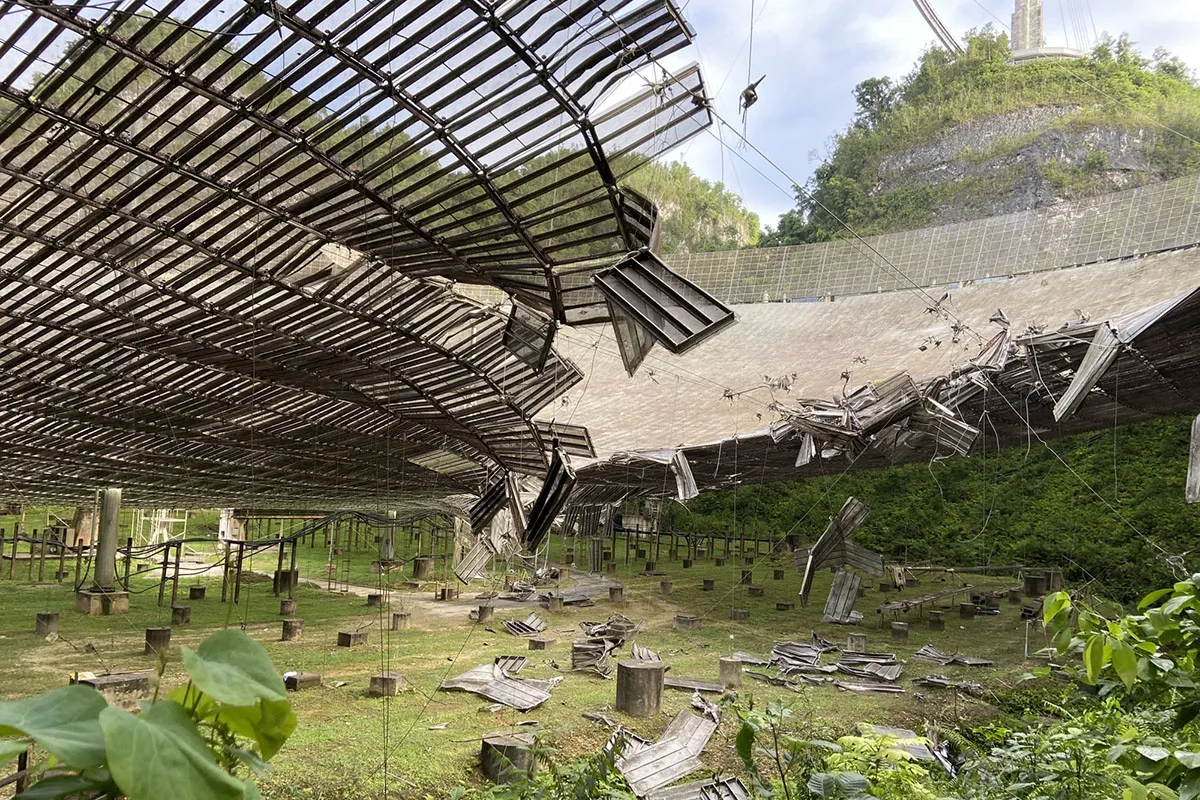
Between 1963 and 2020, the Arecibo radio telescope was a world astronomy icon, reaching popular culture through its inclusion in films like GoldenEye and Contact, as well as in an episode of The X-Files.
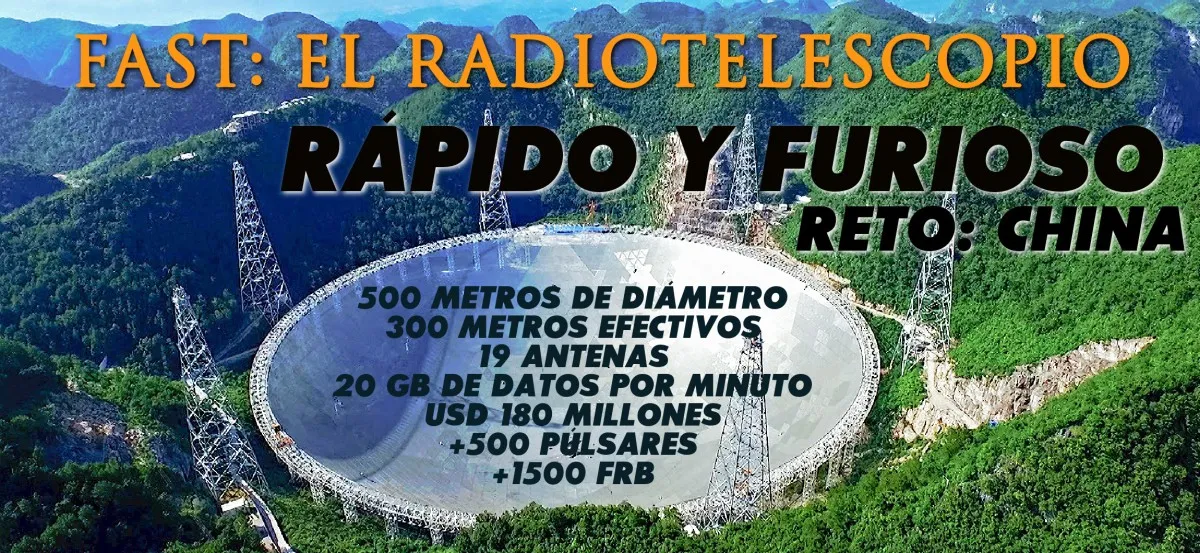
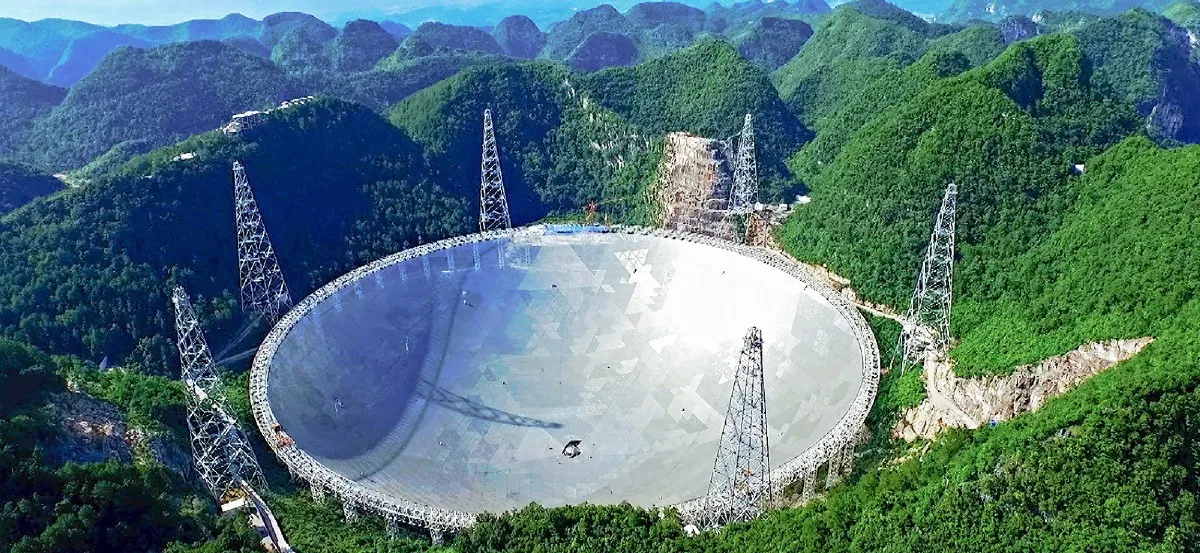
But in the East, where we often don't pay attention, a similar radio telescope has been in use for some years. The one in Puerto Rico was 305 meters. The FAST (Five-hundred-meter Aperture Spherical Telescope) radio telescope has a 500 m diameter dish, hence its name, in English. However, only a 300 m diameter circle is used at any given time.
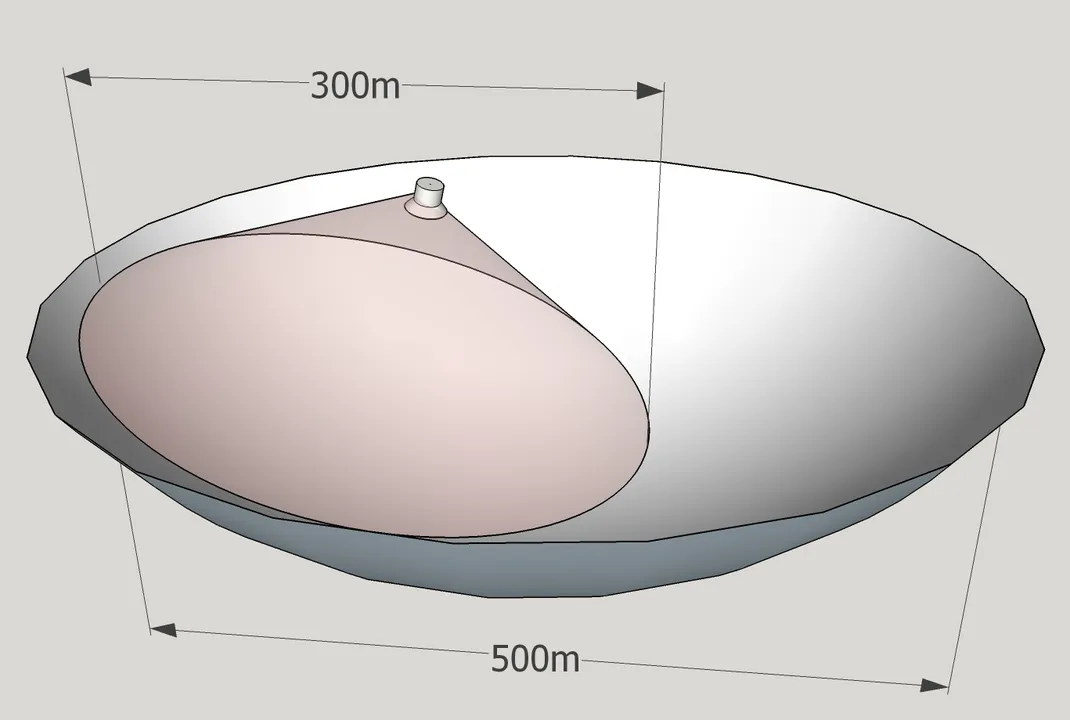
Construction began in 2011 and first light was in 2016, at a cost of USD 180 million. It was built in a natural depression in Guizhou province.
FAST's surface is made of 4450 triangular panels, 11m per side, in the form of a geodesic dome. 2225 actuators located underneath make it an active surface.
Above the reflector is a feed cabin moved by a cable that uses servomechanisms on six support towers 170 meters high. The receiving antennas are mounted below this on a Stewart platform that provides position control and compensates for disturbances like wind motion. This yields a precision of 8 arcseconds.
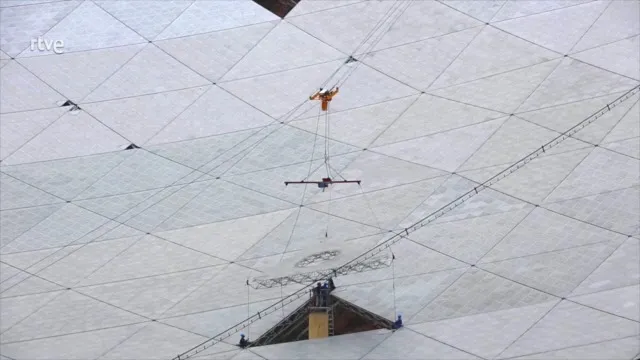
If the numerical data produce awe at the project's size, visualizing the place causes spasms of intellectual pleasure. The documentary "FAST, the ear of the universe", fulfills that purpose. Directed by Fabrice Gardel, co-produced by France and China, released last year, it can be seen on some online sites and has been broadcast on Spanish television.
Already by the mid-1990s, astronomers understood that there was a "contamination" of the sky from the use of the radio spectrum that interferes with radio astronomy.

The Chinese decided to build an instrument far from large urban centers, in a natural depression at least 600 m in diameter. And they found it, about 70 km from an urban center. The rock was good for supporting the tons of the mega-structure. But they had to build drainage for rain and access roads for trucks.

When the terrain was prepared, they had to assemble a 1500 m ring that would be the instrument's frame.

With the ring finished, they had to make the reflective surface, made with triangular blocks supported on hydraulic actuators. If they're not pulling our leg with the information, more than 2000 actuators were used.
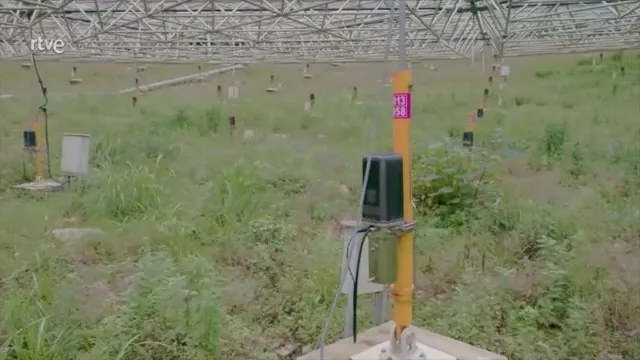
Assembling each part required precision to move each 500kg piece into its appropriate place. Then would come the receiver, for which it was necessary to install six support towers.
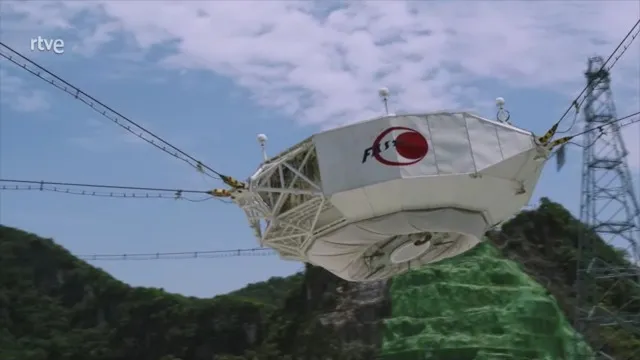
The receiver, held by cables in the center, includes 19 antennas (70 MHz - 3 GHz) installed on a robotic platform. The cable reaching the receiver had to be ultra-fast and resistant. 22 GB of data per minute are recorded. The problem with optical fiber is that it is very fast and very fragile. They had to develop a flexible, resistant, and very fast optical fiber that did not exist until then. The servers are located about 500 m from the structure.
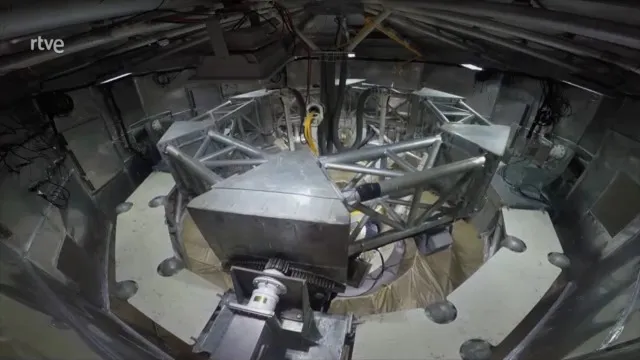
Finally, this incredible machinery works like this: radio signals arrive from deep space to the reflective surface composed of panels that can be moved with hydraulic actuators to change their angle. Upon reflection, the waves head towards the receiver, for which it is necessary for it to move. For this purpose, the elevated receiver is held by steel cables that support the 30 tons and move the apparatus with pulleys placed at the top of each support tower. When the signal reaches the receiver, it converts it into digital data and sends it to the servers.
The research initiated with this fascinating machinery a few years ago has already yielded great fruits. Astronomers have focused on three types of studies: FRBs, pulsars, and HI regions, ideal for studying with radio astronomy. A large number of these phenomena have been discovered: at least 500 pulsars since 2017.
It was not until 2016 when the first repeating source, FRB 121102, was detected. Before the bonanza of new events detected by FAST, scientists using other radio telescopes had reported about 350 FRBs from this source, located in a galaxy rich in star formation processes. With a repeating source, other telescopes typically obtain between two and a hundred pulses. With FAST, more than a thousand were obtained.
The radio telescope was mentioned in the episode "The Search for Intelligent Life" of the new series Cosmos: Possible Worlds.
It might seem like a bad decision for the State to use USD 180 million to make a machine that produces no practical utility. China has 1,400 million people. If the money had been distributed among each inhabitant, each would have gotten USD 0.12. For the Qatar Soccer World Cup, an estimated cost is USD 220,000 million.
To know the universe, large instruments are needed. All roads lead to this.☉
Sources and related links
- FAST, the ear of the universe
https://www.documaniatv.com/ciencia-y-tecnologia/fast-el-oido-del-universo-video_f972d1bd6.html - rtve FAST, the ear of the universe
https://www.rtve.es/play/videos/somos-documentales/fast-el-oido-del-universo/6705808/ - The Five-Hundred-Meter Aperture Spherical Radio Telescope (FAST) Project
Rendong Nan et al.
https://arxiv.org/abs/1105.3794 - Five-hundred-meter Aperture Spherical radio Telescope
https://fast.bao.ac.cn/ - China's FAST telescope detects over 500 new pulsars
http://en.people.cn/n3/2021/1216/c90000-9933484.html - FAST (Five-hundred-meter Aperture Spherical radio Telescope)
https://www.eoportal.org/other-space-activities/fast - The FAST radio telescope detects more than 1600 radio bursts from the same galaxy
https://www.investigacionyciencia.es/noticias/el-radiotelescopio-fast-detecta-ms-de-1600-explosiones-de-radio-provenientes-de-una-misma-galaxia-20433 - Qatar World Cup is the most expensive in all history with more than US$200,000 million
https://www.larepublica.co/ocio/mundial-de-qatar-el-mas-caro-de-toda-las-historia-con-mas-de-us-200-000-millones-3455403 - High-stability 48-core bendable and movable optical cable for FAST telescope optical transmission system
https://www.sciencedirect.com/science/article/abs/pii/S106852001730192X
About the images
By Phoenix7777 - Own workData source: (2011-05-20). "The Five-Hundred-Meter Aperture Spherical Radio Telescope (FAST) Project". International Journal of Modern Physics D 20 (6): 989–1024. DOI:10.1142/S0218271811019335., CC BY-SA 4.0, https://commons.wikimedia.org/w/index.php?curid=51795209
Screenshots.