Play about Tycho Brahe and Johannes Kepler, at the C3.
Details
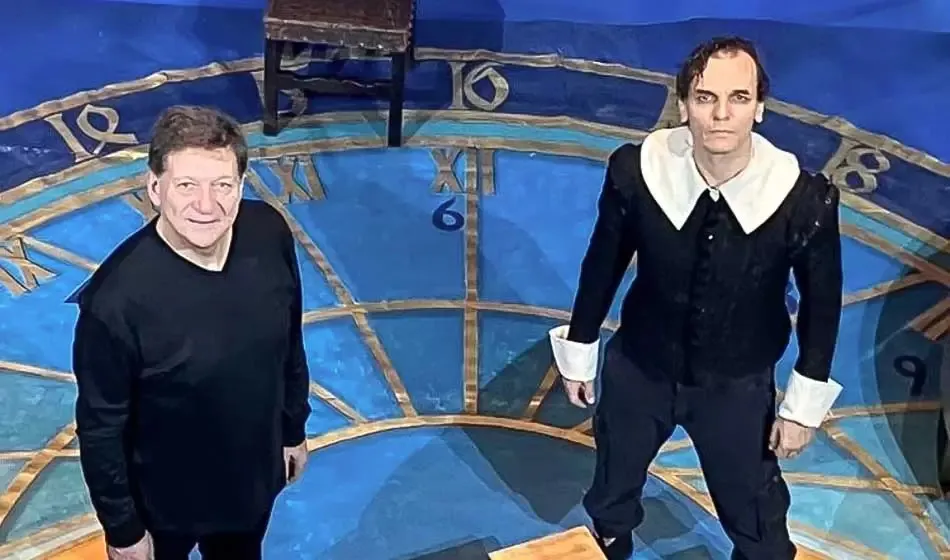
Author: Juan Villoro. Director: Marcelo Lombardero. Performers: Osmar Núñez, Lautaro Delgado Tymruk. Co-production: C3 and Teatro Nacional Cervantes. Costume Design: Luciana Gutman. Scenic Design: Matías Otalora. Lighting Design: Horacio Efron. Acting Coach: Juan Ignacio González Cano. Assistant Director: Mercedes Marmorek. Performances: Fridays, Saturdays and Sundays, at 20:00. Venue: Centro Cultural de la Ciencia, Godoy Cruz 2270. Free admission. Until July 31.
BEFORE
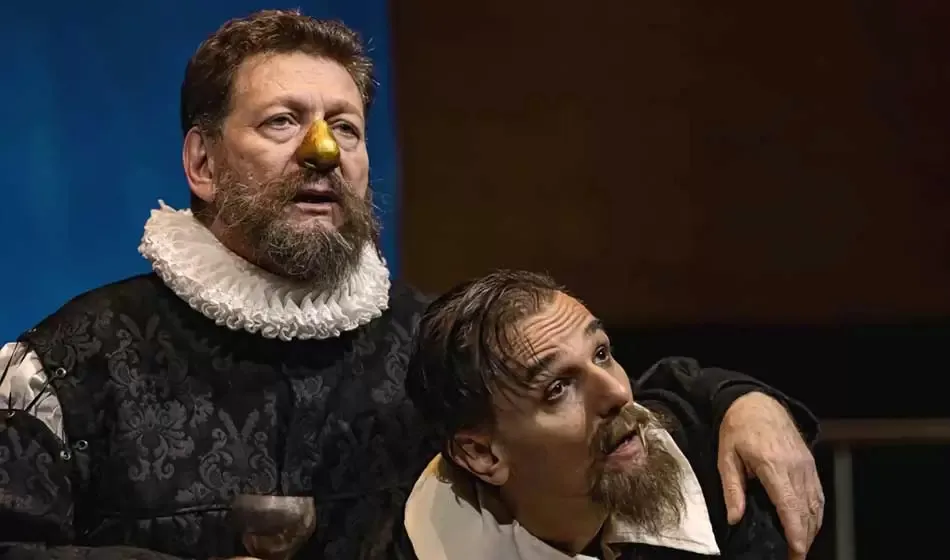
I knew the story beforehand: Kepler had the idea that the orbits of the planets could be explained with the 5 Platonic solids. But the data didn't fit. Very sure of himself, he thought the data was wrong. Tycho Brahe was the one who had the best observations. The German went to see the Dane at his castle. Brahe lived in a certain courtly opulence and drank excessively. His nose had been torn off in a duel and he had a gold prosthesis put in. He was as eccentric and capricious as the orbit of Mars. Kepler needed him, but what could he offer? Brahe didn't want to give him anything but a few scraps of his tables.
I knew Villoro's work and Lombardero's reputation precedes him. The actor Osmar Núñez is well-known. He was part of the film Wild Tales, playing the family's lawyer in the traffic accident story, with Oscar Martínez. Núñez is a theater actor who knows how to fill the stage.
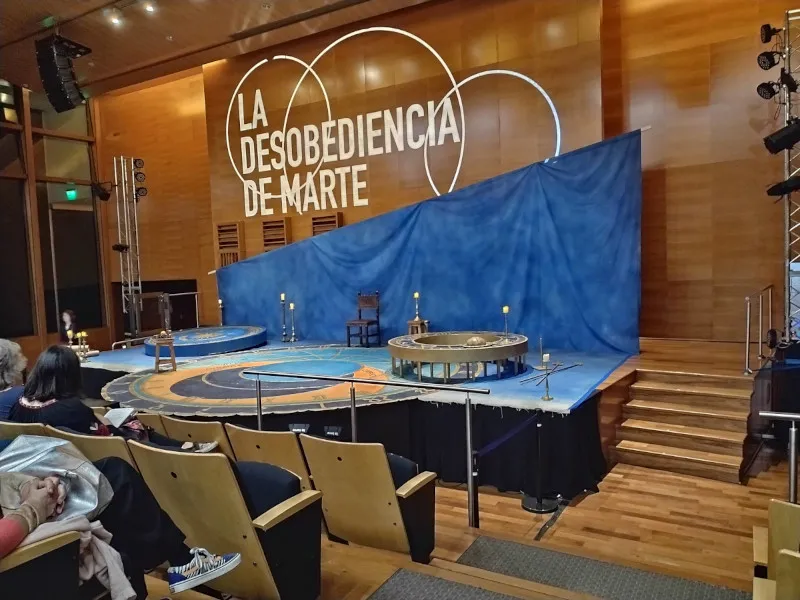
I didn't know the hall of the Centro Cultural de la Ciencia (C3). It's very nice. The seats are mounted on a wooden staircase and the stage has no curtain.
I arrived early, but also a large number of people, this Saturday, July 22. Around the time I saw journalist Cristina Mucci, from the program Los Siete Locos, come in.
DURING
The lights go out, illuminated text appears on the only wall of the stage. The floorboards light up and Tycho and Kepler appear, half-drunk, talking. "Mangy dog!" exclaims Brahe, while Kepler scratches his bare feet. They argue in a duel with the edge of their tongues lubricated by alcohol. It's the year 1600. And then... a cell phone rings! No, it's not from a clueless spectator, but from... Tycho Brahe. And he answers!
Then we notice that Osmar Núñez and Lautaro Delgado are playing two actors who are rehearsing a play in which they will play the roles of two astronomers. A play within a play, like the Platonic solids that Kepler wanted to put one inside the other. A game of nested boxes or Russian dolls.
The history of astronomy becomes a metaphor for human relationships. If the orbits of the planets can give meaning to the universe, what will give meaning to the relationship between these two actors who are rehearsing?
AFTER
I've always been fascinated by how directors manage to make the staging dynamic without changing the scenery. In this case, for example, Núñez leaves the stage and goes up the stairs, among the audience, to continue his dialogue with Delgado, extending his "orbit". The turning off and on of the lights, the sound of out-of-sync clocks, mark the course of the narration.
The performance ends at 100 minutes, with a strong round of applause, with the audience standing, before the dedication of the brilliant actors and the brilliance of their direction. It is so well written that no special effect is needed for us to know when the end has come, before the question that will resonate as we leave: What does the play mean?
We will give different interpretations to the parallel between planetary orbits and social relationships. But I'm left with a line from the end: "Everyone seeks their heaven where they can."☉
Sources and related links
La desobediencia de Mars http://c3.mincyt.gob.ar/la-desobediencia-de-marte/
About the images
Initial image: mine.
Credit for following photos: @cervantestna