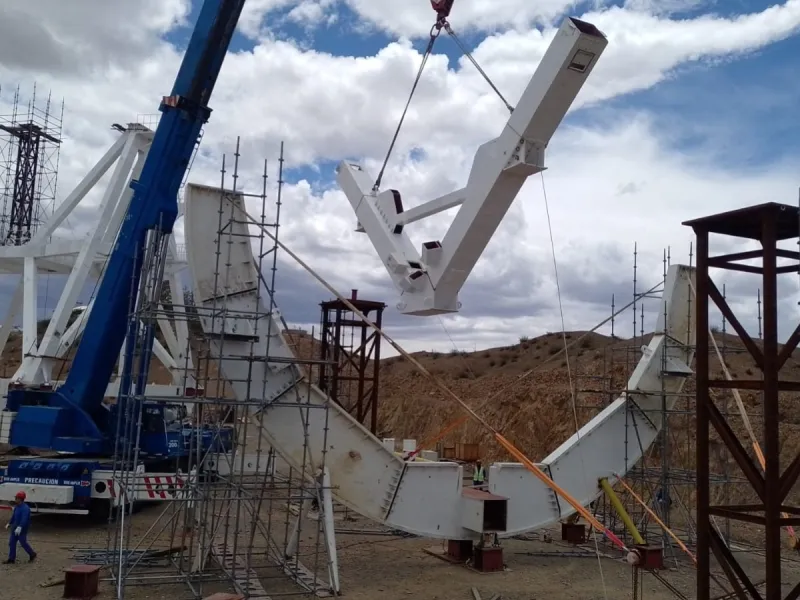
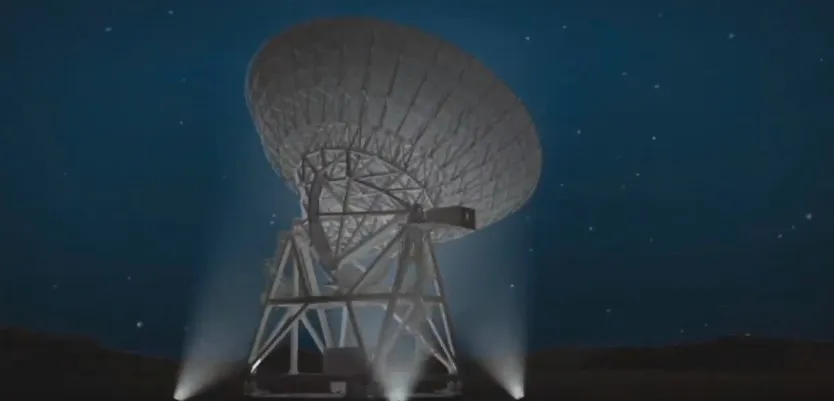
The first parts are arriving in San Juan.
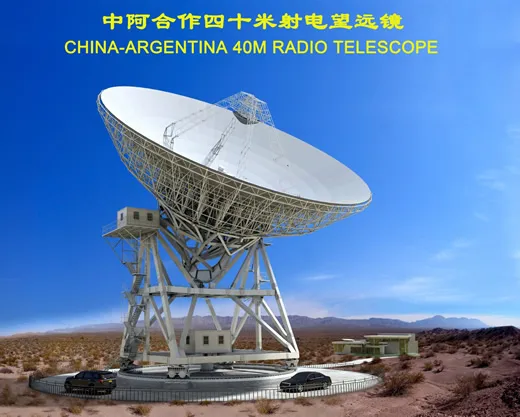
CART is a project involving the creation of the largest radio telescope in South America. Participants include the Consejo Nacional de Investigaciones Científicas y Técnicas (Conicet), the Universidad Nacional de San Juan (UNSJ), the Government of San Juan, and the National Astronomical Observatories of China.
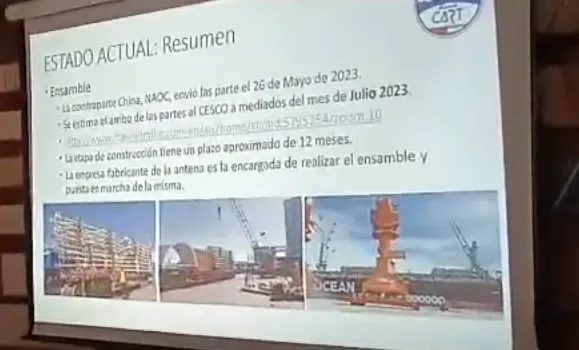
Several San Juan media outlets have published in recent days about the arrival of the first trucks in Barreal, Calingasta. The sources also indicate that 7 of the 27 technicians who will work on the assembly tasks have arrived in the country.
The radio telescope will serve to work in two scientific areas. On one hand, listening to electromagnetic signals from deep space and also space geodesy, which allows for high-precision geolocation and will provide key information about the movements of the San Juan ground.
The radio telescope has the following characteristics:
Primary reflector 40 m in diameter
Secondary reflector 4.2 m
Operational band Phase I: S (2 - 4Ghz) and K (18 - 26Ghz)
Final operational band: L, C, X, Ku, K, Ka, K and Q (1- 45Ghz)
It will be composed of four fundamental parts: antenna, positioning system, receiver, and data acquisition/processing system. The antenna positioning system directs it to the position to be observed and the main reflector or dish of the antenna collects the signal from that area. The receiver is responsible for taking the energy captured by the antenna and conditioning it to appropriate levels and frequencies for recording. Data acquisition and processing is performed by a dedicated computing system.
Argentina has radio telescopes at the IAR, with 30 m antennas, as well as the Llama Observatory, in the north, in millimeter waves, with a 12m dish. The new instrument will be able to work in synergy with the existing ones, opening new research opportunities.
It is desirable that the works continue, beyond possible changes in the political situation...☉
Sources and related links
- CART
http://cart.unsj.edu.ar/ - CART radio telescope: the first pieces arrived in San Juan
https://www.diariohuarpe.com/nota/radiotelescopio-cart-llegaron-las-primeras-piezas-a-san-juan-202385890 - The Chinese radio telescope arrived in the country and the technicians in San Juan
https://www.diariohuarpe.com/nota/llegaron-el-radiotelescopio-chino-cart-y-los-tecnicos-que-lo-montaran-2023727600 - Trucks with parts of the Chinese Radio Telescope begin to arrive
https://www.diarioelzondasj.com.ar/294512-empiezan-a-llegar-camiones-con-partes-del-radiotelescopio-chino - CART (China-Argentina Radio Telescope)
https://www.argentina.gob.ar/ciencia/sact/grandes-instalaciones/cart - Great advances in the Chinese-Argentine radio telescope project (CART)
https://www.youtube.com/watch?v=dkRgnmk97f8 - The first parts of the Chinese-Argentine Radio Telescope arrive in Barreal 04/08/2023
https://www.youtube.com/watch?v=wAyRXSfKOk0
About the images
Credits: CART and youtube captures.