The sale of scientific articles...even on Twitter.
In this blog I have been critical of pseudosciences. And I am a defender of scientific knowledge, without a doubt. But this does not mean that the sciences do not have their drawbacks. One of the criticizable aspects of the scientific system is the phenomenon of "Paper Mills", in Spanish, scientific article factories, papers.
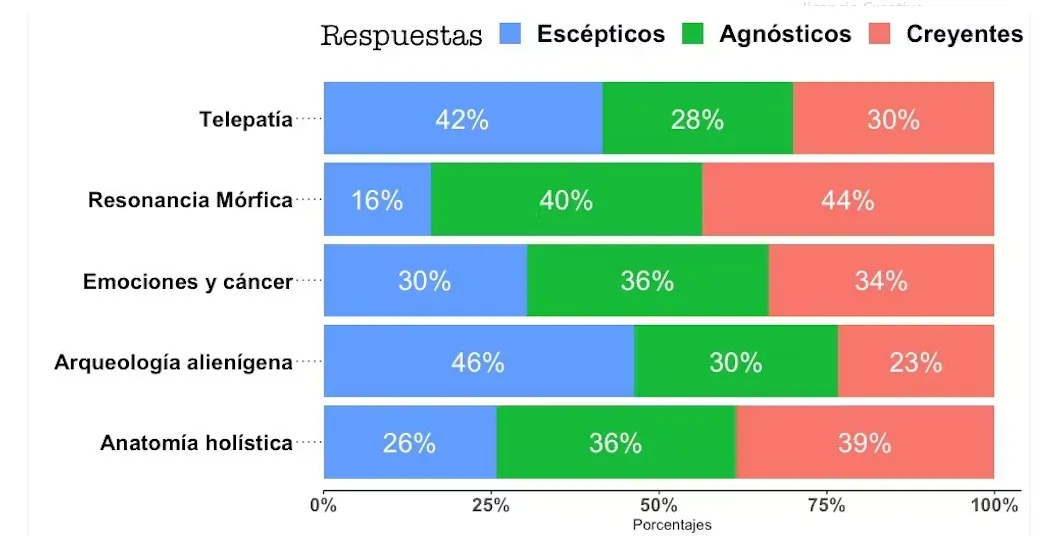
In February, an article was published in The Conversation about the belief in pseudo-scientific ideas in the population of Spain, which shows high acceptance, even among university students.
One of the arguments often used against "occult sciences" and other nonsense is that they deceive the public to obtain an economic benefit.
Doesn't this happen in "real" sciences too?
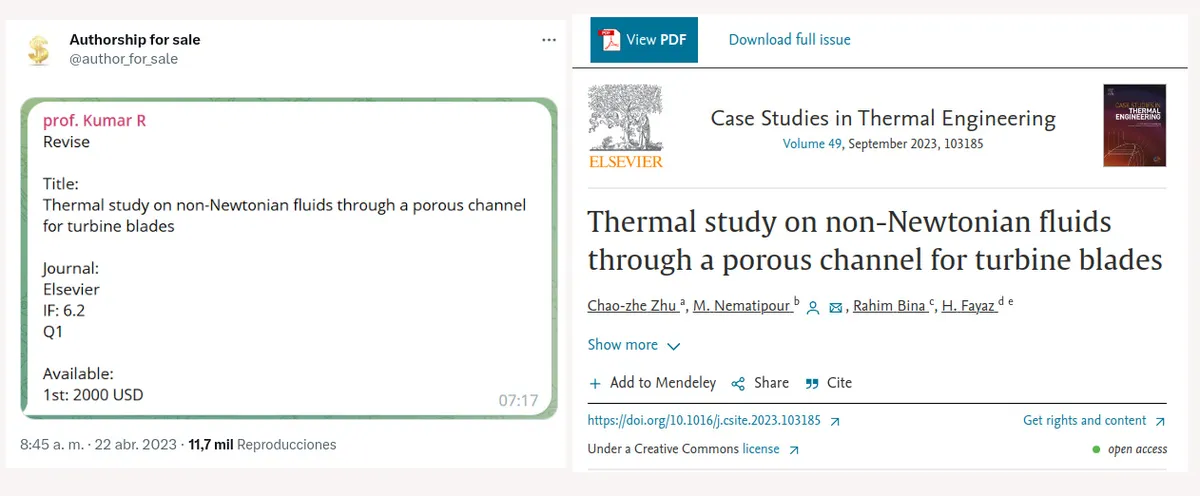
On July 23, Eldiarioar.com showed a tweet published in April offering the purchase of a scientific article in a top-tier journal. A ready-made article, with a title, for USD 2000 for the first author. Shortly after, an Elsiever journal brought forward the September issue which includes an article with exactly the same title. Here I show the tweet and the paper on the journal's site, as of today (August 9):
"Paper Mills" or "article factories" are companies that sometimes present themselves as aids for the researcher to publish. A kind of private review, to improve the article. However, other times, without ambiguities, they offer "turnkey" articles, ready-made. And with the assurance that they will be published in high-impact journals.
The publication of scientific articles is a whole business. Researchers must pay to publish, users generally must also pay to read, and peer review - which supposedly serves to raise the bar - looks the other way. I recommend reading the cited journalistic article as it contains good information.
OTHER CASES
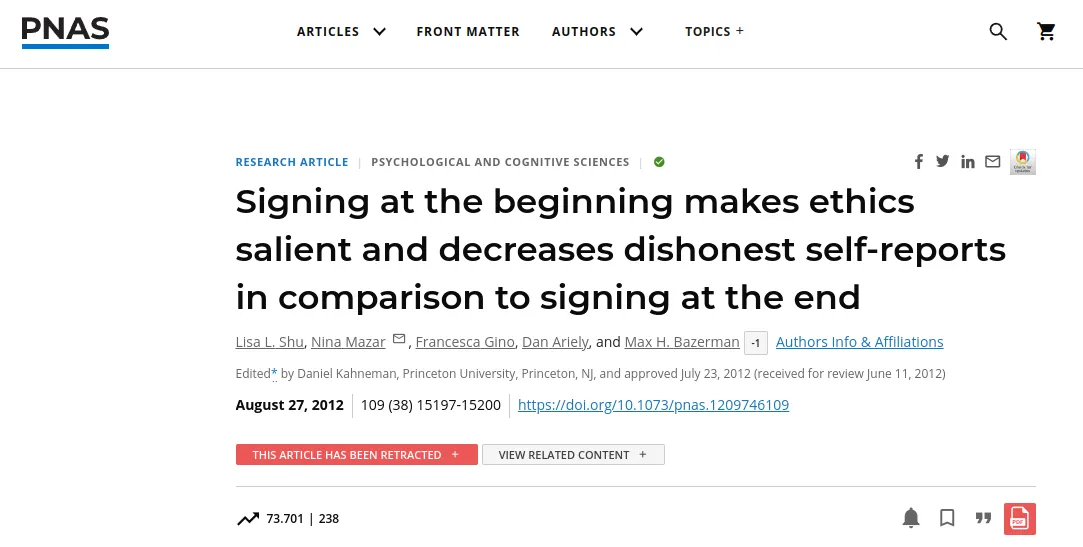
I read in BigThink that in 2012 an article on honesty was published in PNAS. It basically said that people tend to be more honest in their statements if they are asked, beforehand, to sign an affidavit, compared to people who are asked for the affidavit at the end. The article now appears on the journal's website as "retracted". Do you know why? Because the article on honesty...was dishonest. The data were fabricated!
The retraction was made by some of the same authors, in 2020, eight years later.
On the one hand, that works with fabricated data are published is alarming. On the other hand, that science has internal mechanisms to find these cases and retract them is an incentive. One thing is to make a mistake, do some calculations wrong, overlook some procedure. Another thing is to fabricate data. Why does this happen?
THE SCIENTISTS
We have all read (or know secondhand) Max Weber in his text on The Politician and the Scientist. More recently, sociologist Pablo Kreimer wrote that "scientists are also human beings", with a more concrete and current view of what it is to be a scientist, to research, to publish and the conflicts of interest that exist.
I don't know where I got the idea that the higher the educational level, the greater the moral rectitude. The idea I formed over time is that synderesis, that is, the natural ability to judge rightly is not innate, but cultivated and therefore, it is not "natural". I suppose it's an old idea, perhaps revitalized during the Enlightenment, taught in schools, although I don't remember anyone teaching it to me as I present it. But that's what I learned. The data included in this brief post indicate the opposite. University students who believe that NASA did not reach the Moon, who have superstitions, who fabricate data, who buy papers. I have commented here on other occasions about plagiarism.
It is evident that it is not necessary and sufficient to have a certain level of formal education completed to achieve the aforementioned synderesis.
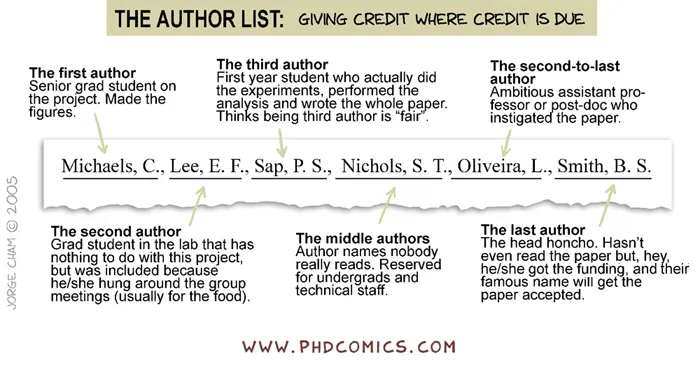
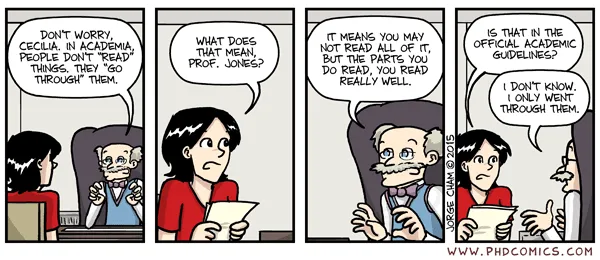
Why do these things happen? It may be due to the search for an economic benefit, prestige (which leads to an economic benefit), or the mere taking advantage of circumstances in order to achieve the least effort. Given the amount of material published it is almost impossible to audit it all. In fact, a comic strip sums it up very well:
THE LUMINOUS SIDE OF SCIENCE
Yes, science has its dark sides: plagiarism, fraud, buying and selling of articles, where personal interest is placed above social interest.
But science also has a luminous side: many human activities have positive consequences that are substitutable.
Doing meditation can help deal with stress. But there are many other ways to achieve the same thing, without meditation. The same benefit can be achieved with other techniques or therapies.
The benefits of science cannot be achieved in any other way. Science is irreplaceable. When the coffee maker breaks, it is possible to fix it, but if it is difficult or expensive, you throw it away and buy another. With science you can't. You have to fix it. The problem is that, perhaps, what is broken, is society.☉
Sources and related links
- Paper for sale for 2,000 dollars: the black market of academic texts damages the credibility of science
https://www.eldiarioar.com/sociedad/vende-paper-2-000-dolares-mercado-negro-textos-academicos-dana-credibilidad-ciencia_1_10401294.html - https://twitter.com/author_for_sale/status/1649741324206080001
- Thermal study on non-Newtonian fluids through a porous channel for turbine blades
https://www.sciencedirect.com/science/article/pii/S2214157X23004914 - Paper Mills—The Dark Side of the Academic Publishing Industry
https://blog.mdpi.com/2022/05/09/paper-mills/ - Publication and collaboration anomalies in academic papers originating from a paper mill: evidence from a Russia-based paper mill
Anna Abalkina
https://arxiv.org/abs/2112.13322 - Paper Mills and Research Misconduct: Facing the Challenges of Scientific Publishing
117th Congress (2021-2022)
https://www.congress.gov/event/117th-congress/house-event/115022?s=1&r=15 - https://publicationethics.org/files/paper-mills-cope-stm-research-report.pdf
- Paper mills research
https://publicationethics.org/node/55256 - Paper Mills: the manufacturing of articles for the sale of authorship
https://universoabierto.org/2022/06/29/papel-mills-la-fabricacion-de-articulos-para-la-venta-de-autorias/ - The Conversation: Pseudosciences: who and how many believe in telepathy, contact with extraterrestrials or that emotions cause cancer
https://theconversation.com/pseudociencias-quienes-y-cuantos-creen-en-la-telepatia-el-contacto-con-extraterrestres-o-que-las-emociones-provocan-cancer-200316 - A study on “honesty pledges” became famous. Its data was fake
https://bigthink.com/the-present/honesty-pledge-study-fraud-dan-ariely/
Siglo XXI: The Scientist is Also a Human Being https://sigloxxieditores.com.ar/libro/el-cientifico-tambien-es-un-ser-humano/