On the future of the Moon and the present of the blog.
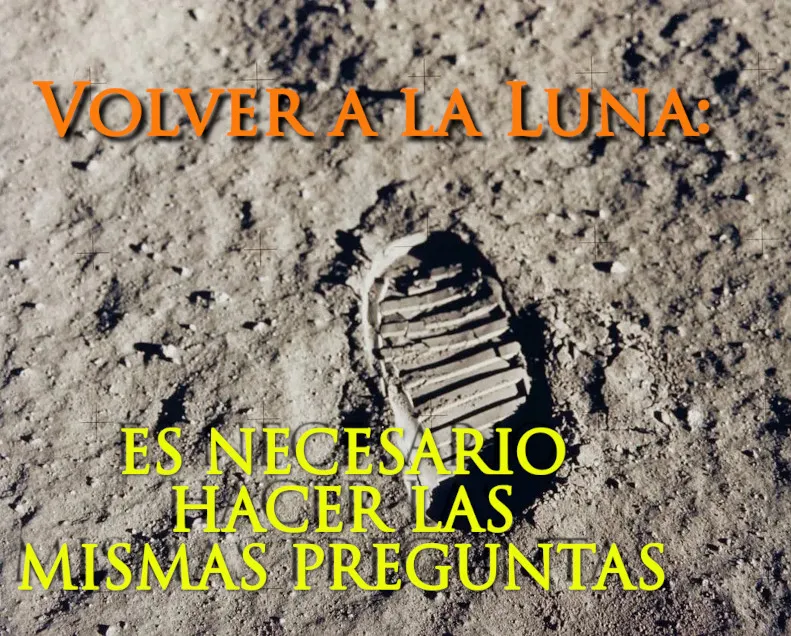
The multidisciplinary Summit on Space Heritage debated the preservation of humanity's legacy in space.
Since 1959 when Luna 2 became the first human-made object to reach the surface of the Moon, more than 100 missions have flown from Earth to our closest neighbor.
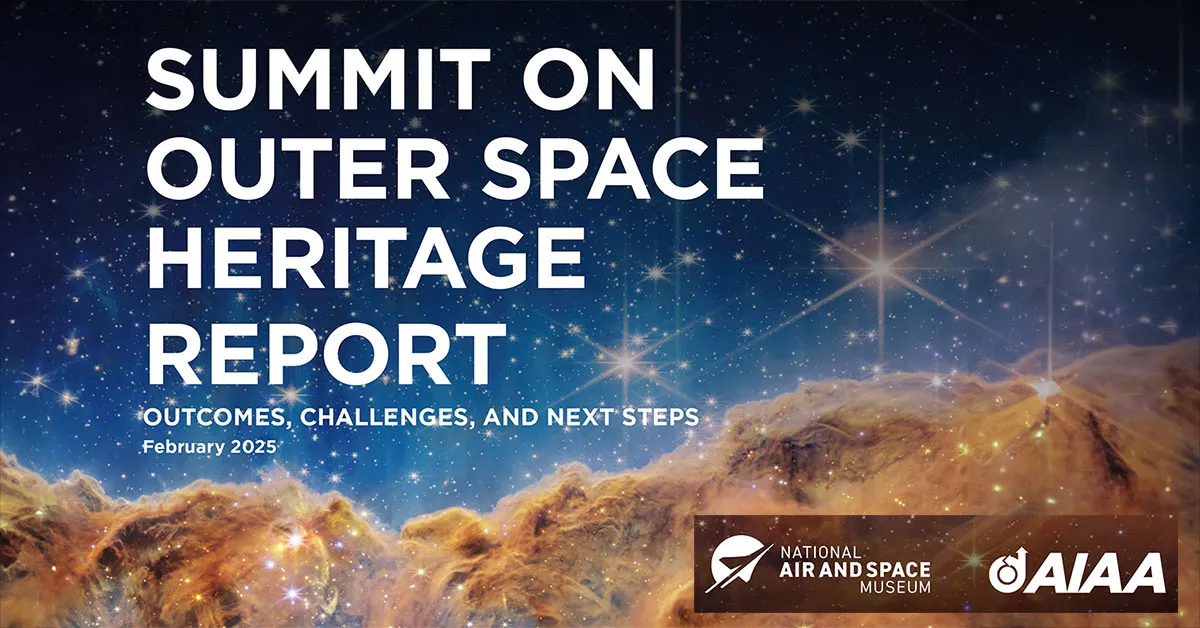
In the decades since then, we have left marks—both literally and figuratively—all over the Moon. Today, there are more than 100 metric tons of human-made material on the lunar surface: from advanced cameras and sensors to human waste. But that is nothing compared to what is to come. NASA predicts that the next decade will see more than 100 new lunar missions, equaling or surpassing all previous missions. This raises a crucial question about everything that is already there: how do we protect that history? A new article by Teasel Muir-Harmony, curator of the Smithsonian's Department of Space History, and Todd Mosher, resident researcher at the University of Colorado Boulder, reports on a summit by the Smithsonian National Air and Space Museum and the American Institute of Aeronautics and Astronautics on Outer Space Heritage that delves into the legal, scientific, and engineering obstacles to preserving these historic sites.
Currently, there is no international heritage law that applies to historic or future sites on the Moon. In 1967, the Outer Space Treaty established that Treaty parties retained jurisdiction over the material they sent into space. Furthermore, it stipulated that space actors must avoid harmful interference and conduct their activities with due regard to the corresponding interests of all other States. However, these provisions do not prevent visits, recovery of material, or alteration of cultural landscapes. While these principles apply to national jurisdiction over hardware in outer space, numerous questions persist about the treatment of historic and future heritage sites: How should historical significance be determined? Significance for whom? Beyond national representation, who specifically should have a voice in these debates? What scientific information could be obtained by visiting these sites? What could be learned by bringing objects back to Earth and what scientific data might be lost? Is it possible to establish international standards for lunar heritage objects? If so, what is the best approach? How should future generations be taken into account in these decisions? How should we balance (1) scientific value, (2) engineering value, and (3) cultural and symbolic value in determining how to treat outer space heritage?
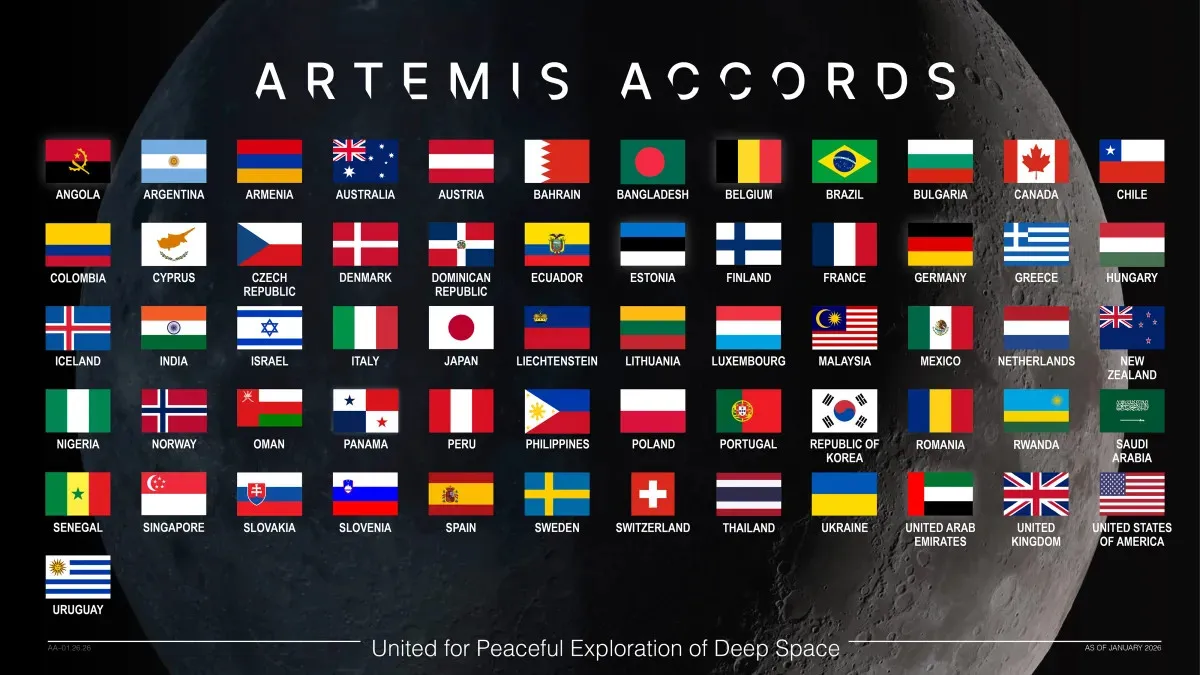
In 2020, the United States and seven founding members signed the Artemis Accords, a set of non-binding principles and guidelines for space exploration. The Accords include a specific principle for the protection of space heritage. It states: 'Space heritage is our common heritage. The signatories of the Artemis Accords commit to preserving landing sites, artifacts, spacecraft, and other evidence of activity on celestial bodies of historical significance, for both human and robotic missions, and to contribute to multilateral efforts for the development of applicable international practices and norms.' By February 2025, 53 nations had signed the Accords. However, as noted by Jinyuan Su and Jinxuan Li, space law experts at Wuhan University in China, the Accords 'suffer from a lack of international consultation,' particularly the participation of China and Russia, two of the major space powers. Furthermore, while the Artemis Accords commit to preserving space heritage, what this will mean in practice has yet to be defined.
STUMBLING OVER THE SAME STONE
It won't be the first time society repeats mistakes, despite which, with some naivety, I think it's possible to avoid already known problems. The Moon will be used to install bases, extract materials, which will also generate environmental consequences. If today, here, we fight with weapons over a little piece of Earth, what will those who have their heads on the Moon do? Ø
BLOG CURRENT STATUS
For a few months now, I have been hospitalized in a palliative care clinic due to severe COPD. Basically, I run out of breath very easily. There is no cure. That explains the lack of publications, but I am feeling better and the doctors consider it important to engage in recreational activities because being bedridden all day for months is not very good, to say the least. Therefore, this publication is a sign of progress, but I will not be able to resume the previous posting frequency.
During these months I was at Sanatorio Finoquietto and now at Clínica de Cuidados Paliativos Baires. I thank the staff of both places for their care, especially the nursing staff.
Sources and related links
- Teasel Muir-Harmony, Todd Mosher,
Multiple aspects of preserving lunar space heritage,
Acta Astronautica,
Volume 240,2026, Pages 147-154,ISSN 0094-5765,
https://doi.org/10.1016/j.actaastro.2025.11.077.
(https://www.sciencedirect.com/science/article/pii/S0094576525008495) - NASA ARTEMIS ACCORDS
https://www.nasa.gov/artemis-accords/ - The Moon's Going To Get Crowded - We Should Protect Our Heritage On It While We Still Can
https://www.universetoday.com/articles/the-moons-going-to-get-crowded-we-should-protect-our-heritage-on-it-while-we-still-can - Outer Space Heritage Summit OLD
https://www.aiaa.org/outer-space-heritage-summit/ - Teasel Muir-Harmony
https://spacestudies.georgetown.edu/profiles/teasel-muir-harmony/
About the images
Credit - NASA / JPL-Caltech