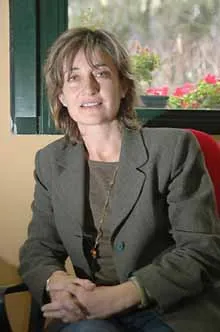
Patricia Tissera leads the Numerical Astrophysics group at the Instituto de Astronomía y Física del Espacio (IAFE, Conicet-UBA), with which they study galaxy formation and evolution in this way.
By Patricia Olivella
Galaxies are structures of millions of stars, with diverse shapes, sizes and colors. Some are found isolated and others in groups of hundreds. Their formation and evolution are closely related to various physical processes that, in some way, also account for how the origin of the universe has been.
However, when astronomers, using new and powerful telescopes, study distant galaxies they encounter an insurmountable difficulty. The galaxy they are observing may no longer be the same. No matter how fast light travels, the enormous distance it must cover means that the image of the observed galaxy corresponds to an earlier stage of its evolution. For example, if the galaxy is 10,000 million light-years away, that is the time its light takes to reach us, so we will be seeing how it was such a long time ago.
To know what has happened to it since then until now, astrophysicists have developed a new tool: Numerical Astrophysics. Numerical models have allowed researchers to obtain information about the kinematics, dynamics, chemistry and many other properties of galaxies and their environment, in different stages of the evolution of the universe.
Patricia Tissera leads the Numerical Astrophysics group at the Instituto de Astronomía y Física del Espacio (IAFE, Conicet-UBA), with which they study galaxy formation and evolution in this way.
"To make the simulations, one must assume a cosmological model, the initial conditions and then establish which are the physical processes that will dominate the evolution of matter in the universe," says Tissera.
The challenge for those who work in this area of astronomy is to find the algorithms that best describe what they suppose happens in the "real world."
To achieve this, astronomers test their own models by simulating situations they can observe, for example a galaxy at some stage of its evolution. "If the simulations result in an object with properties similar to the observed one, this means that the assumed hypotheses are probable and that the numerical code is well integrated," explains the researcher. If the model passes this first test, one can cautiously continue advancing over the virtual territory onto which those phenomena that cannot be accessed directly will be projected.
"Making simulations is like filming the movie of the universe we don't know," says Tissera. "But then you have to check how realistic that movie is. There may be an image from the movie that was missing, or conversely, the movie may allow making predictions of a photograph that no one has taken yet," she explains.
This type of calculation requires powerful computer systems, capable of processing enormous flows of information in very short times. With the arrival of the "supercomputer" HOPE at IAFE in 2004, Numerical Astrophysics received a not inconsiderable boost. HOPE is a Beowulf cluster that has a configuration of 52 processors with parallel architecture, working in 64 bits. Tissera, who is also the director of the HOPE Project, highlights the virtues of her team: "If before I could run, for example, between 500,000 and 100,000 particles, with HOPE I can raise that number to 10 million. What I solved before with a certain precision, I now do with a precision increased by one or two orders of magnitude, which allows me, for example, to study a larger region of the universe."
The group Tissera works with is dedicated, among other things, to the study of the chemical enrichment of the universe. When stars explode they launch chemical elements and energy into space. "Both things affect the medium, enrich it chemically and the energy they release produces mass movement and heating of the gas," describes Tissera. "The developed code serves to study how chemical materials are produced and ejected from stars into the interstellar medium and how heavier elements appear in the universe," she concludes.
Numerical Astrophysics Group
Instituto de Astronomía y Física del Espacio
Pabellón IAFE, 4788-1916 extension 224.
http://www.iafe.uba.ar/astronomia/extrag/index.html
Director: Patricia Tissera
Researchers: Susana Pedrosa
PhD students: Maria Emilia De Rossi, Tomas Tecce, Sebastian Nuza,
Abigail Ganopol
Cable Semanal is a free publication, edited by the Press Office of the Facultad de Ciencias Exactas y Naturales, about news, events, scholarships, contests, activities, research group reviews and other topics of interest to the FCEyN community. It is distributed in print and by mail.