NASA's vehicles on Mars are suffering from a lack of energy, due to a great storm that for almost a month has been blocking sunlight.

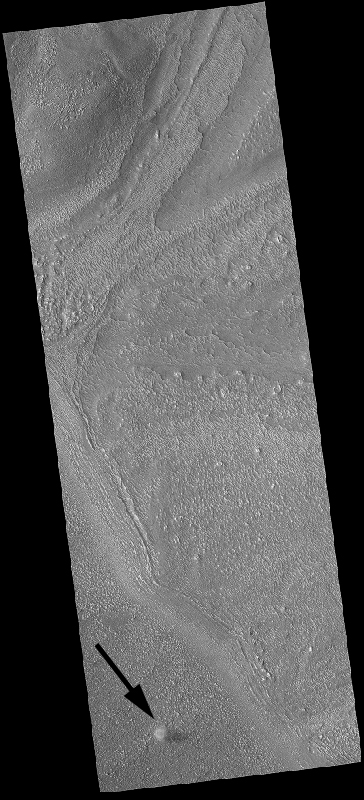
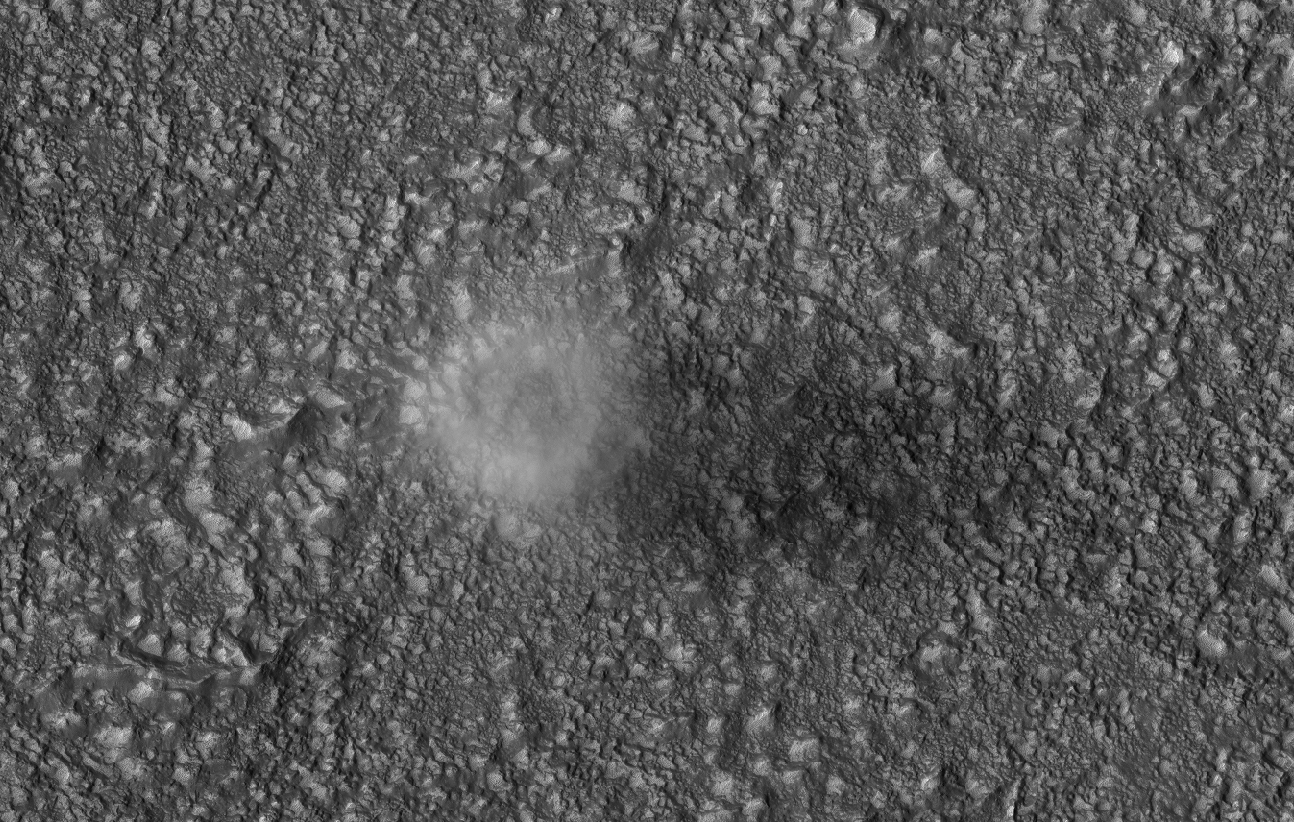
Dust tornado. Credit: NASA/JPL/University of Arizona
The HiRISE camera captured a devilish tornado in a region in the southern hemisphere near Hellas Planitia. The camera is aboard the Mars Reconnaissance Orbiter (MRO).
These dust devils form when the temperature of the atmosphere near the ground is warmer than the upper one. The hot air rises and, under ideal conditions, forms a vortex that sucks in warm air. If the vortex is powerful enough, it will lift dust from the surface, forming a dust tornado.
They generally form in the afternoon because the sunlight needs enough time to heat the surface. When this image was taken, the local time was 3:08 p.m. In addition to the main image, the HiRISE site shows a smaller version of the image with an arrow showing the location of the tornado. The third image is a close-up.
For almost a month, a series of severe summer dust storms have affected the rovers Opportunity and its twin Spirit. The dust over Opportunity blocked 99 percent of direct sunlight to the rover, leaving only diffuse light to power it. Scientists fear that the storms will continue for several days, if not weeks.
If this continues and the storms keep blocking sunlight, the rovers will not be able to generate enough energy to operate and maintain themselves, not even in a dormant state. The problem is that Mars is a very cold planet and the rovers depend on electric heaters to keep some vital electronic cores.
Before the start of the storm, Opportunity's solar panels had been producing 700 watt hours of electricity per day, enough to light a 100-watt light bulb for seven hours. When the dust reduced the panels' capacity to 400 watt hours, the team suspended driving and most observations, including the use of the robotic arm, cameras, and spectrometers to study the site where the rover is located.
On Tuesday the 17th, the panels' output dropped to 148 watt hours, the lowest point for the rovers. On Wednesday it dropped even further, to 128.
NASA engineers are taking proactive measures to protect the rovers, especially Opportunity.
To minimize the amount of energy, Opportunity was instructed to cease communication with Earth on Thursday and Friday.
Sources and related links
- HiRISE
- Physorg: HiRISE Catches a Dust Devil on Mars
- Physorg: Rovers begin new observations on changing Martian atmosphere
- NASA: Mars Rovers Caught in Severe Dust Storm
- Google Mars