A new study suggests having identified the family of asteroids to which the asteroid that would have collided with the Planet and produced the extinction of the dinosaurs belonged.
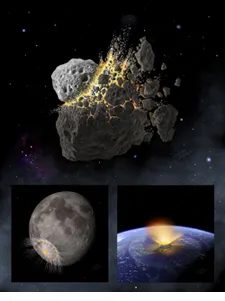
Research by Dr. William F. Bottke, Dr. David Vokrouhlicky and Dr. David Nesvorny suggests that the impact thought to have wiped out the dinosaurs and other life forms 65 million years ago can be traced back to an event in the asteroid belt.
Computational models show that the asteroid Baptistina (298), about 170 km in diameter with characteristics similar to carbonaceous chondrite meteorites, broke up about 160 million years ago when it was struck by another asteroid about 60 km in diameter.
The impact produced the Baptistina family of asteroids, a set of fragments with a similar orbit. The family originally included approximately 300 bodies larger than 10 km and 140 thousand smaller than 1 km.
Following the breakup event, the new fragments slowly began to migrate due to thermal forces produced when they absorbed sunlight and then radiated the energy as heat. Over time, this slow diffusion allowed about 20% of the fragments to escape their orbit and leave the belt. Eventually, these fragments ended up in orbits that crossed Earth's. About 2% of these objects collided with our Planet, while a small fraction collided with the Moon.
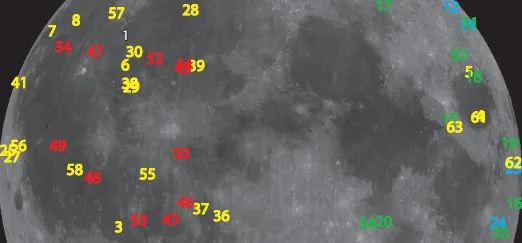
It is likely that a larger fragment created the 85 km Tycho crater on the Moon 108 million years ago.
It is even more likely that a larger fragment created the Chicxulub crater on the Yucatán coast 65 million years ago.
Sources and related links
- Note on Nature.com
- Note in NewScientist
- SWI press release